NEW DELHI: A major political upheaval unfolded on Sunday as a group of rebel Members of Parliament from the Trinamool Congress (TMC) announced their decision to merge with the Tripura-based Nationalist Citizen Party of India (NCPI) and extend support to the National Democratic Alliance (NDA). The development marks a significant escalation in the ongoing crisis within the Mamata Banerjee-led party following its recent electoral setback in West Bengal.
The announcement was made by senior rebel leader Kakoli Ghosh Dastidar, who stated that the dissident lawmakers had decided to formally align with the NCPI rather than continue their association with the Trinamool Congress. She also claimed that nearly two-thirds of the party’s MPs had already submitted a letter to Lok Sabha Speaker Om Birla seeking separate seating arrangements in Parliament.
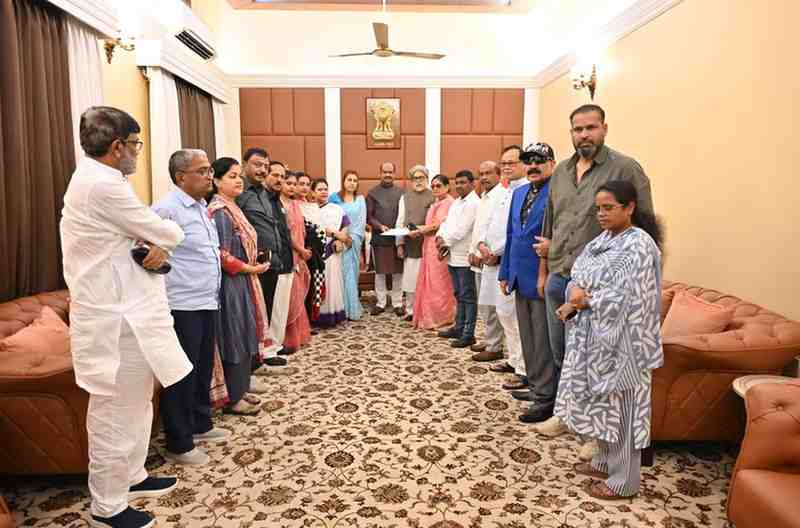
“We will merge with the Nationalist Citizen Party and support the NDA,” Kakoli Ghosh Dastidar declared, signaling a decisive break from the party leadership. Her remarks came shortly after a delegation of rebel MPs met Speaker Om Birla in New Delhi.
Among those present during the meeting with the Speaker were Yusuf Pathan, Kakoli Ghosh Dastidar, and Sudip Bandyopadhyay. Their visit fueled intense political speculation throughout the day, with reports suggesting that the dissident faction was preparing to seek recognition as the “real” Trinamool Congress and stake a claim over the party’s election symbol.
However, the rebels later clarified their political course by announcing their intention to merge with the NCPI, effectively ending speculation regarding a direct battle for control of the TMC organization and its symbol.
The rebellion comes at a time when the Trinamool Congress is grappling with one of the most challenging phases in its political history. The party suffered a severe setback in the recent West Bengal Assembly elections, where the Bharatiya Janata Party (BJP) secured a sweeping victory, ending the TMC’s uninterrupted 15-year rule in the state.
The electoral defeat triggered widespread introspection within the party, but it also exposed deep-rooted divisions among leaders and lawmakers. Several MPs and MLAs reportedly expressed dissatisfaction with the functioning of the organization and the concentration of power within a small leadership circle.
At the center of the controversy is Abhijeet Banerjee, the party’s national secretary and nephew of TMC chief Mamata Banerjee. Rebel leaders have reportedly voiced concerns over his growing influence in party affairs, alleging that decision-making had become increasingly centralized.
As the dissident camp moved to establish its separate political identity, the official TMC leadership responded swiftly. On Sunday, Abhijeet Banerjee sent a formal communication to Lok Sabha Speaker Om Birla asserting that the Trinamool Congress remains a united and indivisible political party.
The letter was delivered to the Speaker by party MPs Kirti Azad and Sagarika Ghose. In the communication, Abhijeet strongly opposed any attempt by the rebel lawmakers to gain recognition as a separate faction within the TMC.
“My attention has been drawn to news reports indicating that certain members of the Lok Sabha belonging to the AITC have submitted, or propose to submit, a communication seeking recognition as a separate group or faction independent of the legislative party,” the letter stated.
The TMC leader further urged the Speaker not to grant any recognition to such claims, emphasizing that the party remains a single entity despite internal disagreements.
Political observers believe the rebellion could significantly alter the opposition landscape, particularly in West Bengal, where the TMC has long served as the principal political force against the BJP. The decision of the rebel MPs to support the NDA may also strengthen the ruling alliance’s position in Parliament.
The emergence of the NCPI as a new political platform for the dissidents adds another dimension to the unfolding developments. While the party has largely remained a regional force, the arrival of prominent former TMC leaders could potentially increase its national visibility.
The coming days are expected to be crucial as Parliament authorities examine the requests submitted by the rebel MPs and as both factions attempt to consolidate support among lawmakers. Questions also remain regarding the future political strategies of the dissidents, their formal merger process with the NCPI, and the response of the TMC leadership.
For the Trinamool Congress, the latest developments represent a serious challenge at a time when it is already recovering from electoral defeat. Whether the party can contain the damage and maintain unity will likely determine its future political trajectory in the months ahead.
As political tensions continue to rise, all eyes remain on New Delhi and Kolkata, where the battle for influence, legitimacy, and leadership within the former ruling party is set to intensify.