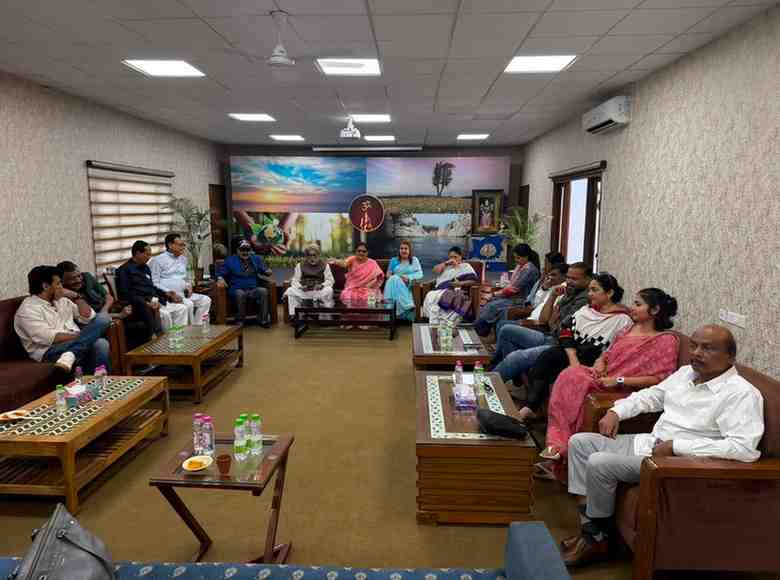
The political turmoil within the Trinamool Congress (TMC) intensified on Sunday as a large group of rebel Members of Parliament assembled in New Delhi and prepared to approach Lok Sabha Speaker Om Birla seeking recognition as the “real” Trinamool Congress parliamentary group. The development marks one of the most significant internal challenges faced by the party led by Mamata Banerjee in recent years.
According to reports, the dissident faction claims the support of around 19 to 20 Lok Sabha MPs and has already submitted a representation to the Speaker. The rebel leaders argue that they represent the majority of the party’s parliamentary strength and therefore deserve recognition as the legitimate parliamentary group in the Lok Sabha.
The rebels have indicated that they will formally meet Speaker Om Birla and present their case. Their move comes after a series of meetings in Delhi involving senior political leaders and members of the dissident camp. The faction has maintained that it wants to preserve the political legacy of the party while restructuring its leadership and direction.
In a dramatic twist, reports suggest that the rebel MPs have decided to merge their faction with the Nationalist Citizens Party of India and extend support to the BJP-led National Democratic Alliance (NDA). This decision has added another layer of complexity to the ongoing crisis and has raised questions about the future political alignment of the dissident lawmakers.
The rebellion received a major boost when senior TMC leader and veteran parliamentarian Sudip Bandyopadhyay reportedly expressed support for the rebel camp after holding meetings with senior BJP leaders in Delhi. His move has been viewed as a significant setback for the party leadership, given his long-standing association with Mamata Banerjee and his influence within the organisation.
Meanwhile, several rebel MPs, including Saayoni Ghosh, arrived in the national capital amid intense speculation regarding the future course of action. While avoiding detailed comments, Ghosh indicated that she would speak publicly at an appropriate time, fueling further speculation about the scale of the rebellion.
Facing mounting pressure, the TMC leadership has initiated a series of organisational changes aimed at consolidating control over the party structure. In a fresh reshuffle, several leaders associated with the dissident camp were removed from key organisational posts. New appointments were announced in the party’s youth and women’s wings as the leadership sought to project unity and stability amid the growing crisis.
The Mamata Banerjee camp has strongly opposed the rebels’ attempt to seek separate recognition. Senior party leaders argue that parliamentary rules and anti-defection provisions do not permit lawmakers elected on a party symbol to simply create a separate group while retaining their seats. Party representatives have maintained that any such move would face significant legal and procedural hurdles.
Adding to the confrontation, TMC national general secretary and parliamentary party leader Abhishek Banerjee wrote to Speaker Om Birla urging him not to grant recognition to any breakaway faction claiming to represent the Trinamool Congress. The letter reflects the official party position that the dissidents do not have the authority to claim the party’s identity in Parliament.
Political observers believe that the outcome of the Speaker’s decision could have far-reaching consequences for the party and for West Bengal politics. If the dissident MPs succeed in securing recognition or in formalising a merger with another political entity, it could reshape parliamentary equations and alter the balance of power within the opposition bloc.
The crisis has unfolded rapidly over the past few days, with resignations, public disagreements and organisational reshuffles exposing deep divisions within the party. Reports indicate that several MPs and MLAs have either joined the dissident camp or expressed sympathy with its objectives, intensifying concerns about the party’s unity.
As both camps prepare for the next phase of the confrontation, attention is now focused on Monday’s meeting with the Lok Sabha Speaker. The decision that emerges from the parliamentary process could determine whether the rebels gain institutional recognition or whether the Mamata Banerjee-led leadership succeeds in retaining its hold over the party’s parliamentary identity.
For now, the Trinamool Congress finds itself at a critical crossroads, confronting one of the most serious internal challenges in its political history while both sides battle for legitimacy, leadership and control of the party’s future.