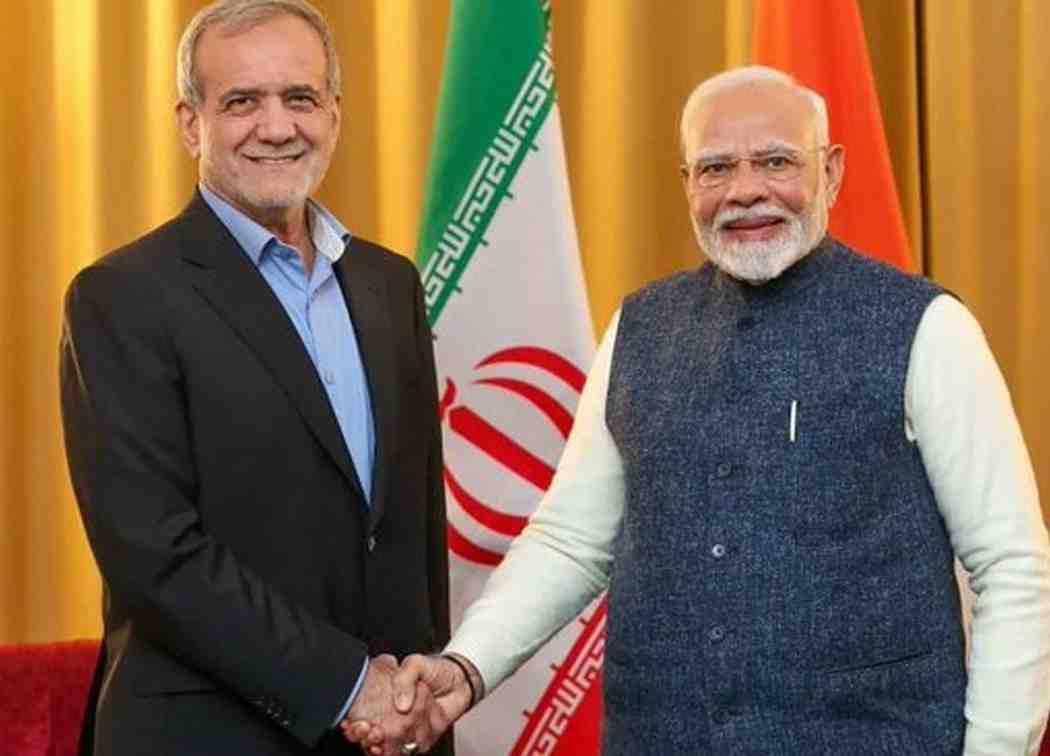
Iran has formally invited Prime Minister Narendra Modi to attend the state funeral and burial ceremonies of former Supreme Leader Ayatollah Ali Khamenei, marking a significant diplomatic development at a sensitive time for West Asia and India-Iran relations. The invitation was reportedly extended by Iranian President Masoud Pezeshkian through diplomatic channels, according to multiple reports and official sources familiar with the matter.
Formal invitation sent to New Delhi
According to diplomatic sources, the invitation was communicated to the Indian government via the Iranian Embassy in New Delhi. However, there has been no official statement from India’s Ministry of External Affairs (MEA) regarding whether Prime Minister Modi will attend the ceremonies.
The invitation comes amid efforts by Tehran to engage with international partners following months of regional instability and the aftermath of the Israel-Iran conflict.
Multi-city funeral ceremonies planned
Iran has announced an extensive funeral programme spread across several cities between July 4 and July 9.
The ceremonies are expected to begin in Tehran before moving to the religious city of Qom and eventually concluding in Mashhad, Ayatollah Khamenei’s birthplace, where the final burial ceremony is scheduled to take place. Millions of mourners and foreign dignitaries are expected to participate in the events.
Iranian authorities are preparing for one of the largest public gatherings in the country’s recent history.
Why the invitation matters
The invitation to Prime Minister Modi carries significant diplomatic importance.
India and Iran share long-standing civilisational, economic and strategic ties. Despite geopolitical complexities involving sanctions, energy trade disruptions and evolving alliances in West Asia, both countries have maintained regular diplomatic engagement.
India also considers Iran strategically important because of connectivity initiatives such as the development of the Chabahar Port, which serves as a gateway to Afghanistan and Central Asia.
Experts believe Tehran’s decision to invite Modi underscores the importance it attaches to preserving and strengthening bilateral relations with New Delhi.
Khamenei’s death reshaped Iranian politics
Ayatollah Ali Khamenei, who served as Iran’s Supreme Leader for more than three decades, was killed during the opening phase of the joint US-Israeli strikes on Tehran on February 28, 2026, according to Iranian state media and international reports. His death marked one of the biggest political turning points in modern Iranian history.
Following his death, Iran entered a transition period that led to the appointment of Mojtaba Khamenei as the country’s new Supreme Leader.
The months following the leadership change were characterised by heightened regional tensions, diplomatic negotiations and efforts to stabilise Iran internally.
India balancing diplomacy in West Asia
India has consistently maintained a balanced foreign policy approach in West Asia, carefully nurturing ties with Iran, Israel and Arab Gulf nations simultaneously.
Throughout the recent Iran-Israel conflict, New Delhi repeatedly called for restraint, dialogue and protection of civilian lives. India also prioritised the safety of its citizens residing in the region.
The invitation places India in a delicate diplomatic position, as any decision regarding Modi’s attendance will be closely watched by global powers and regional stakeholders alike.
International participation expected
Several countries are expected to send high-level delegations to Tehran during the funeral ceremonies.
Pakistan has already indicated that it will send a delegation to participate in the event, while Iran continues diplomatic outreach to friendly nations and strategic partners.
Political analysts suggest that the gathering could become an important platform for informal diplomatic interactions between leaders amid ongoing efforts to restore stability in the region.
Awaiting New Delhi’s decision
The Indian government has neither accepted nor declined the invitation publicly. Any eventual decision will likely take into account diplomatic priorities, security assessments and broader geopolitical considerations.
As the funeral dates approach, observers expect further clarity from both governments regarding India’s level of representation at one of the most significant state ceremonies in Iran’s contemporary history.