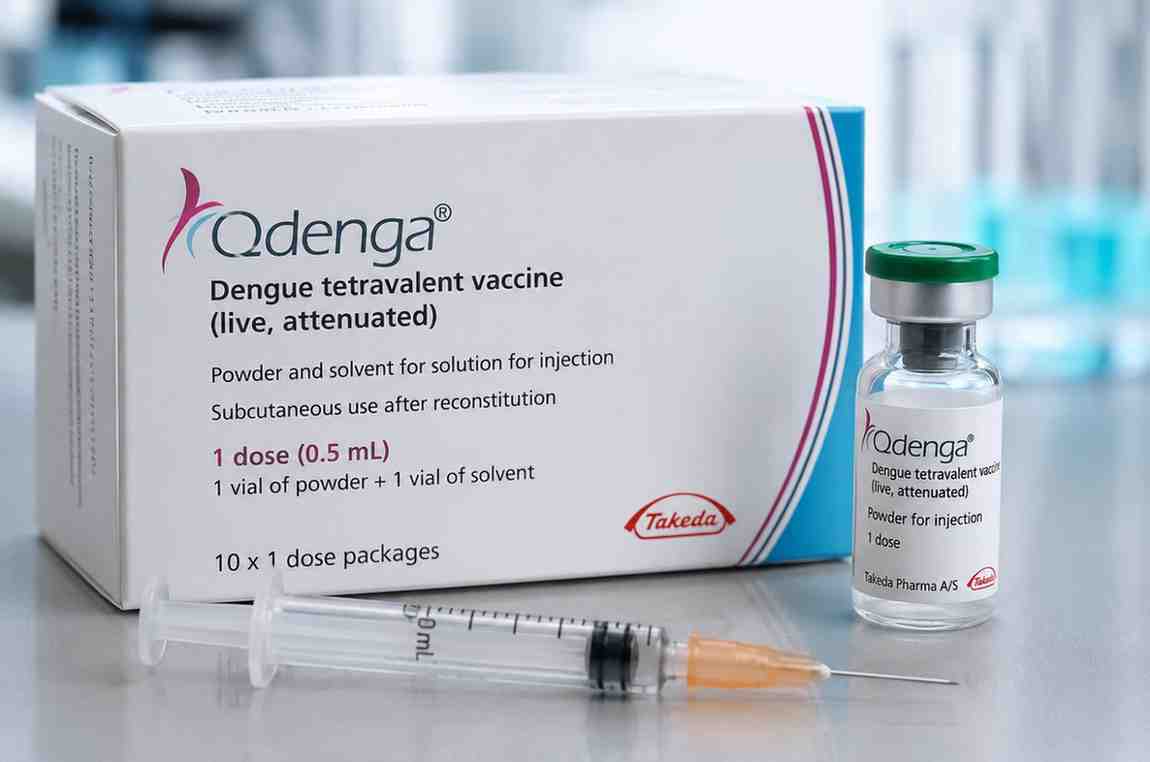
India has approved its first dengue vaccine, marking a significant milestone in the country’s efforts to combat one of its most widespread mosquito-borne diseases. The Drug Controller General of India (DCGI) has granted market authorisation to QDENGA, a vaccine developed by Japanese pharmaceutical company Takeda, making it the first dengue vaccine approved for use in the country.
The approval comes at a crucial time as India continues to witness a growing burden of dengue infections. Health experts believe the vaccine could play an important role in reducing severe illness, hospitalisations and deaths caused by the disease, especially during the annual monsoon season when dengue cases typically surge.
Protection Against All Four Dengue Virus Types
QDENGA is a tetravalent live-attenuated vaccine designed to provide protection against all four known dengue virus serotypes—DENV-1, DENV-2, DENV-3 and DENV-4. This is particularly important because infection with one serotype does not guarantee immunity against the others, and subsequent infections can sometimes result in more severe disease.
Unlike some earlier dengue vaccines, QDENGA can be administered without requiring prior laboratory confirmation of previous dengue infection. This feature is expected to simplify vaccination strategies and improve access for eligible individuals.
Eligible Age Group
According to the approval granted by the Indian drug regulator, the vaccine is authorised for individuals aged 4 to 60 years. The decision follows extensive clinical studies evaluating the vaccine’s safety and effectiveness across different populations.
Clinical evidence has shown that the vaccine offers long-term protection against symptomatic dengue infection and significantly lowers the risk of hospitalisation due to severe dengue.
India’s Growing Dengue Challenge
India remains among the countries most affected by dengue globally. The disease, transmitted by the Aedes aegypti mosquito, has expanded rapidly over the past two decades because of urbanisation, changing weather patterns and increasing mosquito breeding sites.
Every year, thousands of people across several states require hospital treatment during seasonal outbreaks. Public health authorities have long stressed the importance of preventive measures such as mosquito control, elimination of stagnant water and early diagnosis.
The arrival of an approved vaccine adds a new layer of protection alongside these existing public health measures.
Manufacturing Plans for India
Takeda has already partnered with Indian vaccine manufacturer Biological E to strengthen production capacity. Under the collaboration, Biological E is expected to build the capability to manufacture up to 50 million doses annually, supporting both Indian demand and global supply.
The partnership is also aimed at expanding worldwide vaccine production to approximately 100 million doses each year by the end of the decade.
Global Use of QDENGA
QDENGA has already received regulatory approval in 43 countries since its global launch in 2022. According to the company, more than 32 million doses have been distributed worldwide.
Also Read: Iran Claims Strike On US Military Aircraft At Jordan’s Aqaba Airport
The vaccine has been introduced in several dengue-endemic countries where health authorities have incorporated it into disease prevention strategies. Long-term follow-up studies have continued to demonstrate sustained protection against dengue infection and related hospitalisations.
A Step Forward for Public Health
Medical experts have welcomed India’s decision, describing it as an important advancement in dengue prevention. While vaccination alone cannot eliminate dengue, it can significantly reduce the disease burden when combined with effective mosquito control, surveillance and public awareness campaigns.
Experts also caution that people should continue taking preventive measures such as using mosquito repellents, wearing protective clothing, installing window screens and avoiding stagnant water around homes even after vaccination.
Health authorities are expected to issue detailed guidelines regarding vaccine availability, pricing and implementation in the coming months.
Indigenous Vaccine Development Continues
Alongside the approval of QDENGA, India is also progressing with the development of its own indigenous dengue vaccine. An Indian candidate vaccine is currently undergoing advanced clinical trials, reflecting the country’s broader commitment to strengthening its response against dengue.
The approval of QDENGA, however, represents the first time an authorised dengue vaccine will become available in India, offering fresh hope for reducing infections and easing pressure on the healthcare system during future outbreaks.
Click here to join our WhatsApp Channel for real-time news updates and exclusive coverage.