The Ministry of Ayush has issued new Standard Treatment Guidelines (STGs) for managing dermatological disorders across Ayurveda, Siddha, Unani and Homoeopathy, with Yoga also included in the initiative. The guidelines aim to improve consistency in clinical practice, strengthen quality assurance and promote evidence-informed approaches to the management of common skin conditions.
The document, titled Management of Dermatological Disorders for Ayurveda, Siddha, Unani and Homoeopathy, has been prepared by the Ayush Vertical of the Directorate General of Health Services (DGHS), under the Ministry of Health and Family Welfare. It provides system-specific recommendations for prevention, diagnosis, treatment, follow-up and rehabilitation.
The initiative seeks to establish a more structured framework for delivering Ayush-based dermatological care while retaining the distinct principles and practices of each traditional medical system.
Prataprao Jadhav Highlights Integration With National Healthcare
Union Minister of State (Independent Charge) for Ayush and Minister of State for Health and Family Welfare Prataprao Jadhav described the guidelines as an important step towards strengthening the integration of Ayush systems into India’s broader healthcare framework.
According to the minister, the document combines traditional medical approaches with contemporary scientific evidence to support safe, effective and holistic care for common skin disorders.
He said that standardised, evidence-informed clinical practices could contribute to better patient care and reinforce the role of Ayush systems in public health.
The guidelines are intended to provide practitioners with a common reference framework for clinical decision-making, helping promote greater uniformity in the delivery of dermatological services across different healthcare settings.
Psoriasis, Vitiligo and Other Skin Conditions Covered
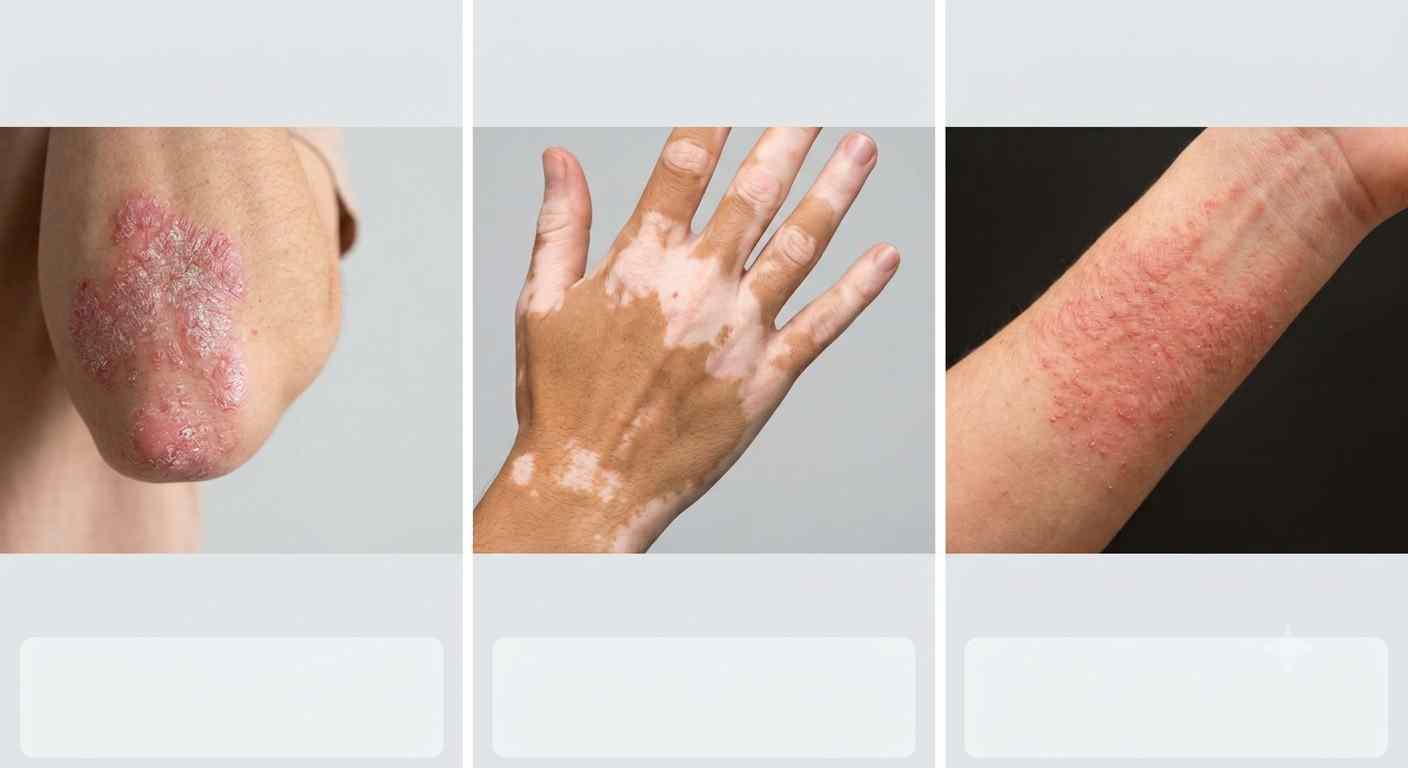
The guidelines address several common dermatological conditions, including psoriasis, vitiligo, dermatitis, urticaria and dermatophytosis.
Psoriasis is a chronic inflammatory skin condition, while vitiligo is characterised by the loss of skin pigmentation. Dermatitis involves skin inflammation, urticaria commonly causes raised, itchy welts, and dermatophytosis refers to fungal infections affecting the skin.
By outlining recommendations for these conditions, the document seeks to support practitioners in assessing patients, planning appropriate care and providing follow-up according to the relevant medical system.
The inclusion of prevention and rehabilitation alongside diagnosis and treatment also gives the guidelines a broader clinical focus.
However, the publication of standard treatment guidelines does not establish that every recommended traditional intervention has been proven effective for every condition. Patients should seek qualified medical assessment, and evidence-based treatment should not be discontinued or delayed without consulting their healthcare provider.
Ayush Secretary Emphasises Standardisation and Evidence
Vaidya Rajesh Kotecha, Secretary of the Ministry of Ayush, said the guidelines represent a significant step towards improving standardisation, quality and evidence-based practice across the Ayush systems.
He noted that the recommendations were developed through expert consultations and an assessment of contemporary scientific evidence. The document provides practical guidance while preserving the fundamental principles of Ayurveda, Siddha, Unani and Homoeopathy.
According to Kotecha, the guidelines are expected to encourage greater consistency in clinical practice and support rational decision-making in patient care.
Also Read | India-Czech Republic Defence Ties Set For Major Boost As Rajnath Singh Meets Karel Havlíček
Standardised guidance can also serve as a reference for practitioners, educators and researchers seeking to improve the quality and organisation of dermatological services.
DGHS Stresses Multidisciplinary Collaboration
Dr. Loveneesh G. Krishna, Director General of Health Services, highlighted the importance of collaboration between different medical disciplines in strengthening healthcare delivery.
He said the guidelines would help promote quality assurance, uniformity and evidence-informed practices across Ayush systems.
The multidisciplinary approach behind the document brings together traditional medicine specialists and experts in modern medicine, with the objective of supporting safe, effective and patient-centred care.
The effort reflects an attempt to combine system-specific knowledge with broader clinical evaluation and practical considerations.
Expert Consultations and Scientific Review Shape Guidelines
The development process involved Ayush Research Councils, senior academic specialists in Ayurveda, Siddha, Unani and Homoeopathy, Yoga experts and modern medicine specialists.
The process included consultations with experts, reviews of classical medical texts, assessments of available contemporary scientific evidence and consensus-based deliberations.
This approach was intended to ensure that the recommendations reflected the distinctive foundations of each Ayush system while taking relevant scientific findings into consideration.
The document’s preparation also involved discussions on how the proposed protocols could be applied in routine clinical practice.
Field-Level Validation Strengthens Practical Application
An important component of the initiative was the field-level validation of the treatment protocols.
The Ayush Vertical worked with the Directorate of Ayush, Government of the National Capital Territory of Delhi, to assess the guidelines in primary and secondary healthcare settings.
Medical Officers participated in testing the protocols and provided feedback on their practical usability. Their observations were incorporated into the final documents to improve clinical relevance and ease of implementation.
Such field-level evaluation can help identify operational challenges before guidelines are used more widely, although continued monitoring and research remain important for assessing clinical outcomes.
Guidelines to Support Training, Research and Healthcare Planning
The guidelines were released on the occasion of the 11th Ayurveda Day, marking another step in the government’s efforts to strengthen standardisation and quality assurance across Ayush healthcare.
Beyond routine clinical care, the documents are expected to support professional training, academic education, research and policymaking. They may also serve as reference material for practitioners, clinicians, researchers and institutions involved in traditional medicine.
The initiative places emphasis on consistent clinical processes, informed decision-making and collaboration among healthcare disciplines.
As implementation progresses, the practical value of the guidelines will depend on their appropriate use, continued evaluation and the quality of evidence supporting individual treatment recommendations. Their broader objective is to provide a more organised framework for managing common skin disorders while strengthening the role of Ayush systems within India’s evolving healthcare landscape.
Click here to join our WhatsApp Channel for real-time news updates and exclusive coverage.