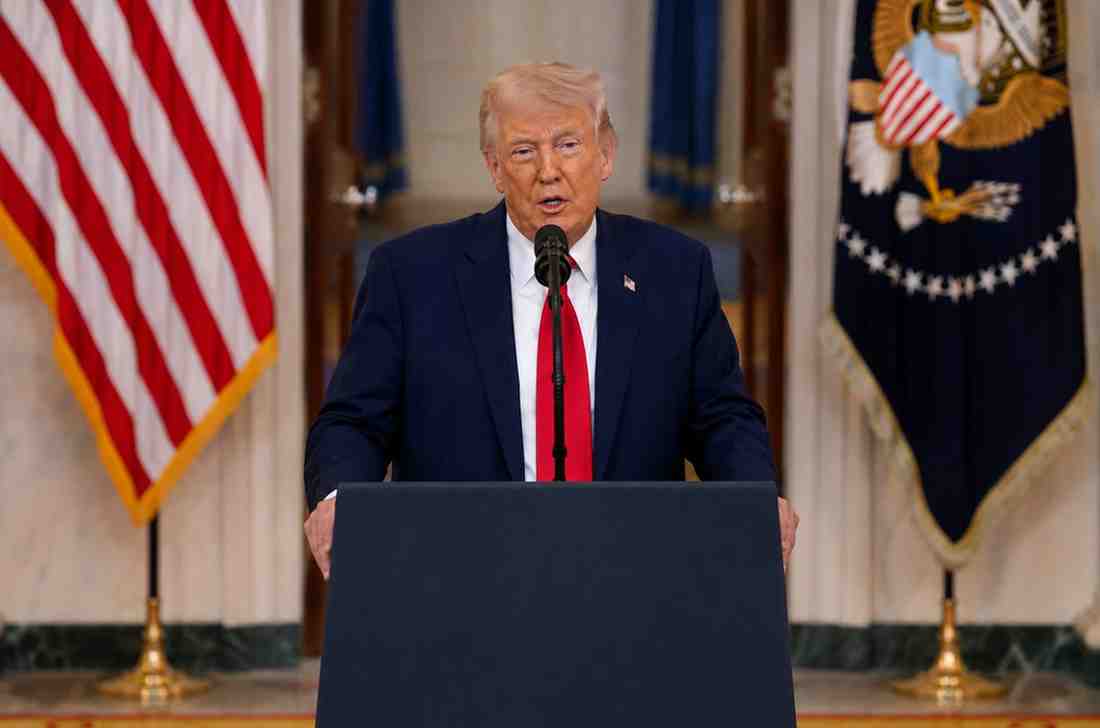
Efforts to end months of tensions and military confrontation between the United States and Iran appeared to move closer to a breakthrough on Saturday, with US President Donald Trump claiming that a peace agreement could be signed on Sunday. However, Iranian officials cautioned that negotiations were still ongoing and that additional time may be required before any final agreement is reached.
In a social media post, Trump stated that the proposed agreement was scheduled to be signed the following day and said the strategically important Strait of Hormuz would be reopened immediately afterward. He also reiterated that the deal would prevent Iran from obtaining nuclear weapons and warned that Washington retained “the ultimate alternative” if Tehran declined to sign the agreement.
The latest developments come after weeks of military escalation, including US strikes on Iranian targets, Iranian attacks on shipping routes, and heightened tensions across the Middle East. Diplomatic efforts led by regional mediators, particularly Pakistan and Qatar, have intensified in recent days in an attempt to secure a lasting settlement.
Pakistan, which has played a key mediating role, expressed optimism that an agreement is closer than ever. Officials involved in the talks indicated that major elements of the proposed framework have been discussed and that negotiators are working through remaining differences.
Despite the optimism from Washington, Tehran has adopted a more cautious tone. Iranian Foreign Ministry spokesperson Esmaeil Baghaei warned against speculation regarding the timing of a final signing, suggesting that while progress has been made, negotiations are not yet complete. Iran’s Revolutionary Guard also pushed back against suggestions that a formal agreement would be finalized immediately, emphasizing that discussions remain ongoing.
According to reports, the proposed understanding could include the reopening of the Strait of Hormuz, one of the world’s most important energy shipping routes. The waterway has been at the center of the crisis, with attacks on commercial vessels and military operations disrupting regional security and global energy markets. The United States has also indicated that it may assist in clearing navigation hazards and restoring safe passage through the strait.
While negotiators appear to have narrowed differences on several issues, significant questions remain regarding Iran’s nuclear programme, sanctions relief, and the future status of enriched uranium stockpiles. Washington maintains that any final arrangement must ensure Iran cannot develop nuclear weapons, while Iranian officials have continued to reject external demands that they consider incompatible with national sovereignty.
The diplomatic push follows a period of renewed military confrontation. Earlier this week, US forces conducted strikes on Iranian targets after an American helicopter was brought down near the Strait of Hormuz. Iran responded with attacks on regional targets and commercial shipping, raising fears of a broader regional conflict.
Even as talks continue, both sides have signaled a willingness to pursue a negotiated outcome. Trump has repeatedly described the emerging agreement as stronger than previous nuclear arrangements, while Iranian officials have acknowledged that discussions have entered an advanced stage. However, the timing and exact terms of any final deal remain uncertain.
With global attention focused on the negotiations, diplomats and observers will be watching closely to see whether the United States and Iran can convert the current momentum into a formal agreement that could ease tensions across the Middle East and restore stability to one of the world’s most critical maritime corridors.
The emerging US-Iran agreement reflects a shift from military escalation toward diplomacy, but major uncertainties remain. While President Trump has projected confidence about a swift deal, Iran’s cautious response suggests that key issues—particularly nuclear restrictions, sanctions relief, and regional security—are still under negotiation. The reopening of the Strait of Hormuz would ease pressure on global energy markets and reduce fears of wider conflict in the Middle East.
However, the gap between public political messaging and the realities of diplomatic bargaining indicates that a final settlement is not yet guaranteed. The coming days will be crucial in determining whether both sides can translate tentative progress into a durable agreement capable of preventing future confrontation.