
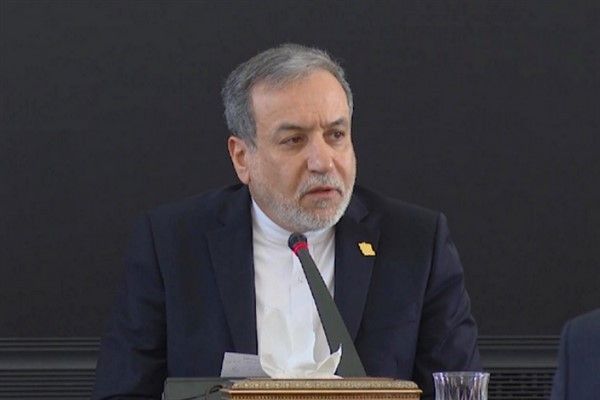
Iran’s Foreign Minister Abbas Araghchi has warned that any fresh Israeli military action against Lebanon or the continued occupation of Lebanese territory would be viewed as a breach of the newly negotiated memorandum of understanding (MoU) between Iran and the United States, a framework aimed at ending the recent conflict involving Iran, Israel and the US.
Speaking during a meeting with ambassadors, chargés d’affaires and heads of international missions based in Tehran, Araghchi outlined key developments surrounding the ongoing diplomatic efforts that seek to transform a temporary cessation of hostilities into a broader and more permanent agreement.
The senior diplomat said the memorandum reached between Tehran and Washington would officially come into force upon its signing on Friday, although political understandings between the parties have already paved the way for the announcement of the end of hostilities.
Iran Announces Progress Towards Formal Peace Arrangement
According to Araghchi, Iran and the United States are preparing to enter a new phase of negotiations designed to establish a comprehensive agreement following the recent conflict.
He explained that the immediate priority was securing an official end to the war and stabilising multiple regional fronts affected by the fighting.
“The first and most important achievement is the declaration that the war has ended,” he said, noting that the announcement was made on Monday morning, based on Tehran’s timeline, after negotiators reached a preliminary understanding.
The foreign minister added that the memorandum itself would become legally operational once formally signed later this week.
Lebanon Emerges as a Central Component of the Agreement
Araghchi emphasised that developments in Lebanon are inseparable from the broader regional conflict involving Iran.
He argued that Israel’s military operations in Lebanon became intertwined with the wider confrontation and therefore had to be addressed as part of any lasting settlement.
According to Iran’s position, ending military activity in Lebanon was considered an essential condition from the beginning of negotiations aimed at ending the war involving Iran.
He said the arrangement effectively links several parties together.
Key Stakeholders Involved Include:
- The United States and Israel on one side.
- Iran and Lebanon’s Hezbollah movement on the other side.
- Regional mediators supporting de-escalation efforts.
Araghchi stressed that any future peace arrangement would remain incomplete if fighting persisted in Lebanon or if Israeli forces maintained their presence in occupied territories.
Tehran Issues Strong Warning Over Future Military Operations
The Iranian foreign minister delivered a clear warning regarding future developments on the Lebanese front. He said that any new Israeli military strikes or continuation of occupation would be interpreted as violating the terms and spirit of the memorandum.
According to Tehran, maintaining stability in Lebanon is directly linked to preserving the broader regional ceasefire architecture. Iran views the Lebanese front not as an independent issue but as an integral component of a comprehensive security arrangement covering multiple theatres of conflict.
Analysts believe such statements indicate Tehran is attempting to create diplomatic safeguards that discourage renewed escalation after months of tensions.
New Negotiations Expected Soon
Araghchi also revealed that another round of talks between Tehran and Washington is expected to begin shortly.
While specific details regarding the agenda were not disclosed, the negotiations are expected to focus on:
- Mechanisms to sustain the ceasefire.
- Regional security guarantees.
- Conflict prevention measures.
- Withdrawal timelines and monitoring arrangements.
- Diplomatic channels for future dispute resolution.
The upcoming discussions could determine whether the current memorandum evolves into a more durable agreement capable of reducing tensions across the Middle East.
Pakistan and Qatar Recognised for Diplomatic Efforts
The Iranian foreign minister also acknowledged the contributions of regional partners that supported mediation efforts throughout the crisis. He specifically thanked Pakistan and Qatar for their constructive roles in promoting peace and stability.
Both countries have increasingly positioned themselves as important diplomatic intermediaries in regional conflicts due to their ability to maintain communication with multiple stakeholders. Iran praised their efforts to encourage dialogue and help prevent further deterioration of security conditions across the region.
Regional Stability Remains Fragile
Despite diplomatic progress, experts caution that the situation remains highly sensitive. The success of the memorandum will likely depend on the willingness of all parties to honour commitments and avoid actions that could reignite hostilities.
Lebanon now appears to have become one of the key indicators of whether the broader Iran-US understanding can survive beyond its initial implementation phase. Any military escalation in southern Lebanon, border disputes or prolonged territorial occupation could rapidly undermine the fragile diplomatic momentum that has emerged.
For now, Tehran is signalling that preserving calm in Lebanon is no longer a separate issue but a core requirement for maintaining the wider peace framework currently under negotiation.