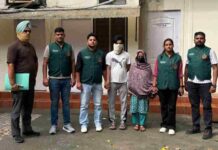
The Enforcement Directorate (ED) has intensified its crackdown on an alleged large-scale illegal organ trafficking network in Kerala, conducting coordinated search operations across multiple locations and uncovering evidence linked to money laundering, forged documents and financial irregularities.
According to an official statement issued by the ED’s Kochi Zonal Office, raids were carried out on June 18 at nine premises across Kerala under the provisions of the Prevention of Money Laundering Act (PMLA), 2002. The operation is part of an ongoing investigation into an organised organ trafficking racket that authorities believe operated across the state for several years.
Investigation Began After Kerala Police FIRs
The money laundering probe was launched after several FIRs registered by Kerala Police revealed the existence of an organised criminal network allegedly involved in illegal organ transplants.
Investigators said the syndicate operated by exploiting the legal framework surrounding altruistic organ donations and medical tourism. Authorities suspect that forged documents and fake identities were systematically used to bypass regulatory mechanisms governing organ transplantation.
The investigation indicates that the network functioned through multiple intermediaries and agents who allegedly connected financially vulnerable donors with recipients willing to pay substantial amounts for organs.
Accused Allegedly Operated Through Medical Tourism Firm
Preliminary findings suggest that the racket was allegedly masterminded by Muhammed Najeeb K and his associate Rasheeda A.A., who reportedly operated through a front company named Kallatharas Medical Tourism Private Limited. Officials believe the illegal activities were carried out between 2021 and 2026.
According to investigators, the accused developed an extensive network of middlemen and agents who targeted financially distressed individuals. Donors were allegedly offered payments ranging from Rs 5 lakh to Rs 15 lakh, while recipients were charged anywhere between Rs 20 lakh and Rs 35 lakh or even higher amounts.
Authorities suspect that significant profits were generated through the difference between what donors received and what recipients ultimately paid.
Forged Documents Used
The ED has alleged that the syndicate relied heavily on forged documents to legitimise illegal transplant procedures. Among the documents reportedly fabricated were altruism certificates, recommendation letters purportedly issued by public representatives, Aadhaar cards, ration cards and several other identity-related records.
Investigators further stated that some of these forged documents were allegedly prepared through local establishments in Ernakulam district. The fake paperwork was then allegedly used to secure approvals required for organ transplantation procedures.
Officials suspect that these forged identities and fabricated relationships between donors and recipients enabled the network to circumvent existing safeguards designed to prevent organ trafficking.
Major Hospitals Under Scanner
The investigation has also focused on illegal transplant procedures allegedly facilitated at prominent hospitals in Ernakulam. Authorities are examining records related to transplant surgeries, including details about donors and recipients, as well as documentation submitted before district-level authorisation committees.
The ED is currently analysing whether proper due diligence protocols were followed and whether officials involved in the approval process were misled through forged submissions. At this stage, investigators have not publicly disclosed the names of any hospitals under scrutiny.
Financial Trail Under Investigation
A key objective of the ED operation is to trace the proceeds of crime generated through the illegal organ trade.
During the searches, officials seized multiple incriminating documents, digital devices and financial records that could help establish money trails connected to the racket. Authorities have also gathered information regarding immovable assets allegedly owned by the accused individuals and their associates.
These assets are now being examined to determine whether they were acquired using funds generated through illegal activities. Officials are simultaneously investigating complex financial transactions to identify how money was moved, layered and potentially concealed.
Bank Accounts Frozen
As part of the enforcement action, the ED has issued freezing orders against several bank accounts linked to agents and intermediaries suspected of facilitating the illegal trade.
Investigators have also obtained banking details of the accused and associated entities.
Financial experts within the agency are analysing transaction histories to trace the movement of funds and identify additional beneficiaries who may have profited from the alleged racket.
The agency believes the financial trail could reveal the broader network involved in the operation.
Investigation Continues
The latest raids represent one of the most significant enforcement actions taken against organ trafficking in Kerala in recent years.
Authorities emphasised that the investigation remains active and that additional searches, summons and legal action may follow depending on the evidence uncovered.
The ED has stated that further investigation is underway to identify all individuals involved, establish accountability and dismantle the larger network behind the illegal organ trade.
The case once again highlights growing concerns surrounding the exploitation of economically vulnerable individuals and the misuse of medical systems for organised criminal activities.