
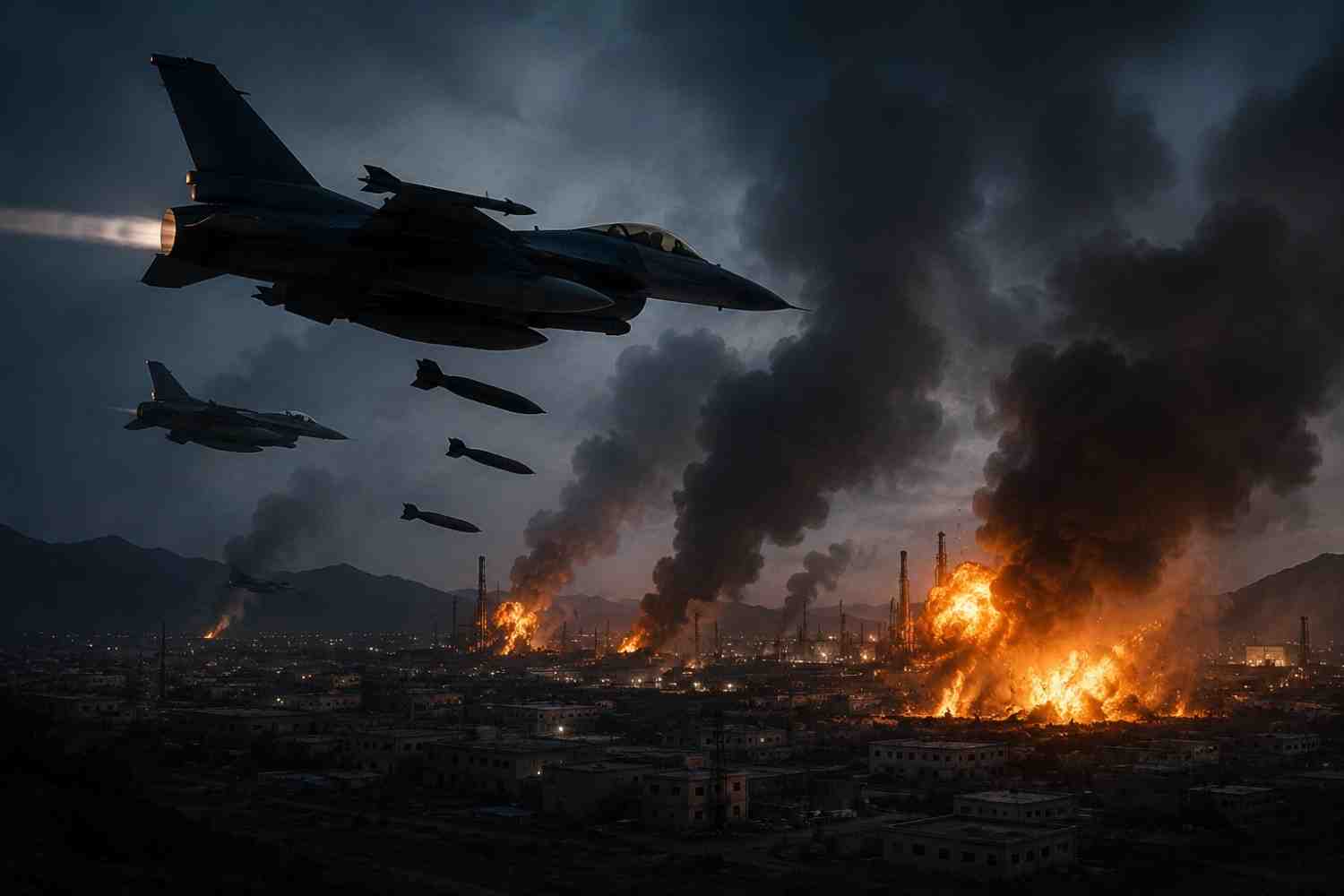
The United States has resumed large-scale air strikes against Iran after accusing Tehran of launching a missile attack on an American military base in Jordan, marking a significant escalation in the ongoing conflict that has gripped the Middle East. The renewed military campaign comes after a brief pause in hostilities that had raised hopes of renewed diplomatic engagement between the two countries.
Fresh Wave of Air Strikes
According to the US military, American forces carried out a coordinated series of strikes lasting nearly two hours, targeting dozens of military installations across Iran. The operation reportedly focused on missile launch facilities, drone infrastructure, command centers, surveillance sites, and other military assets believed to be linked to the Islamic Revolutionary Guard Corps (IRGC).
US Central Command described the operation as a direct response to Iran’s attempted missile attack on American personnel stationed in Jordan. American officials stated that the strikes were carefully planned to weaken Iran’s military capabilities and reduce the threat to US forces and allies operating in the region.
Missile Attack on US Base
The latest escalation followed Iran’s alleged launch of ballistic missiles toward a US military installation in Jordan. According to American officials, air defense systems successfully intercepted the incoming missiles before they could cause significant damage.
Although no major casualties were reported from the attempted strike, Washington viewed the attack as a serious escalation. US President Donald Trump had earlier warned that any attack on American forces would receive a decisive military response, signaling that the United States would not tolerate direct threats to its military personnel in the region.
Trump Signals Strong Retaliation
President Donald Trump defended the renewed military operation, saying Iran had crossed a red line by targeting American troops. The White House maintained that the strikes were intended to deter further attacks while protecting US military interests and regional partners.
Trump had previously indicated that diplomatic efforts remained possible, but stressed that military action would continue if Iran resorted to aggression. Following the missile attack, Washington concluded that a forceful response was necessary to restore deterrence.
Diplomatic Hopes Fade
The latest confrontation has significantly reduced prospects for renewed negotiations between Washington and Tehran. In recent days, regional mediators had attempted to revive indirect talks aimed at easing tensions and addressing disputes over maritime security and broader regional stability.
However, the missile attack and the subsequent American retaliation have pushed both sides further away from diplomacy. Analysts warn that rebuilding trust will become increasingly difficult as military exchanges intensify.
Several international observers fear that the collapse of negotiations could trigger a prolonged period of instability across the Middle East, with broader geopolitical consequences extending beyond the immediate conflict.
Regional Security Concerns Grow
The renewed strikes have heightened concerns among neighboring countries, many of which host American military personnel or strategic installations. Governments across the region are closely monitoring developments amid fears that further retaliation could spread the conflict beyond Iran and Jordan.
Also Read: Bloodshed And Ballots: PoK Polls Spark Fresh Unrest Amid Security Crackdown
Military experts warn that additional attacks on US bases, commercial shipping routes, or energy infrastructure could rapidly widen the confrontation. Strategic waterways, including the Strait of Hormuz, remain under close observation because of their importance to global oil supplies and international trade.
Impact on Global Markets
Financial markets reacted swiftly to the renewed military action. Oil prices climbed sharply as investors worried that escalating tensions could disrupt crude exports from the Middle East. Energy analysts noted that any prolonged conflict involving major oil-producing nations could increase volatility in global energy markets and affect fuel prices worldwide.
Shipping companies and insurers are also assessing the security situation as commercial vessels continue to navigate through sensitive maritime routes in the Gulf region.
Conflict Enters a New Phase
Security analysts believe the latest exchange marks another dangerous chapter in the months-long confrontation between the United States and Iran. Both countries have accused each other of provoking instability while maintaining that their military actions are defensive.
Although Washington insists its operations are aimed at preventing further attacks, Tehran has repeatedly condemned American military action as unlawful and vowed to defend its sovereignty. With both sides showing little willingness to back down, fears of additional military escalation remain high.
The international community is expected to intensify diplomatic efforts in the coming days to prevent the conflict from expanding into a broader regional war. However, with military operations continuing and tensions at their highest level in months, the path toward de-escalation remains uncertain.
Click here to join our WhatsApp Channel for real-time news updates and exclusive coverage.