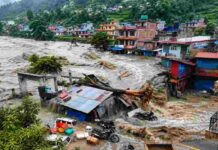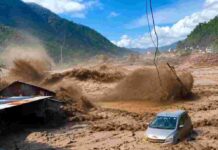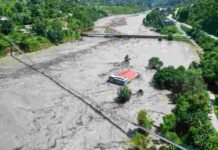
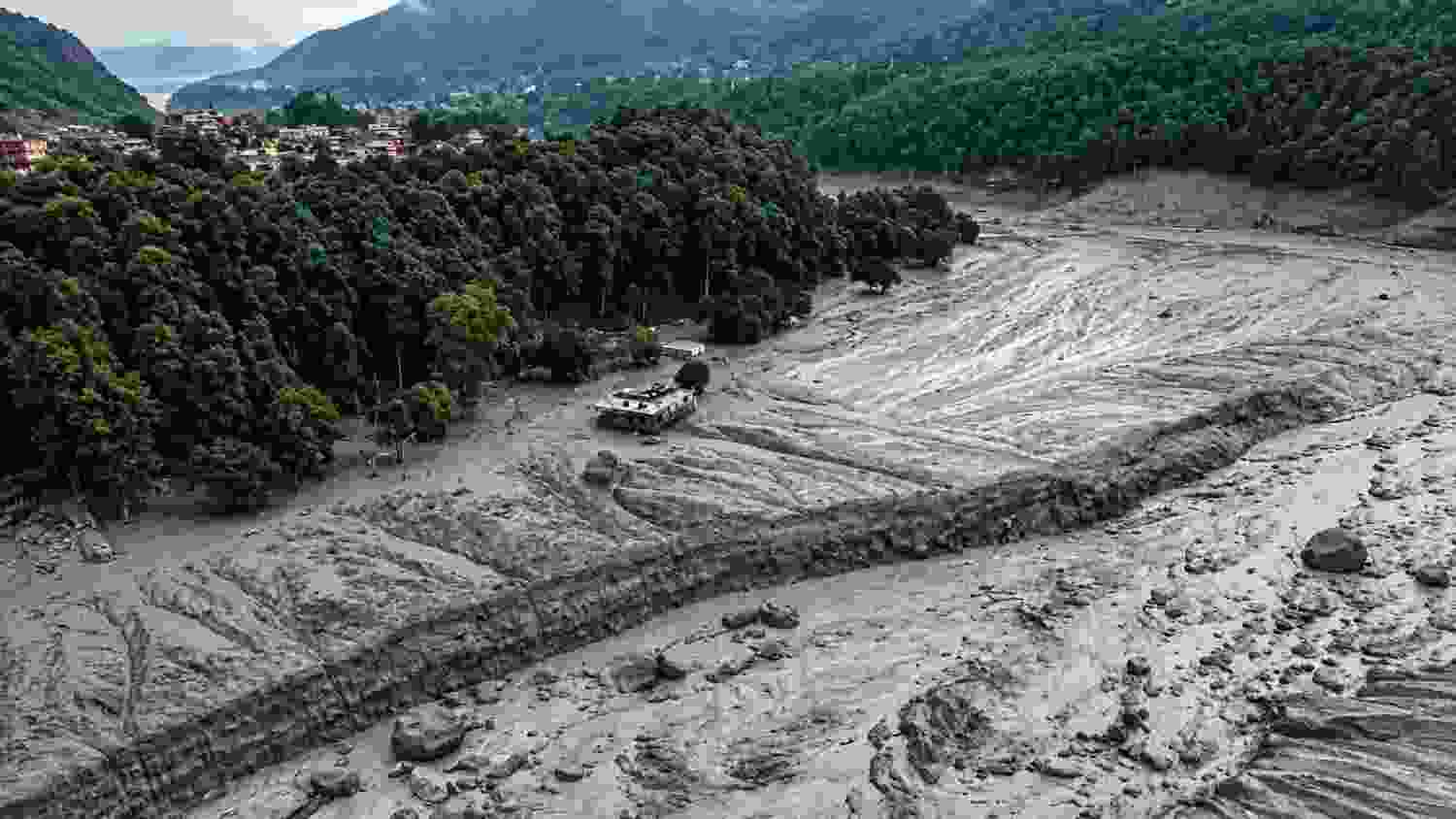
A catastrophic flood disaster in Nepal’s Rasuwa district has taken an even more dangerous turn after a newly formed lake began overflowing, forcing authorities to temporarily halt rescue operations amid fears of another devastating flood surge. The emergency unfolded as the death toll from the Nepal-Tibet border disaster continued to climb and hundreds of people remained missing.
The suspension particularly affected helicopter rescue missions, which have been crucial in reaching remote and badly damaged areas cut off by destroyed roads and bridges. Authorities ordered a temporary pause as a precaution while monitoring water levels and assessing the threat posed by the overflowing lake. Residents in vulnerable locations were also urged to move towards safer, higher ground.
Rising Death Toll Adds to Nepal’s Mounting Disaster
The flash floods that struck the Rasuwa region on Wednesday have developed into one of Nepal’s most devastating recent natural disasters. The latest reports put the death toll in Nepal at around 469, while more than 1,000 people remain unaccounted for. Casualty figures are continuing to change as rescue teams reach isolated locations and recover bodies from debris and flood-hit settlements.
The disaster also affected areas across the border in Tibet, where Chinese authorities reported deaths and hundreds of missing people. The combined scale of the tragedy has raised fears that the final toll could rise significantly as search teams gain access to areas that remain difficult to reach.
Among those missing are local residents, workers, security personnel and foreign nationals. Tourists and pilgrims travelling through the Himalayan region have also been caught up in the disaster, creating an international search effort involving several countries.
Overflowing Lake Creates Fresh Flood Threat
The latest danger emerged after floodwaters and debris blocked natural drainage channels and created a lake in the mountainous region. Rising water levels have now raised concerns about a possible secondary flood, adding another layer of danger for communities already devastated by the initial flash flood.
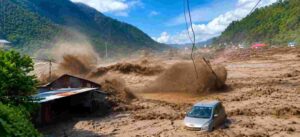
Authorities have been closely monitoring the situation because a sudden release of water could send another powerful surge downstream. The threat has made it difficult for rescue teams to operate safely, particularly helicopters that are being used to evacuate survivors from remote settlements.
The temporary suspension of rescue flights highlights the extremely challenging conditions facing emergency responders. Even as rescuers race against time to find survivors, they must now contend with unstable terrain, rising water levels, damaged infrastructure and the possibility of further landslides and flooding.
Roads and Bridges Destroyed Across Rasuwa
The initial flash flood caused enormous damage to critical infrastructure in northern Nepal. Bridges were swept away, roads were destroyed and several settlements were buried or severely damaged by a violent combination of water, mud, rocks and debris.
Nearly 40 kilometres of roads have reportedly been affected, making ground-based rescue operations extremely difficult. Several communities have effectively been cut off from the rest of the country, leaving helicopters as one of the few viable means of reaching survivors and delivering emergency supplies.
Hydropower infrastructure has also suffered extensive damage. Rescue teams have been working to evacuate people trapped in or around hydropower facilities, while emergency personnel continue searching areas buried under mud and debris.
Nepal Army Intensifies Rescue Mission
The Nepal Army has played a central role in the ongoing rescue operation, deploying helicopters, personnel and other resources to reach stranded people. Hundreds of survivors have already been evacuated from affected areas.
Also Read: Delhi Couple Arrested In Major ISI Spy Case Over Indian SIM Cards Sent To Pakistan
One of the most urgent operations involves people trapped inside a hydropower tunnel. More than 100 people were still reported to be inside the tunnel as rescuers worked to reach them, while hundreds of workers and residents had already been rescued from the wider affected area.
Emergency teams are also using heavy equipment and other search resources to locate people buried beneath collapsed structures and debris.
Families Wait for News as Search Expands
The disaster has left families across Nepal and several other countries desperately waiting for information about missing relatives. Foreign nationals are among those reported missing, with Indians, Americans, Australians, Britons, Canadians and citizens of several other countries affected by the disaster.
The international dimension has increased pressure on authorities to accelerate identification and rescue efforts. However, dangerous weather and the risk of another flood continue to complicate operations.
Humanitarian agencies have warned that the crisis could affect tens of thousands of people. International organisations have begun mobilising emergency assistance, while Nepal continues to coordinate its response through its own security and disaster-management agencies.
Rescue Efforts Face a Race Against Time
The temporary halt in rescue operations has underscored the unpredictable nature of the disaster. Authorities must balance the urgent need to reach survivors with the safety of rescue personnel and vulnerable communities.
As water levels are monitored and the threat from the overflowing lake is assessed, officials are keeping emergency teams ready to resume operations when conditions permit.
For thousands of people affected by the Nepal floods, the immediate priorities remain survival, evacuation, medical assistance and access to food and shelter. But with hundreds still missing and the possibility of another destructive flood surge, Nepal’s Himalayan disaster has entered a critical and deeply uncertain phase.
Click here to join our WhatsApp Channel for real-time news updates and exclusive coverage.