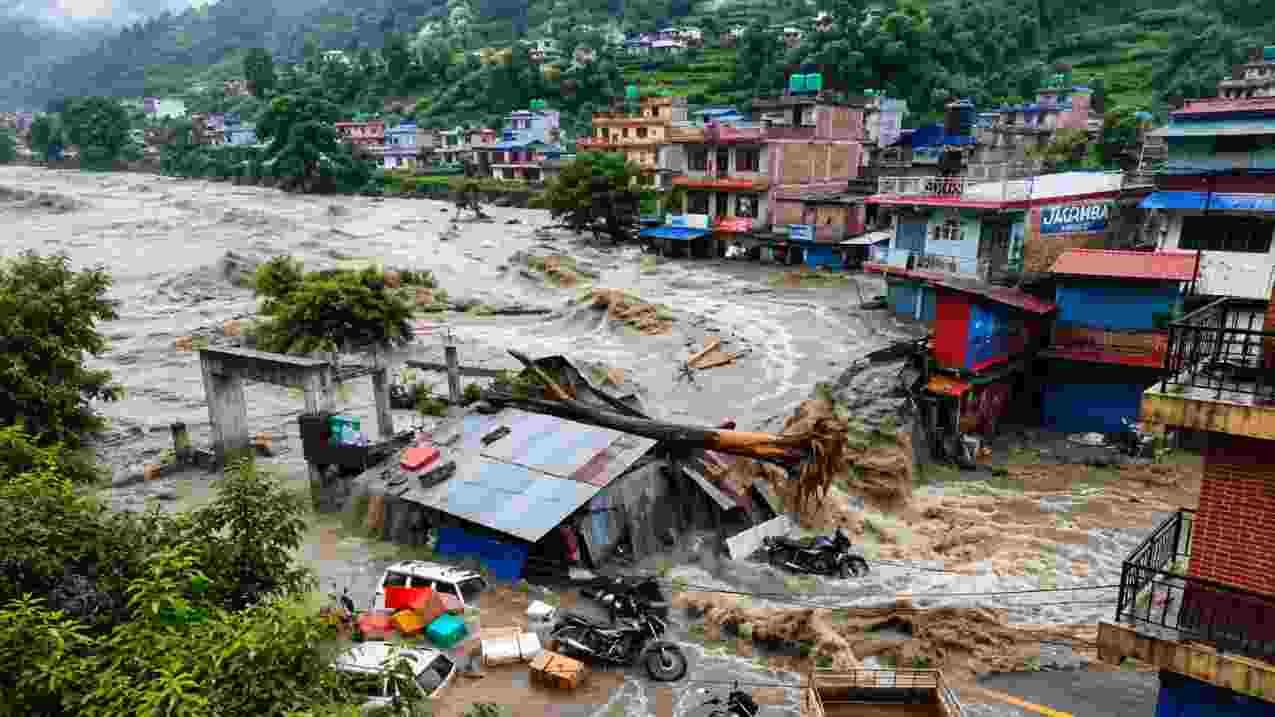
The death toll from the devastating flash floods that swept through Nepal’s Himalayan region has climbed to 270, as rescuers race against time to find more than 1,200 people reported missing in Nepal and Tibet. The catastrophe has triggered a massive search-and-rescue operation while authorities struggle to reach communities cut off by destroyed roads, bridges and communications.
The disaster struck on Wednesday, August 26, along the Bhote Koshi and Trishuli river systems, particularly around Nepal’s Rasuwa district near the Tibet border. A powerful surge of water, mud, rocks and debris swept through settlements and infrastructure, leaving a trail of destruction across the Himalayan region.
Death Toll Climbs Sharply as Rescue Operations Continue
According to the latest reports from Nepal, the number of confirmed deaths has reached 270. Bodies have been recovered from several districts, including Chitwan, Nawalparasi East, Dhading, Gorkha, Rasuwa, Nuwakot and Tanahun.
The rapid increase in fatalities reflects the continuing recovery of bodies from areas downstream from the original flood zone. Earlier official figures had put the toll considerably lower, but rescue and recovery teams have continued discovering victims as floodwaters recede.
The situation remains fluid, with authorities warning that the final toll could rise further as teams gain access to remote and severely damaged locations.
More Than 1,200 People Still Missing
The humanitarian crisis is deepening as more than 1,200 people remain unaccounted for across Nepal and Tibet, according to the latest reports.
A large number of those missing are believed to have been travelling through the region when the sudden flood struck. The affected corridor is used by tourists, trekkers, local residents and pilgrims travelling toward the Nepal-China border and the Mount Kailash region.
Foreign nationals are also among those whose whereabouts remain unknown. Earlier reports indicated that hundreds of foreign tourists were missing, including Indian nationals as well as travellers from countries including the United States, Britain, Australia, Canada and several other nations.
The uncertainty has left families desperately searching for information about relatives who were travelling through the disaster-hit Himalayan corridor.
Glacier Collapse Linked to Catastrophic Flood
Investigations into the cause of the disaster indicate that a glacial collapse and subsequent debris flow triggered the devastating flood.
Initial reports had suggested that an earthquake might have caused the disaster. However, further analysis by the US Geological Survey determined that the seismic signal was associated with a landslide and glacial collapse rather than an earthquake.
Satellite imagery and geological assessments indicated that a large section of glacier and rock collapsed at high altitude, sending an enormous volume of debris into the river system. The resulting blockage and sudden release of water produced a devastating downstream surge.
The flood then travelled through narrow Himalayan valleys, carrying mud, boulders and debris into populated areas.
Roads, Bridges and Settlements Destroyed
The scale of infrastructure damage has made rescue operations extremely difficult.
Floodwaters swept away roads and bridges along major river corridors, while several settlements were inundated or badly damaged. Nepal’s National Disaster Risk Reduction and Management Authority reported damage to dozens of motorable and suspension bridges, along with around 40 kilometres of roads.
Electricity and communications have also been disrupted in affected areas, making it difficult for authorities to establish contact with isolated communities.
The destruction of transportation routes has forced rescue teams to depend heavily on helicopters and other emergency resources to reach stranded residents and tourists.
Security Personnel Among Those Missing
The disaster has also affected Nepal’s security forces.
Also Read: Tragic Kanpur Plane Crash: Pilot And Co-Pilot Killed In Training Aircraft Disaster
According to Nepalese authorities, dozens of personnel from the Nepal Army, Nepal Police and Armed Police Force remain missing after being deployed in flood-affected areas.
Nepal Police has mobilised thousands of personnel for rescue, recovery and disaster-management operations. Search teams are working across multiple locations while attempting to restore communications with isolated security posts.
India Sends Relief as Bihar and UP Remain Alert
India has stepped up its humanitarian response following the disaster. New Delhi has pledged assistance to Nepal, including emergency supplies, medicines and other relief material.
Indian authorities are also closely monitoring the situation because rivers originating in Nepal flow into northern India. Bihar and Uttar Pradesh have been placed on alert, particularly in areas vulnerable to rising water levels in downstream river systems.
The possibility of additional flooding has increased concern among communities living along the Gandak and other rivers connected to Nepal’s river network.
Race Against Time to Find Survivors
Rescue teams are now working under extremely difficult conditions as they search through mud, debris and damaged settlements for survivors and missing people.
Helicopters, security personnel and emergency workers have been deployed, but unstable terrain, destroyed roads and continuing risks along the rivers are slowing operations.
The Nepal floods have become one of the country’s most devastating recent natural disasters, with 270 confirmed deaths and more than 1,200 people still missing.
As authorities continue recovering bodies and searching for survivors, the immediate focus remains on reaching isolated communities, identifying the missing and delivering emergency assistance. With the full extent of the destruction still emerging, officials fear the human cost of the Himalayan catastrophe could rise further.
Click here to join our WhatsApp Channel for real-time news updates and exclusive coverage