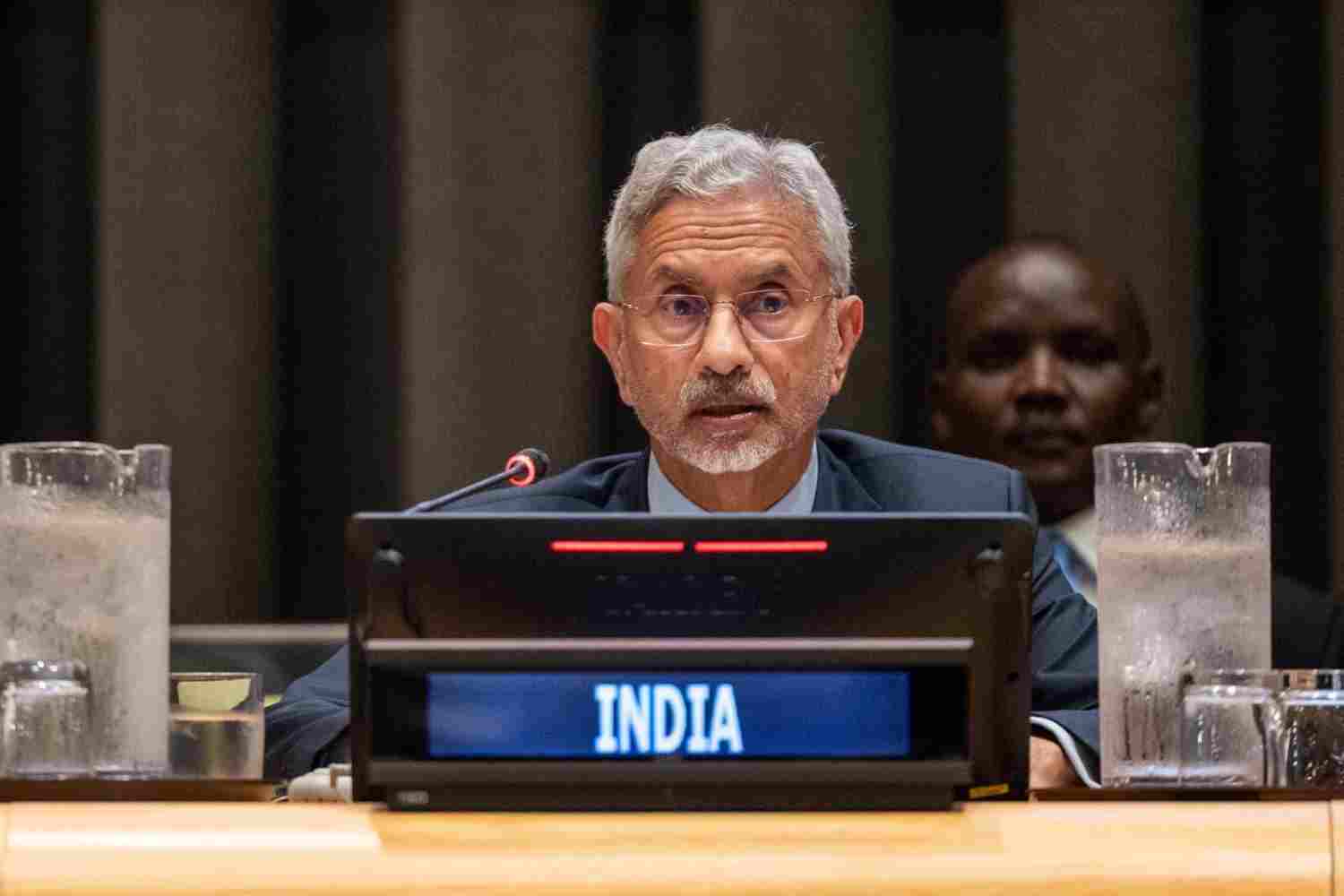
India has renewed its call for reformed, transparent and more inclusive multilateral institutions, with External Affairs Minister S. Jaishankar warning that growing geopolitical competition, conflicts and global disruptions are placing increasing pressure on the international order.
Addressing the inaugural Partners for Multilateralism Summit on the sidelines of the 81st United Nations General Assembly in New York, Jaishankar said the international system is undergoing major structural changes. He argued that strengthening multilateral cooperation is essential to address challenges that increasingly cross national borders.
Jaishankar Warns of Growing Pressure on Global Order
Jaishankar said the world is witnessing a period marked by intensified geopolitical competition, tensions and conflicts. According to him, the continuing transformation of global power dynamics has taken on a more difficult character because of these developments.
He stressed that if such trends continue without effective international cooperation, they could weaken the foundations of multilateralism. India therefore sees stronger cooperation among nations as necessary for maintaining international peace, security and development.
The minister pointed to several areas where collective action remains critical, including peace and international security, climate action, development finance, emerging technologies, counter-terrorism, supply-chain resilience and disaster preparedness.
His remarks came as countries gathered for the high-level week of the 81st UN General Assembly, where reform of global institutions and the future of multilateral cooperation are among the prominent issues under discussion. The UN General Assembly’s current priorities also include renewed multilateralism and institutional reform.
India Calls for Reformed Multilateralism
A central element of Jaishankar’s address was India’s continued advocacy for what it describes as “Reformed Multilateralism.”
He said international institutions need stronger advocacy as well as more effective implementation of multilateral principles. India has consistently argued that global governance structures should better reflect contemporary geopolitical and economic realities.
The Permanent Mission of India to the UN has similarly identified UN reform as a priority for the 81st General Assembly, supporting changes aimed at making the organisation more capable of responding to present-day challenges.
Jaishankar particularly emphasised the importance of more participative deliberations and transparent decision-making. He said greater openness and participation could help strengthen confidence in the UN system and encourage countries to work together on shared challenges.
Focus on Conflicts, Technology and Supply Chains
The Indian minister also highlighted the need for practical responses to immediate global disruptions while longer-term diplomatic solutions continue.
Also Read | Ayurveda Day 2026 Gains Powerful Nationwide Momentum With 9,700+ Activities
He referred to pressures involving fuel, food, fertilisers and finance, arguing that these interconnected challenges require coordinated international responses rather than being allowed to develop independently.
Emerging technologies were another major component of his remarks. Jaishankar called for appropriate international frameworks and safeguards as new technological capabilities create both opportunities and potential risks.
He also stressed the importance of reducing vulnerabilities in global supply chains through diversification and resilience, particularly where disruptions or excessive dependence on strategic chokepoints could affect countries and economies.
International Law Remains Central
Jaishankar underlined the importance of international law, established rules and norms in sustaining an effective multilateral system.
His comments reflect India’s broader position that global institutions need to become more representative and responsive while preserving the principles underpinning international cooperation.
Earlier this year, while launching India’s campaign for a non-permanent seat on the UN Security Council for 2028–29, Jaishankar similarly argued that global governance must become more democratic, representative and effective. India identified contemporary peace and security challenges, technology governance, maritime security, counter-terrorism and climate action among its priorities.
India’s Wider Diplomatic Engagement at UNGA
Jaishankar’s multilateralism push forms part of India’s broader diplomatic engagement during the UN General Assembly’s high-level week.
He has held meetings with foreign counterparts and international leaders on bilateral relations, global conflicts, economic cooperation and multilateral issues. Discussions have included India’s ties with Switzerland, cooperation with Pacific island nation Nauru and the first Visegrad Group-India Foreign Ministers’ Meeting involving Poland, Hungary, Slovakia and the Czech Republic.
The discussions have also covered technology, defence, space, connectivity, mobility and major international developments, including the Ukraine conflict and tensions in the Gulf.
Reform Push Gains Importance Amid Global Uncertainty
India’s latest intervention comes as the UN system faces renewed debates over how global institutions should adapt to changing geopolitical realities.
The UN’s UN80 reform process is also focused on improving efficiency, reviewing mandates and introducing structural changes across the organisation. India has backed an ambitious reform approach aimed at making the UN more capable of addressing contemporary challenges.
Jaishankar’s message at the summit was therefore centred on strengthening cooperation while pursuing institutional reform. For India, the emphasis remains on a multilateral system that is more participatory, transparent and responsive to emerging global challenges.
As geopolitical tensions continue to reshape international relations, India’s call for reformed multilateralism places institutional change, international cooperation and adherence to global rules at the centre of its diplomatic messaging at the 81st UN General Assembly.
Click here to join our WhatsApp Channel for real-time news updates and exclusive coverage.