
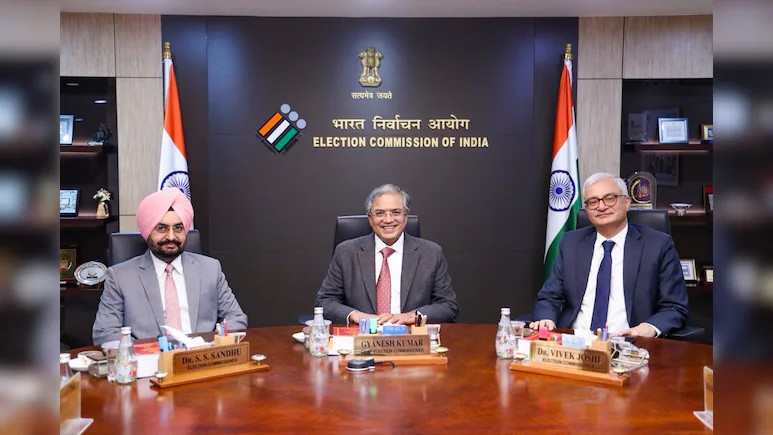
The disclosure of internal government records under the Right to Information (RTI) Act has brought fresh attention to an internal dispute within the Election Commission of India (ECI). The documents reveal that the Cabinet Secretariat forwarded letters written by Election Commissioners Sukhbir Singh Sandhu and Vivek Joshi to Cabinet Secretary T. V. Somanathan to the office of Chief Election Commissioner (CEC) Gyanesh Kumar, as well as to the Department of Personnel and Training (DoPT). The letters reportedly raised concerns about the conduct of senior deputy election commissioner Maneesh Garg.
The development has renewed scrutiny of the administrative handling of complaints involving senior officials at the constitutional body responsible for conducting elections in India.
What the RTI Documents Reveal
According to the records disclosed through the RTI process, the Cabinet Secretariat considered the two communications after they were submitted by Sandhu and Joshi. On August 3, 2024, officials proposed seeking the opinion of CEC Gyanesh Kumar on the representations. A subsequent note dated August 4 recorded that the letters had been sent by the commissioners in their individual capacities rather than as an official communication from the Election Commission as a whole.
The records also indicate that the Cabinet Secretariat ultimately sent acknowledgements confirming receipt of the letters. These acknowledgements, dated August 5, were copied to officials in the DoPT and the principal private secretary to the CEC.
The disclosure provides a clearer picture of how the matter was handled administratively, although the forwarding of the letters does not, by itself, establish the validity of the allegations against the officer concerned.
Why Did the Election Commissioners Write to the Cabinet Secretary?
The controversy centres on a work-allocation order reportedly issued by Maneesh Garg, a senior deputy election commissioner. According to reports on the dispute, the order was issued without prior consultation with the commissioners or the officers concerned.
Sandhu and Joshi reportedly objected to the manner in which responsibilities were reassigned. Their concerns included whether the changes could affect administrative oversight of the Election Commission’s information technology systems and the management of electoral-roll-related functions.
The issue attracted attention because electoral databases and associated systems play an important role in maintaining and updating voter lists. Any changes to responsibilities involving these systems can raise questions about administrative accountability, oversight and compliance with established procedures.
The dispute, however, should be distinguished from allegations concerning the conduct of elections themselves. The available documents primarily concern internal administration and the handling of representations against an official on deputation to the poll body.
Cabinet Secretariat Cites Constitutional Autonomy
A key aspect of the matter is the Cabinet Secretariat’s consideration of the Election Commission’s constitutional status and independence.
The internal notes reportedly indicated that the commissioners’ letters could not automatically be treated as a formal representation by the entire Commission. Officials expressed concern that taking action solely on the basis of individual communications, without an official submission from the institution as a whole, might be interpreted as interference in the functioning of a constitutional body.
This position reflects the distinction between the individual responsibilities of election commissioners and decisions taken collectively by the Commission under its governing framework.
The Cabinet Secretariat’s approach was therefore to acknowledge the representations and bring them to the attention of the relevant authorities rather than immediately initiating action on the basis of the letters alone. The records do not establish that the allegations against Garg were proven, nor do they indicate that the forwarding of the communications amounted to a formal finding of misconduct.
Election Commission’s Earlier Clarification
The Election Commission had previously addressed the controversy in a public clarification issued on September 26, 2026. It stated that the letters sent to the Cabinet Secretary were related to the functioning of an officer on deputation and did not concern a policy matter of the Commission or its information technology division.
The poll body also maintained that the disputed work-reallocation orders were not implemented after Sandhu and Joshi intervened. It said that oversight of the IT division by the relevant deputy election commissioner had not actually been withdrawn.
Also Read | India-China Border: ITBP Chief Reveals Shaurya Commandos’ Preparedness In Arunachal Pradesh
This clarification is significant because it presents the Commission’s official position on the practical consequences of the disputed order. It also separates the administrative disagreement from claims that changes had already altered the functioning of the electoral-roll management system.
The latest RTI disclosure adds details about the subsequent movement of the commissioners’ letters through government offices, complementing the earlier public explanation.
Why the Disclosure Matters
The latest revelations place transparency and institutional accountability at the centre of the debate. RTI disclosures can help establish how official representations were received, processed and communicated between government departments, even when they do not settle the underlying allegations.
In this case, the documents clarify that the Cabinet Secretariat considered the two commissioners’ communications, discussed seeking the CEC’s views and forwarded the letters to relevant offices. They also indicate that the Secretariat treated the representations cautiously because they were not submitted as a formal communication from the Commission collectively.
The matter is likely to remain of public interest because the Election Commission plays a central role in administering elections and maintaining public confidence in the electoral process. Its internal procedures, administrative decisions and mechanisms for resolving disagreements are therefore subject to legitimate scrutiny.
At the same time, the distinction between a documented administrative dispute and established wrongdoing remains essential. The RTI records shed light on the handling of the letters, but the allegations against the officer must not be treated as proven solely on the basis of those documents.
The disclosure ultimately offers a more detailed account of the administrative trail involving Sandhu, Joshi, the Cabinet Secretariat, DoPT and CEC Gyanesh Kumar. It also underscores the importance of clear procedures for addressing disagreements within constitutional institutions while preserving their independence and accountability.
Click here to join our WhatsApp Channel for real-time news updates and exclusive coverage.