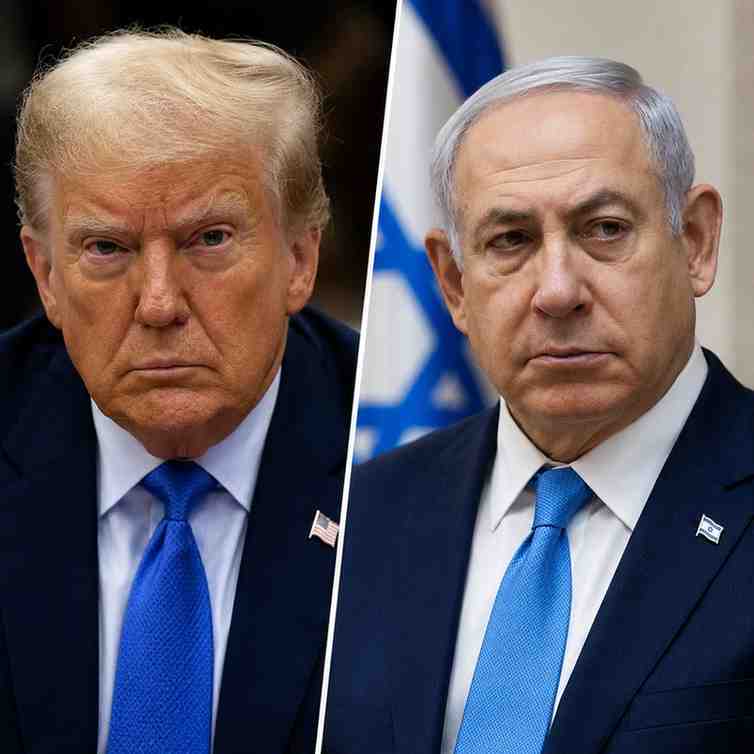
A rare public disagreement has emerged between US President Donald Trump and Israeli Prime Minister Benjamin Netanyahu over Israel’s military operations in Lebanon, signalling potential cracks in one of the world’s most closely watched alliances.
Trump’s Unusual Remark Draws Attention
Speaking about the ongoing tensions in Lebanon, Trump said the United States sometimes has to keep Netanyahu “a little bit sane,” a surprisingly direct criticism of a leader he has long supported. The comment reflects increasing frustration within Washington over Israel’s military approach and its potential impact on wider regional diplomacy.
Trump maintained that he still has a good relationship with Netanyahu but suggested that Israel needs to exercise greater restraint in dealing with security threats originating from Lebanon.
Lebanon At The Centre Of The Dispute
The disagreement centres around Israel’s military campaign against the Iran-backed group Hezbollah in Lebanon. While Israel argues that its actions are necessary to protect its borders, the US administration fears prolonged military operations could destabilise the region further and derail diplomatic efforts involving Iran.
Trump has repeatedly urged Netanyahu to adopt a “softer touch” rather than responding with overwhelming force to every perceived threat. He criticised the destruction caused by some Israeli strikes and warned that excessive military action could isolate Israel internationally.
Ceasefire Efforts Add To The Tension
The latest comments come after the United States helped broker ceasefire efforts between Israel and Hezbollah. According to American officials, these diplomatic efforts were designed to create conditions for broader talks involving Iran and to reduce instability across the Middle East.
However, maintaining the ceasefire has proven difficult. Violent clashes have continued intermittently despite agreements being announced, raising concerns about whether all parties are fully committed to de-escalation.
Trump has publicly taken credit for helping reduce hostilities and has insisted that diplomacy remains the preferred route instead of prolonged military confrontation.
Growing Differences Between Allies
Although Trump and Netanyahu have traditionally presented a united front against Iran, recent developments have exposed significant policy differences.
Trump appears increasingly focused on preventing another long-term regional conflict that could damage global markets and complicate ongoing diplomatic initiatives. Netanyahu, meanwhile, continues to prioritise eliminating Hezbollah’s military capabilities and insists Israel will independently decide its security actions.
These differing priorities have generated friction between the two leaders in recent weeks.
Previous Heated Exchanges
This is not the first time tensions between Trump and Netanyahu have surfaced publicly.
Earlier reports indicated that Trump held intense conversations with the Israeli leader over Lebanon, expressing anger over escalating military operations that threatened diplomatic negotiations involving Iran. Trump later confirmed he had strongly criticised Netanyahu, though he insisted their overall relationship remained intact.
Several media reports have described increasingly candid exchanges between the two leaders as Washington attempts to balance support for Israel with broader regional stability goals.
Iran Diplomacy Complicates The Situation
A major factor influencing Trump’s position is his administration’s ongoing efforts to engage with Iran through a temporary diplomatic framework.
The United States views stability in Lebanon as essential for future negotiations with Tehran, including discussions surrounding nuclear issues, maritime security and broader regional peace arrangements.
Any renewed escalation between Israel and Hezbollah could jeopardise these talks and undermine months of diplomatic efforts.
Regional Impact Remains Significant
The conflict’s consequences extend far beyond Lebanon and Israel. Persistent instability has already affected international energy markets, disrupted trade routes and raised fears of a broader Middle East confrontation involving multiple countries.
Global leaders continue to push for restraint, warning that additional escalation could have severe economic and humanitarian consequences.
Trump’s public criticism of Netanyahu marks a significant diplomatic moment because it signals that unconditional political alignment may be giving way to strategic disagreements. While both leaders remain partners, Washington appears increasingly focused on diplomacy and regional stability, whereas Israel remains committed to aggressive security operations. How these differences evolve could shape the future of Middle East politics in the coming months.