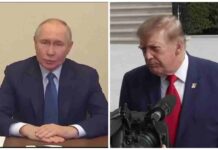

The United States and India appear to be moving closer to a breakthrough in their long-running trade negotiations, with US President Donald Trump expressing optimism about an agreement and suggesting that the proposed pact could differ significantly from previous trade arrangements. His remarks came as US Secretary of State Marco Rubio visited India for high-level discussions aimed at strengthening bilateral economic and strategic ties.
Speaking to reporters at the White House on Tuesday, Trump indicated that both countries were interested in reaching an agreement and that negotiations had progressed considerably. His comments have renewed expectations that New Delhi and Washington could resolve outstanding trade differences after months of discussions over tariffs, market access and broader economic cooperation.
The developments are significant for both countries, as the proposed agreement could influence bilateral commerce, investment flows, energy partnerships and the future direction of one of the world’s most important strategic relationships.
Trump Signals Progress, Hints at a Different Trade Agreement
Trump’s latest remarks conveyed confidence that the negotiations were approaching their final stage. He indicated that India and the US were close to reaching an understanding but offered few details about the structure or specific provisions of the proposed agreement.
The US President also suggested that the agreement could be a substantially different kind of deal from those previously concluded by Washington. However, he did not explain what changes might distinguish the proposed arrangement or whether they would involve tariffs, market access, investment commitments or other economic provisions.
The comments come against the backdrop of sustained negotiations between the two governments to establish a framework that addresses their respective economic priorities. Both sides have sought to maintain momentum despite disagreements over trade policies and other bilateral issues.
In February 2026, India and the United States announced a framework for an interim trade agreement. Subsequent discussions have focused on moving the arrangement towards completion, with officials from both countries indicating that progress has been made.
A final agreement could provide greater clarity for businesses, exporters and investors operating across the two markets. Nevertheless, the precise terms, implementation schedule and final approval process remain subject to negotiations and official announcements.
Marco Rubio Says India-US Trade Deal Is ‘Very, Very Close’
Rubio has also expressed strong optimism about the negotiations, reinforcing Trump’s assessment that the agreement is nearing completion. During his visit to India, the US Secretary of State said the two countries were close to finalising the deal, with only a limited number of issues remaining unresolved.
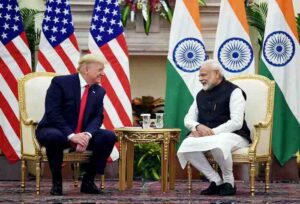
He indicated that the outstanding matters could be addressed soon, raising the possibility of an announcement in the near future, followed by a formal signing by the two countries’ leaders.
Rubio’s comments followed a meeting with External Affairs Minister S. Jaishankar in Mumbai on Tuesday. The discussions covered trade, energy, technology, defence and people-to-people relations, alongside regional developments affecting both countries.
The meeting highlighted the importance Washington and New Delhi attach to their strategic partnership, even as differences over trade and other policy matters continue to present challenges.
Russian Oil Sanctions and Tariff Uncertainty
The trade negotiations have been closely linked to disagreements over India’s purchases of Russian oil. Washington’s earlier tariff and sanctions proposals had raised concerns about the potential impact on Indian exports and the wider economic relationship.
The situation shifted after Trump waived certain Russia-related sanctions and tariff measures under the Lindsey O. Graham Sanctioning Russia and Iran Act of 2026. The decision eased immediate pressure on India and could provide additional room for both governments to advance their trade discussions.
The proposed legislation had threatened to expose countries purchasing Russian oil and gas to substantial additional tariffs, potentially reaching 100% in certain circumstances. India, among the major buyers of Russian crude, faced considerable uncertainty over the implications for its trade with the United States.
However, the waiver does not necessarily eliminate the underlying risks. The measures have been deferred, leaving Washington with the ability to reconsider its approach. The future treatment of Russian energy purchases therefore remains an important consideration in India-US economic relations.
India-US Energy and Defence Cooperation in Focus
Beyond trade, Rubio’s visit has placed energy security and defence cooperation at the centre of discussions between the two countries.
During his meeting with Jaishankar, Rubio encouraged India to expand energy trade and increase purchases of American technologies and systems. The discussions reflect Washington’s interest in deepening commercial ties while strengthening strategic cooperation with New Delhi.
Rubio has also highlighted India’s capabilities in crude oil refining, including the potential for Indian companies to process more Venezuelan crude as supplies become available. He was expected to discuss the issue with Reliance Industries, which operates a major refining complex in Jamnagar, Gujarat.
Also Read | India Hits Back At UN Over Protest Crackdown, Warns Against Selective Targeting
Such cooperation could create additional commercial opportunities while supporting efforts to diversify energy supplies. However, any expansion would depend on commercial decisions, supply conditions and the broader international energy environment.
What the Potential Trade Deal Means for India
A completed agreement could provide fresh momentum to India-US economic relations by improving predictability for businesses and establishing clearer conditions for bilateral trade. It could also strengthen cooperation in areas such as advanced technology, energy, manufacturing and defence.
For Indian exporters, the final terms will be particularly important in determining the agreement’s practical benefits. Market access, tariff treatment and the competitiveness of Indian products will help establish whether the proposed pact delivers meaningful gains.
Indian officials have also emphasised that the agreement must preserve the country’s economic interests. Commerce and Industry Minister Piyush Goyal said last week that the first tranche of the bilateral trade agreement had been finalised and was undergoing legal drafting, with further work required before it could be operationalised.
Final Agreement Remains the Key Test
Trump’s latest comments and Rubio’s positive assessment suggest that India and the United States are seeking to overcome the remaining obstacles to a trade agreement. The diplomatic engagement also demonstrates that both sides are keen to sustain cooperation despite differences over tariffs, energy purchases and other policy matters.
However, expressions of confidence should not be mistaken for a completed deal. The agreement’s final provisions, formal approval and implementation arrangements have yet to be established publicly.
For now, the focus remains on resolving the outstanding issues and translating the positive signals from Washington and New Delhi into a concrete agreement. If successfully concluded, the pact could mark an important step towards rebuilding trade confidence and expanding the strategic partnership between the two countries.
Click here to join our WhatsApp Channel for real-time news updates and exclusive coverage.