
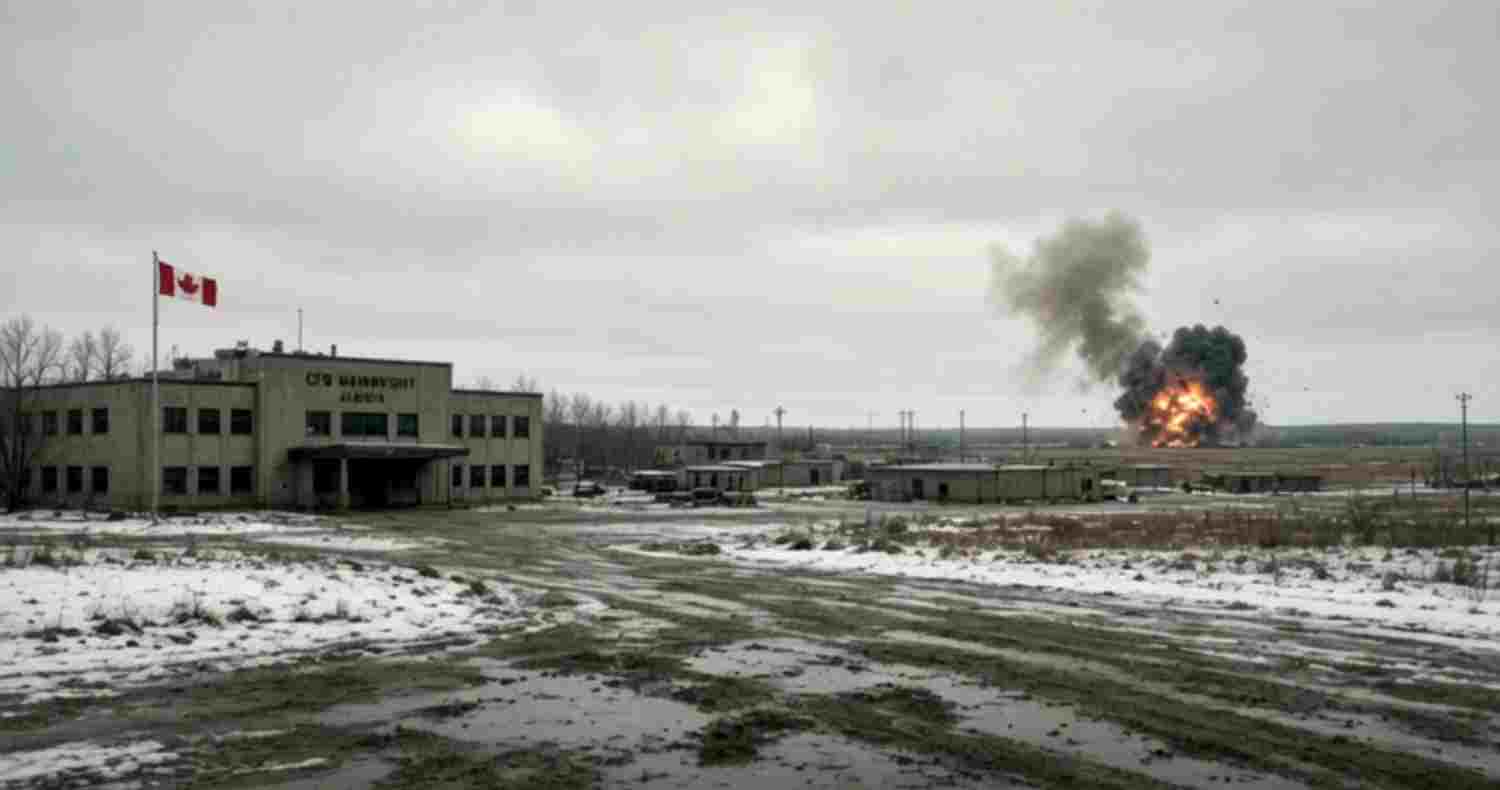
Canada is mourning the deaths of four service members after a sudden and rapidly spreading grass fire swept through a military training area at Canadian Forces Base (CFB) Wainwright in Alberta. The incident, which occurred on Saturday, October 17, has raised serious concerns about the dangers posed by extreme weather conditions during military exercises.
According to officials, 39 people were taken to hospitals following the incident. Of these, 19 were reported to be in critical condition, while eight were listed as stable and 12 were receiving treatment for less serious injuries.
The fire erupted while soldiers were participating in an intensive combat training exercise involving live ammunition. The situation deteriorated dramatically when strong winds changed direction and pushed the flames towards personnel operating in the training area.
Canadian Prime Minister Mark Carney described the incident as one of the worst peacetime tragedies experienced by the country’s armed forces on Canadian soil. The loss has prompted an outpouring of condolences and renewed attention to the risks faced by military personnel during training operations.
Four Soldiers Identified After Tragic Fire
Military officials identified the four deceased service members as Sergeant Morgan Wong, Private Shaun Farrell, Private Aidan Goulding and Private Hayden Lykkemark.
Their families have been informed of their deaths, according to officials. The victims were serving members of the Canadian Armed Forces, and their deaths have deeply affected the military community.
The incident also left dozens of personnel injured, with several requiring urgent medical assistance. Emergency services worked to transport casualties from the base to hospitals across Alberta as medical teams prepared to handle a large influx of patients.
The severity of the injuries highlighted the speed with which the fire overwhelmed the training area. Military officials said the sudden change in conditions left personnel with very little time to respond once the flames advanced towards them.
Sudden Wind Shift Fuelled Rapid Spread of Flames
Major General Wade Rutland, commander of the Canadian Army’s 1st Canadian Division, described the fire’s rapid development as an extraordinary event.
According to officials, the blaze began as a smouldering grass fire in the training area. Although the fire had been observed earlier, personnel believed it was sufficiently contained for training activities to continue. The situation changed when powerful winds shifted direction and drove the flames towards the soldiers.
Wind speeds reportedly reached approximately 96 kilometres per hour, dramatically accelerating the fire’s movement across the dry prairie landscape.
Rutland said the flames advanced at an exceptionally high speed, covering approximately one kilometre in less than a minute under the changing conditions.
The rapid spread caught personnel off guard and created a dangerous situation for soldiers participating in the exercise. Officials described the event as an uncommon and exceptionally fast-moving fire.
The precise circumstances that caused the initial grass fire remain under investigation. Authorities have not yet established a definitive explanation for how it began.
High-Intensity Combat Exercise Underway
The training involved Charlie Company of the 3rd Battalion, Princess Patricia’s Canadian Light Infantry. Approximately 85 soldiers were participating in the exercise, which included live-fire combat drills designed to prepare troops for demanding operational situations.
Personnel were divided between a grenade range and an area where they practised attacks on simulated enemy positions. The fire spread into the second training area, exposing soldiers to the advancing flames.
The battalion had been preparing for rapid deployment in response to international crises, including a planned mission to reinforce Canadian forces in Latvia in the coming spring.
The exercise was intended to strengthen operational readiness and prepare troops for deployment under challenging conditions. However, the sudden fire transformed the training operation into a major emergency.
The incident has raised questions about how quickly conditions can change during outdoor military exercises, particularly when high winds combine with dry vegetation and active training activities.
Emergency Teams Launch Major Rescue Operation
Military and civilian emergency responders were mobilised to assist injured personnel and contain the blaze. Ambulances transported casualties to medical facilities in Wainwright, Edmonton, Calgary and Red Deer.
Air ambulance services and military aircraft also supported the emergency response. Hospitals in the region prepared for a surge in patients, and a mass-casualty alert was issued to coordinate medical resources.
The response involved considerable coordination between military personnel, local emergency services and healthcare providers. Medical teams worked to stabilise seriously injured patients while emergency crews continued efforts to control the fire.
Authorities also monitored the spread of the blaze beyond the military training grounds. Officials reported that the fire crossed established firebreaks, prompting further firefighting efforts alongside municipal authorities.
The scale of the emergency placed significant pressure on local healthcare services, underlining the importance of coordinated disaster response when large numbers of people are injured simultaneously.
Prime Minister Mark Carney Orders Flags at Half-Mast
Prime Minister Mark Carney expressed profound sorrow over the deaths and extended his condolences to the families, friends and colleagues of those who lost their lives.
He characterised the incident as one of the most serious peacetime tragedies to affect Canada’s military on home soil. In a gesture of national mourning, he ordered flags on federal government buildings to be flown at half-mast.
Carney also pledged support for the injured personnel and their families as they confront the consequences of the disaster.
Alberta Premier Danielle Smith also acknowledged the seriousness of the incident, while military officials continued to provide information about casualties and the ongoing response.
The tragedy has drawn attention to the sacrifices made by armed forces personnel, including the risks they face during training exercises intended to prepare them for operational duties.
Investigation Underway Into Cause of the Fire
Authorities are investigating the circumstances surrounding the incident, including the initial ignition of the grass fire and the conditions that allowed it to spread so quickly.
Also Read | Tiger Shroff Shooting Case: Lawrence Bishnoi Gang Threat Triggers Massive Mumbai Police Manhunt
Military officials have indicated that the investigation will examine the sequence of events and the factors contributing to the fire’s rapid movement. They have also said initial assessments do not indicate that damage to oil and gas infrastructure or outside interference caused the incident.
A definitive conclusion is not expected immediately, and investigators will need time to establish what happened.
CFB Wainwright is a major Canadian military installation used for combat training and operational preparation. Its training facilities support exercises designed to prepare Canadian troops for domestic responsibilities and international deployments.
The deadly fire has left four families grieving, dozens of service members facing medical treatment and the Canadian Armed Forces confronting a devastating loss.
As the investigation continues, the immediate priorities remain the recovery of injured personnel, support for the bereaved families and a thorough examination of the circumstances that turned a routine training operation into a fatal emergency.
The findings could help authorities determine whether additional precautions are needed to reduce the risk of similar incidents during future military exercises.
Click here to join our WhatsApp Channel for real-time news updates and exclusive coverage.