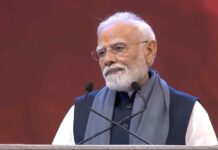
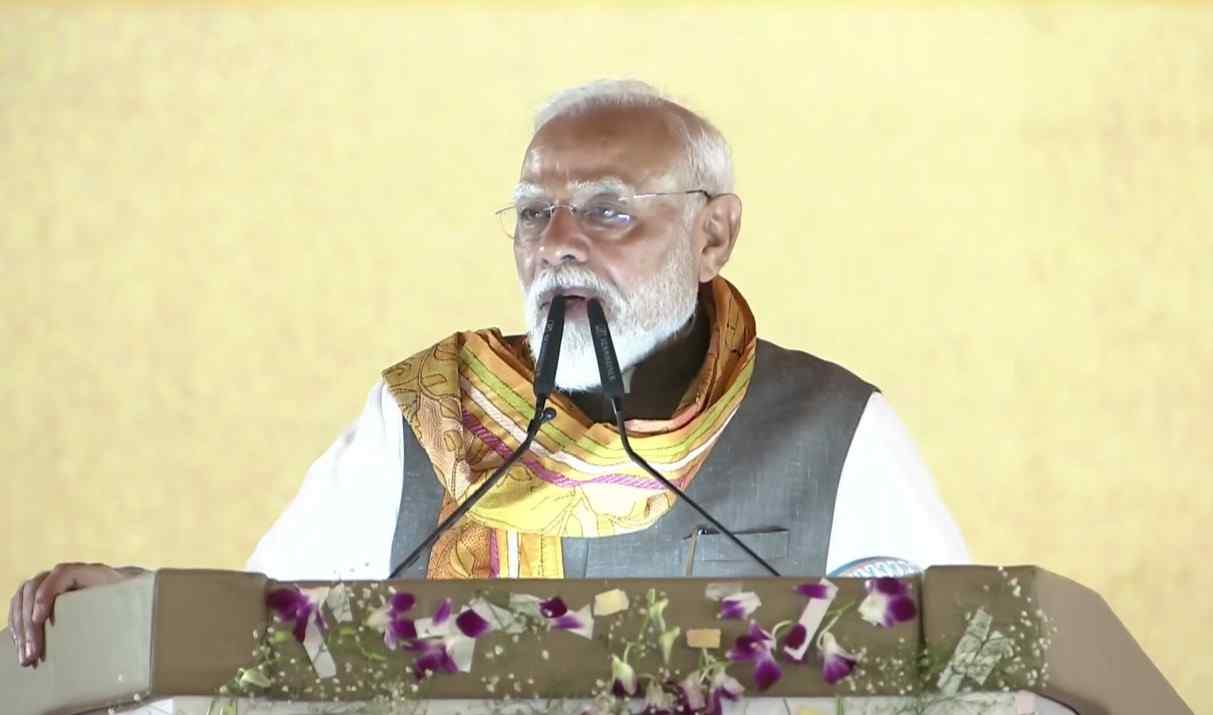
KOLKATA: Prime Minister Narendra Modi used the occasion of Paschimbanga Divas to revisit one of the most debated chapters in India’s history, asserting that West Bengal exists today because of the efforts of Shyama Prasad Mukherjee. Addressing a gathering in Tarakeswar, Hooghly district, Modi claimed that attempts were once made to merge the entire Bengal region with Pakistan, but those efforts were ultimately defeated through determined resistance.
His remarks brought the spotlight back on the political developments surrounding India’s Partition in 1947 and reignited discussions about Bengal’s historical identity, territorial integrity and the role of various leaders during that turbulent period.
Modi Targets Congress Over Partition-Era Decisions
During his address, the Prime Minister launched a strong attack on Congress, alleging that political compromises made before independence could have drastically altered India’s eastern geography.
According to Modi, there were serious attempts to separate Bengal from India and align it with Pakistan. He said Congress leadership failed to adequately protect Bengal’s interests during a crucial period in history.
PM Modi argued that millions of people living in present-day West Bengal would have faced an entirely different reality had those plans succeeded. He described June 20 as an important day that symbolises Bengal’s choice to remain part of India.
The Prime Minister said citizens should remember this date not merely as a historical event but as a reminder of the sacrifices and struggles that shaped modern India.
Shyama Prasad Mukherjee’s Role Highlighted
A major focus of Modi’s speech was the contribution of Shyama Prasad Mukherjee, one of Bengal’s most influential political figures. The Prime Minister credited Mukherjee with mobilising public opinion and campaigning for the creation of a separate West Bengal within the Indian Union.
He said Mukherjee understood the dangers posed by Partition-era proposals and worked tirelessly to protect Bengal’s cultural, economic and strategic significance. According to Modi, had Mukherjee not intervened at the time, today’s Kolkata and several other regions may have ended up outside India’s borders.
The Prime Minister described Mukherjee as a visionary leader whose efforts preserved Bengal’s Indian identity and protected millions of people from an uncertain future.
Historical Debate Around Bengal And Pakistan
The controversy dates back to the months leading up to India’s independence in 1947. At that time, several political ideas regarding Bengal’s future were being discussed. One proposal advocated for a united and independent Bengal instead of dividing the province between India and Pakistan.
Supporters believed such a plan could avoid communal violence and preserve Bengal’s cultural unity. However, opponents feared that demographic realities and political dynamics could eventually pull the region towards Pakistan.
Shyama Prasad Mukherjee emerged as one of the strongest opponents of proposals that could have distanced Bengal from India.
He advocated for the partition of Bengal so that Hindu-majority western districts could remain within India, eventually leading to the formation of present-day West Bengal. PM Modi used this historical backdrop to strengthen his argument that decisive leadership prevented an irreversible geopolitical shift.
Paschimbanga Divas Gains Greater Political Significance
Paschimbanga Divas, observed on June 20, commemorates a key decision taken before independence that paved the way for the establishment of West Bengal within India.
Over the years, the day has evolved into more than just a ceremonial observance. It has increasingly become a platform for discussing Bengal’s history, identity and contribution to the nation.
During his speech, Modi said Bengal has consistently enriched India through its achievements in literature, science, spirituality, music, social reform and trade. He praised generations of Bengalis for their contributions and said the state’s intellectual and cultural legacy continues to inspire the entire country.
The Prime Minister also urged people, particularly younger generations, to learn more about Bengal’s historical journey and the circumstances that shaped its present form.
Pakistan References Dominate The Political Narrative
While development initiatives were also discussed during the event, Modi’s remarks about Pakistan dominated the day’s political discourse. His statements are expected to trigger fresh debates between the BJP and opposition parties over historical interpretations of Partition.
Political observers believe that references to Pakistan remain emotionally significant because Partition displaced millions of families across Bengal and permanently altered the region’s demographic landscape.
The memories of migration, communal tensions and border division continue to influence political narratives decades after independence. By invoking those events, Modi sought to connect contemporary politics with historical lessons, emphasising that national unity and territorial integrity should never be taken for granted.
Focus On Development Alongside Historical Messaging
Apart from revisiting history, Modi also reiterated the Centre’s commitment to accelerating development in West Bengal.
He spoke about infrastructure expansion, agricultural support, rural development programmes and initiatives aimed at improving opportunities for young people.
The Prime Minister said the government’s objective is to build a stronger and more prosperous Bengal while preserving its rich heritage. He added that development and historical awareness must go hand in hand to create a better future for upcoming generations.
A Speech That Reignites Historical Memory
Modi’s address at Paschimbanga Divas was more than a political speech. It was a reminder of how events from nearly eight decades ago continue to shape contemporary debates.
By asserting that Shyama Prasad Mukherjee saved Bengal from becoming part of Pakistan, the Prime Minister placed historical memory at the centre of his message.
Whether welcomed or contested politically, his remarks have once again brought national attention to Bengal’s Partition history and the decisions that helped define India’s eastern frontier.
The speech is likely to fuel further discussions about the legacy of independence-era leaders and the lasting impact of the choices made during one of the most transformative periods in South Asian history.