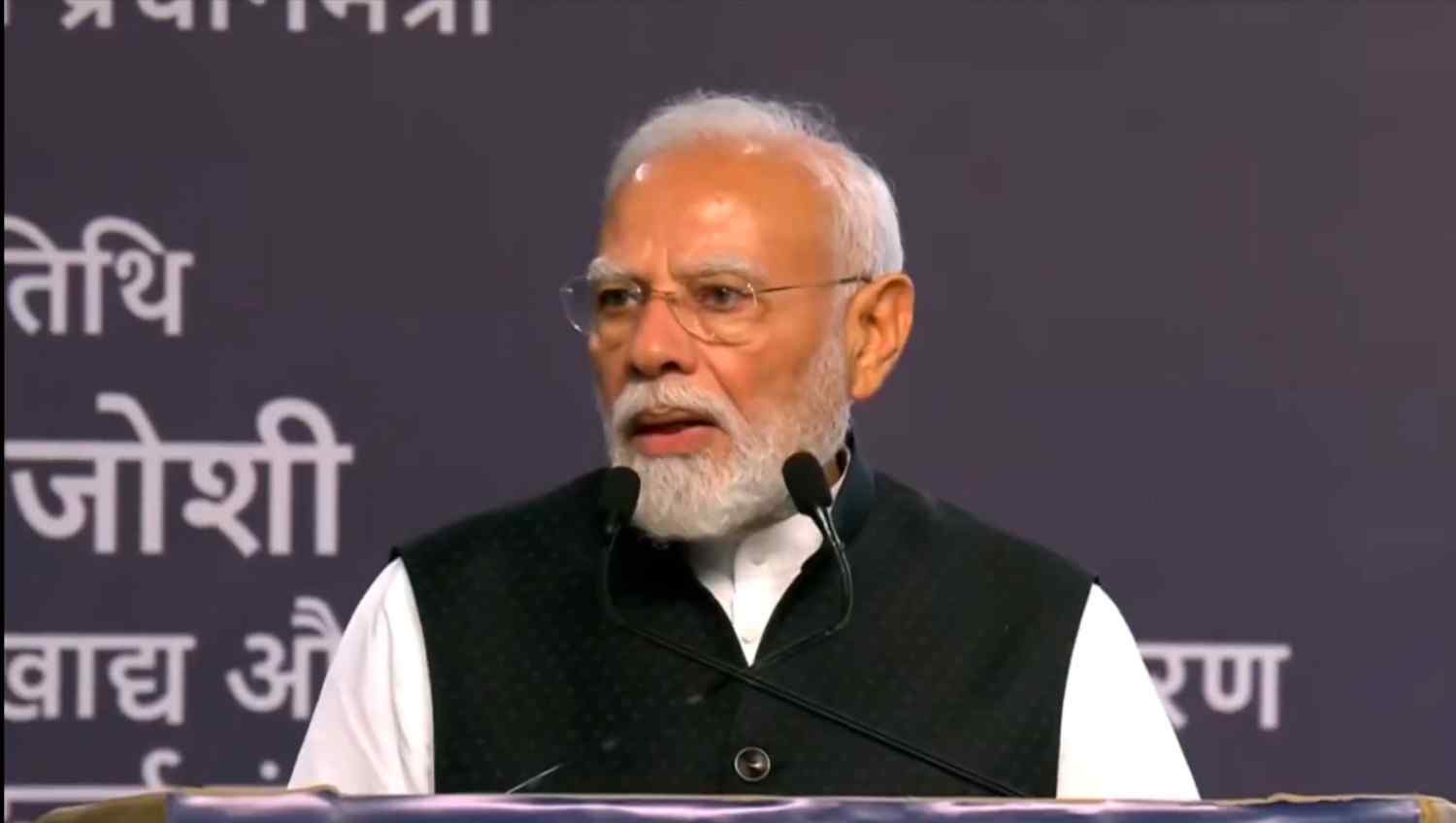
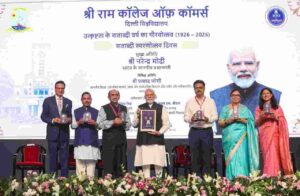
Prime Minister Narendra Modi on Sunday addressed the centenary celebrations of Shri Ram College of Commerce (SRCC) in Delhi, using the prestigious institution’s 100-year milestone to reflect on India’s transformation over the past 13 years. Speaking before students, faculty members and alumni, Modi also revisited his widely remembered 2013 address at the college and compared the economic and governance situation of that period with what he described as India’s progress today.
The Prime Minister’s appearance at SRCC was significant as it marked his return to the college after 13 years. He had visited the institution in 2013 while serving as Gujarat Chief Minister and before becoming Prime Minister. His latest address focused heavily on India’s economic growth, governance, opportunities for young people and the country’s changing global position.
Modi recalls his 2013 SRCC speech
Modi began by asking young people to look back at the situation in India in 2013 and compare it with the present. He recalled that his speech at SRCC that year was among his major interactions with young audiences outside Gujarat.
According to Modi, the national conversation in 2013 was dominated by concerns over economic slowdown, inflation, governance problems and several controversies. He referred to issues including developments along the Line of Control, World Bank-related GDP concerns and the helicopter controversy as examples of the political and economic atmosphere of that time.
He argued that India was then being described internationally as part of the “fragile five” economies, while the country is now viewed as one of the fastest-growing major economies.
PM Modi highlights 7.8% GDP growth
A major part of Modi’s speech centred on India’s latest economic growth figures. Referring to the reported 7.8 per cent GDP growth, he said the number had generated optimism across the country.
Modi linked the growth figure to India’s ability to maintain economic momentum despite geopolitical challenges, including the ongoing conflict in West Asia. He also criticised those who, in his view, remained unwilling to acknowledge the country’s economic achievements.
The Prime Minister said the same people who had earlier pushed India into the “fragile five” category were now unable to accept the latest growth figures.
‘Half-full or half-empty’ glass analogy returns
Modi also brought back an analogy from his 2013 SRCC address involving a glass of water. He recalled explaining that people could view a half-filled glass differently depending on their outlook.
Some could see it as half full, while others could focus on what was missing. Modi said he had presented a third perspective, viewing the glass as full when both water and air were taken into consideration.
He used the same idea to contrast optimism with what he described as a consistently negative outlook towards India’s development. According to the Prime Minister, India is expanding its opportunities and creating new avenues for employment, while critics continue to see the situation as half empty.
Governance and development take centre stage
The Prime Minister also returned to a theme from his 2013 speech — the importance of people-centric and proactive governance.
Modi said that when he addressed SRCC as a critic of the then government, he chose not to turn the platform into an attack on the Congress-led administration. Instead, he said, he presented his vision for India and spoke about the possibilities ahead.
He claimed that after assuming office in 2014, his government attempted to change the approach to governance by focusing on proactive decision-making and people-oriented policies.
SRCC completes a remarkable 100-year journey
While much of the speech was devoted to India’s development, Modi also celebrated SRCC’s century-long contribution to education.
He recalled the institution’s early beginnings in Delhi’s Daryaganj area and noted how significantly it had expanded over the decades. He praised the college for providing generations of students with opportunities to learn, develop their skills and contribute to society.
Modi also praised SRCC’s alumni for carrying the institution’s reputation across India and the world. In an effort to connect with the younger audience, he used contemporary Gen Z terminology to describe the college’s alumni as its “OGs”.
Youth remain central to Modi’s message
The Prime Minister’s return to SRCC also comes against the backdrop of continued efforts to engage India’s younger population. His 2013 address had focused strongly on the potential of youth, describing them not merely as a new generation of voters but as a powerful force capable of shaping the country’s future.
Also Read — Operation Ashdar: Pakistani LeT Terrorist Yasir Killed In Fierce Budgam Encounter
That earlier speech also emphasised the need for India to strengthen its production capabilities and make the most of the opportunities presented by a changing global economy.
At the centenary event, Modi again placed young Indians at the centre of his broader development narrative, urging them to look beyond pessimism and recognise the opportunities emerging in a changing India.
From 2013 to 2026: Modi’s message of transformation
The SRCC centenary address ultimately became a comparison between two different moments in India’s recent history. Modi used his return to the institution to recall the challenges discussed during his 2013 visit and to underline what he considers the economic and governance gains made since then.
His speech combined political criticism, economic claims, memories from his earlier SRCC appearance and a message of optimism for young Indians.
As SRCC completes 100 years, the Prime Minister portrayed the institution’s journey as part of a much larger story — one in which education, youth ambition, economic growth and national development remain closely connected.
Click here to join our WhatsApp Channel for real-time news updates and exclusive coverage.