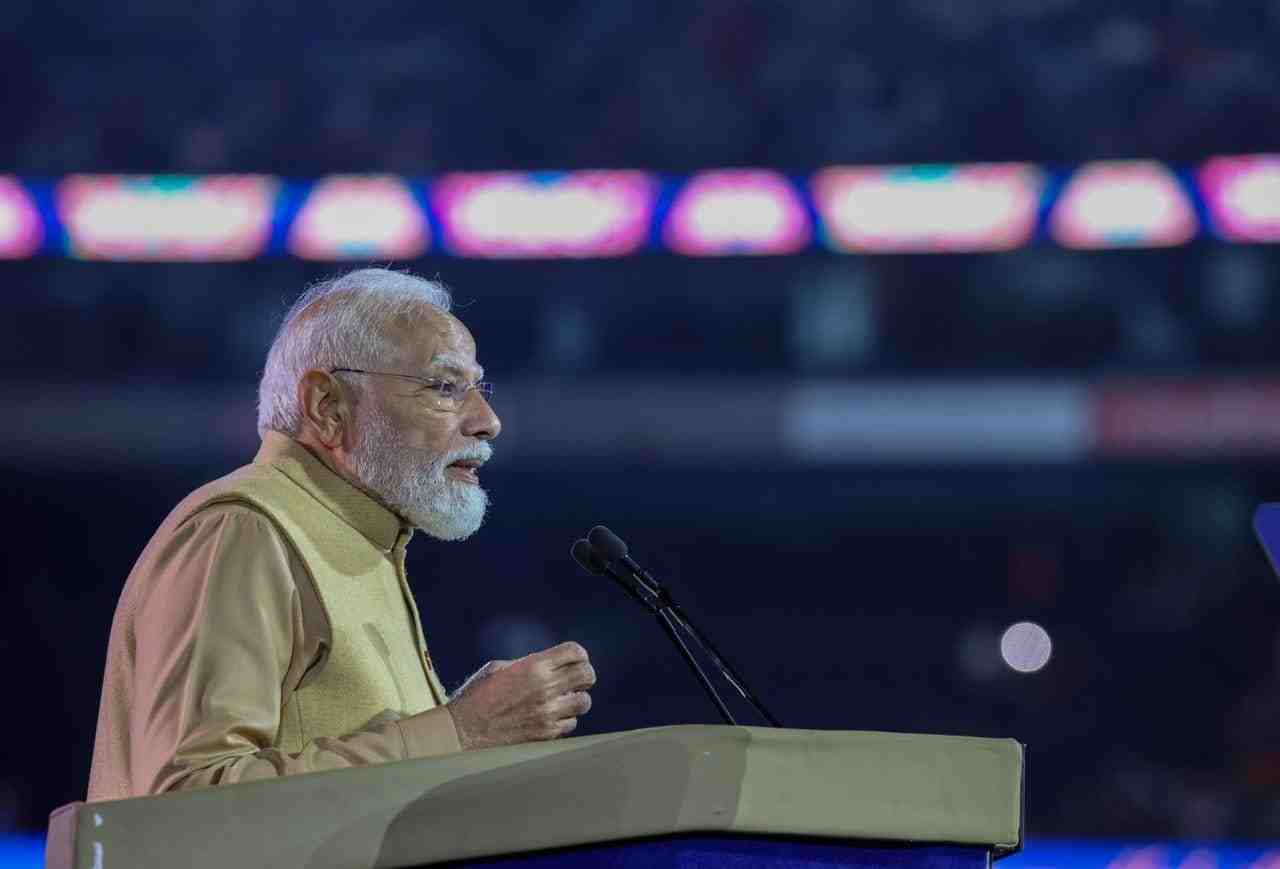
Twenty-five years in public life is a significant milestone for any political leader. For Prime Minister Narendra Modi, the journey represents something larger than the career of an individual politician. From taking oath as Gujarat Chief Minister in October 2001 to leading the Government of India for more than a decade, his political journey has coincided with a period of profound change in India’s economic ambitions, social infrastructure, technology, diplomacy and global standing.
The completion of Narendra Modi’s 25 years at the helm of a government provides an opportunity not merely to celebrate a milestone, but to examine the larger transformation that has taken place during this period. Modi’s political philosophy has consistently revolved around the ideas of development, governance, national confidence, self-reliance and the empowerment of ordinary citizens. The central question now is whether these ideas have changed the way India sees itself—and how the world sees India. The answer is visible across several dimensions.,
From Gujarat to the National Stage
When Narendra Modi became Gujarat Chief Minister in 2001, the state was emerging from a difficult period marked by natural disasters, drought and economic challenges. Over the following years, Gujarat became associated with infrastructure expansion, industrial development, investment and administrative reforms.
That experience became an important foundation for his national political vision. When he became Prime Minister in 2014, the challenge was vastly different. Gujarat was one state; India was a nation of more than a billion people with enormous regional, economic and social diversity.
The transition required taking ideas of governance and scaling them nationally.
The past 12 years have therefore been characterised by an emphasis on large-scale implementation. Government programmes increasingly sought to reach citizens directly, using technology to reduce administrative barriers and improve delivery.
The transformation of banking access, digital identity, direct benefit transfers, housing, sanitation, cooking gas, electricity and tap-water connectivity illustrates this approach. According to government data, Jan Dhan accounts have expanded dramatically, while millions of households have gained access to basic amenities. The government’s own assessment says more than 25 crore people have moved out of poverty over the broader period of transformation.
For supporters, this represents the emergence of a new model of welfare—one that combines welfare delivery with financial inclusion, technology and individual empowerment.
Make in India: From Consumer Market to Manufacturing Ambition
Perhaps one of the most visible changes has been in the country’s manufacturing ambitions.
When Make in India was launched in 2014, the message was clear: India should not remain primarily a market for products manufactured elsewhere. It should increasingly become a place where products are designed, produced and exported.
Twelve years later, the scale of the change is significant. Government data shows electronics production rising from approximately ₹1.9 lakh crore in 2014-15 to ₹13.11 lakh crore in 2025-26. Mobile-phone production has expanded from around ₹18,900 crore to approximately ₹6.27 lakh crore. Electronics exports have also grown sharply. This is more than a story about mobile phones.
India has simultaneously pursued domestic capacity in defence manufacturing, pharmaceuticals, automobiles, railways, semiconductors, renewable energy and other strategic sectors. Production-linked incentives, industrial corridors, PM GatiShakti and other policy interventions have attempted to create an ecosystem in which manufacturing can move from assembly towards greater value addition.
The deeper significance of Make in India is therefore psychological as much as economic. It has encouraged the country to think of itself not merely as a large consumer economy, but as a potential manufacturing and innovation centre for the world.
Digital India and the Rise of a New Public Infrastructure
If Make in India represents India’s industrial ambition, Digital India represents its technological transformation.
A decade ago, the idea that hundreds of millions of Indians could participate in a digital economy through smartphones and inexpensive internet connectivity would have appeared ambitious. Today, digital payments, online government services and digital identity have become part of everyday life.
UPI has perhaps become the most recognisable symbol of this transformation. India’s digital public infrastructure has evolved beyond a domestic convenience and increasingly become an international reference point. Government data shows UPI operating in multiple countries, while India has signed agreements with numerous countries for cooperation around digital public infrastructure. This is where India’s experience begins to acquire global significance.
India did not simply build another technology platform. It demonstrated that digital infrastructure could be created at population scale and used for financial inclusion, commerce, public services and everyday transactions.
The lesson for developing countries is important: technological advancement does not necessarily have to follow the exact path taken by advanced economies. India has demonstrated that countries can leapfrog stages of development by combining smartphones, connectivity, digital identity, payments and public platforms.
A More Assertive Foreign Policy
The transformation is equally visible in India’s foreign policy. Over the last decade, New Delhi has attempted to move from being viewed primarily through the prism of regional South Asian politics to becoming an important participant in global strategic conversations.

India’s relationships with the United States, Europe, Russia, Japan, Australia, the Gulf countries, Africa and Southeast Asia have expanded across trade, technology, defence, energy and strategic cooperation.
At the same time, India has sought to maintain strategic autonomy. Its engagement with multiple competing power centres reflects an attempt to protect national interests while avoiding rigid alignment.
The G20 presidency provided another important opportunity. India used the platform to emphasise the concerns of the Global South and helped advance the inclusion of the African Union in the G20. India’s advocacy for developing countries has increasingly become an important component of its diplomatic identity.
The underlying message is that India wants to be neither a passive participant nor merely a balancing power. It wants to be a rule-shaper.
That ambition is also reflected in initiatives such as the International Solar Alliance, the promotion of millets, Yoga diplomacy, development partnerships and India’s increasing role in discussions on climate change, technology and global economic governance.
Infrastructure as the Foundation of Growth
The India of 2026 is also physically different from the India of 2014.
Expressways, modern airports, metro networks, railway modernisation, freight corridors, ports, logistics infrastructure and digital connectivity have expanded rapidly. PM GatiShakti has attempted to bring different infrastructure projects into an integrated planning framework.
This is important because infrastructure is not merely about concrete and steel. It determines how quickly goods move, how easily people travel, how businesses expand and how regions connect to national markets.
India’s infrastructure push is therefore closely connected to its ambition to become a globally competitive economy.
Self-Reliance Without Isolation
The idea of Atmanirbhar Bharat has also evolved. Self-reliance does not necessarily mean economic isolation. In its contemporary interpretation, it increasingly means possessing sufficient domestic capabilities in sectors that are strategically important while remaining deeply connected to global markets.
The pandemic exposed vulnerabilities in global supply chains. India responded by seeking greater domestic capacity in pharmaceuticals, vaccines, electronics, defence equipment, energy technologies and critical manufacturing.
The objective is not to close India’s doors to the world, but to ensure that India’s participation in globalisation takes place from a position of greater strength.
This distinction could prove crucial in the coming decades.
The Human Story Behind the Numbers
Yet no assessment of the Modi era should be restricted to GDP figures, highways or digital transactions. The real measure of development remains the ordinary Indian.

A woman who receives a bank account in her own name. A family receiving a permanent home. A farmer gaining access to digital services. A young person building a start-up. A small entrepreneur accepting a digital payment. A student accessing education online. A village receiving improved connectivity.
These individual experiences collectively constitute national transformation.
Government figures show substantial expansion in access to basic services and digital infrastructure. The challenge ahead is to ensure that the benefits of growth remain broad-based and that India’s development story reaches every region and social group.
From Amrit Kaal to Viksit Bharat 2047
Perhaps the most consequential aspect of the 25-year milestone is that Modi’s political narrative is no longer centred only on the achievements of the past decade. It is increasingly centred on the next two decades.
Also Read | From Gujarat To Delhi: PM Modi Completes 25 Years At Helm Of Government
Viksit Bharat 2047 is the defining long-term ambition: to transform India into a developed nation by the centenary of independence.
This vision requires far more than economic growth. A developed India must mean world-class infrastructure, high-quality education, advanced healthcare, technological leadership, productive agriculture, globally competitive manufacturing, environmental sustainability, strong institutions and opportunities for every citizen.
India will have to create millions of productive jobs, raise productivity, deepen human capital, expand innovation and remain competitive in an increasingly fragmented global economy.
The next phase will therefore test whether the foundations built during the last decade can produce sustained and inclusive prosperity.
Is India Showing a New Path to the World?
There is a compelling argument that India is increasingly offering the world certain models worth studying. Digital public infrastructure is one. Affordable and population-scale digital payments are another.
India’s approach to renewable energy, large-scale vaccination, financial inclusion, space technology and digital governance has attracted international attention. The growing adoption of Indian digital platforms and India’s willingness to share technological and developmental experiences with partner countries further strengthens this argument.
Also Read | PM Modi Marks 25 Years In Public Service With Viksit Bharat 2047 Roadmap
But leadership of the world cannot be measured simply by the number of international partnerships or diplomatic honours.
It is ultimately measured by whether a country can combine economic power with responsibility, technological capability with inclusion, national interest with international cooperation, and growth with sustainability. That is the larger test before India.
Twenty-Five Years—and the Road Ahead
Narendra Modi’s 25 years in public service represent a political journey that has travelled from a state-level experiment in governance to a national project and, increasingly, to a global vision for India.
The transformation of the last 12 years is visible in factories, highways, airports, digital payment screens, start-ups, villages connected to the internet and India’s expanding diplomatic footprint.
But history will not judge this period only by the number of projects completed or programmes launched. It will ultimately judge whether the foundations laid during these years enabled India to become more prosperous, more capable, more confident and more equitable.
The most important achievement of the Modi era may therefore not be any single scheme or infrastructure project. It may be the change in India’s collective aspiration.
A country that once frequently asked whether it could compete with the world is increasingly asking how it can lead, innovate and contribute to the world. That change in ambition matters.
As India moves towards 2047, the challenge is to convert confidence into capability, capability into prosperity and prosperity into a better quality of life for every citizen.
Twenty-five years after Narendra Modi first took charge of a government, the journey has reached another milestone. But if Viksit Bharat 2047 is to become reality, the milestone cannot become a resting point. It must become a launchpad.
And perhaps that is the most defining feature of the Modi era: the insistence that every achievement should be treated not as the destination, but as preparation for a larger national goal. The India of tomorrow will ultimately be shaped not by one leader alone, but by the collective energy of 1.4 billion Indians.
The task before the country, therefore, is larger than celebrating 25 years. It is to build the India that the next 25 years demand.
Click here to join our WhatsApp Channel for real-time news updates and exclusive coverage.