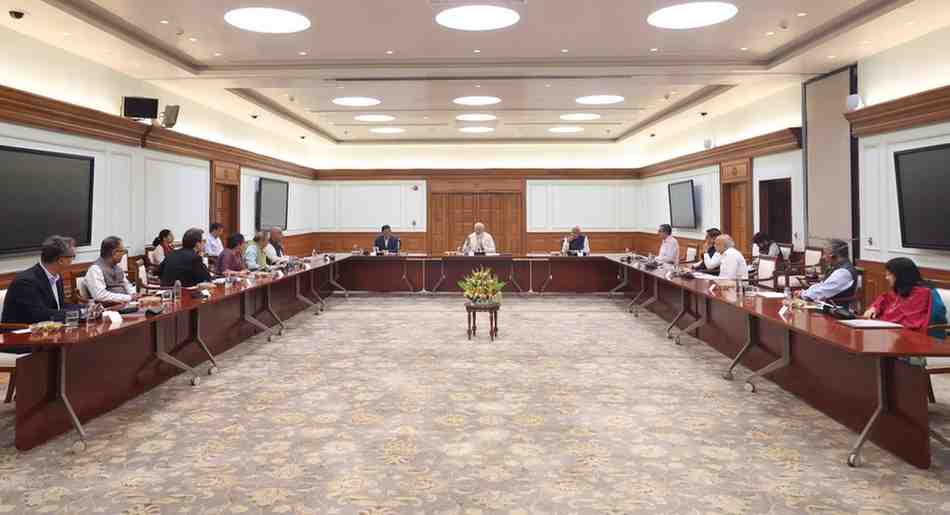
NEW DELHI: Prime Minister Narendra Modi on Saturday chaired a high-level meeting of the Economic Advisory Council to the Prime Minister (EAC-PM), focusing on measures to sustain India’s economic growth momentum and strengthen resilience against global uncertainties arising from the ongoing conflict in West Asia. The meeting comes at a time when geopolitical tensions continue to create concerns over energy security, trade flows, inflation, and global economic stability.
During the deliberations, members of the Economic Advisory Council presented their assessments of the evolving situation in West Asia and its possible implications for India and the broader global economy. Discussions reportedly centered on strategies that could help the country maintain strong economic growth while minimizing the impact of external shocks.
The Prime Minister and council members examined a range of policy options aimed at strengthening economic fundamentals and ensuring that India remains on a stable growth trajectory despite volatility in international markets. Special emphasis was placed on reforms that can further improve the ease of living for citizens and the ease of doing business for industries and entrepreneurs.
Officials familiar with the discussions indicated that attracting greater domestic and foreign investment remains a key component of the government’s long-term growth strategy. The meeting explored ways to streamline regulations, encourage innovation, improve competitiveness, and create a more conducive environment for businesses across sectors.
The review assumes significance against the backdrop of continuing instability in West Asia, a region that plays a critical role in global energy markets and trade routes. Any prolonged disruption in the region could affect crude oil prices, shipping costs, supply chains, and inflationary trends worldwide. India, as one of the world’s fastest-growing major economies and a significant importer of energy resources, remains closely watchful of developments.
Economic experts participating in the meeting reportedly highlighted the importance of maintaining macroeconomic stability while pursuing growth-oriented reforms. The discussions reflected the government’s broader effort to prepare for multiple global scenarios and ensure that the Indian economy remains insulated from major external disruptions.
The government has already been reviewing various mitigation measures in recent months to address challenges emerging from the West Asia crisis. Previous high-level meetings chaired by the Prime Minister and senior ministers have focused on ensuring uninterrupted supplies of fuel, fertilizers, food items, and other essential commodities while safeguarding supply chains and strategic sectors.
The latest meeting also took place against a relatively positive domestic economic backdrop. India recently recorded stronger-than-expected economic growth, with GDP expanding by 7.8 percent in the March quarter and 7.7 percent for the full fiscal year, underlining the resilience of the country’s economy despite global headwinds. Strong domestic demand, investment activity, and infrastructure spending have continued to support growth.
Observers note that while India’s economic fundamentals remain robust, policymakers are keenly aware of risks posed by geopolitical conflicts, rising commodity prices, and potential disruptions in international trade. The EAC-PM meeting is therefore seen as part of a broader effort to ensure policy preparedness and maintain confidence among investors, businesses, and consumers.
The Economic Advisory Council serves as an independent body that advises the Prime Minister on economic and related issues. It plays a key role in analyzing emerging challenges and recommending policy responses that support sustainable growth and economic development.
The discussions on Saturday underscored the government’s commitment to proactive planning and reform-driven growth. As global uncertainties persist, India’s leadership appears focused on balancing economic expansion with stability, while continuing efforts to strengthen the country’s position as a major global economic force.