
The Union Ministry of Education has intensified efforts to improve the implementation of the National Means-cum-Merit Scholarship Scheme (NMMSS), urging officials across States and districts to ensure timely registration and verification of scholarship applications for the academic year 2026–27. The initiative aims to strengthen administrative coordination, address technical challenges and ensure that financial assistance reaches deserving students without unnecessary delays.
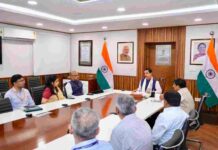
The Department of School Education and Literacy (DoSEL), under the Ministry of Education, organised a one-day regional Orientation-cum-Review Workshop on the NMMSS in Bhopal, Madhya Pradesh, on October 14, 2026. The workshop brought together officials responsible for implementing the scheme at the State, district and institutional levels to review progress and improve the efficiency of scholarship delivery.
Under the scheme, eligible students receive an annual scholarship of ₹12,000 to help them continue their education and reduce the financial burden on economically weaker families.
NMMSS 2026–27: Key Registration and Verification Deadlines
The Ministry highlighted the importance of meeting the prescribed deadlines for registration and verification through the National Scholarship Portal (NSP). Officials have been asked to ensure that applications are processed accurately and within the stipulated time.
The key deadlines for the 2026–27 academic year are:
- October 31, 2026: Last date for students to register their applications.
- November 15, 2026: Deadline for Institute Nodal Officers (INOs) to verify applications.
- November 30, 2026: Deadline for District Nodal Officers (DNOs) to complete verification.
The Ministry emphasised that timely action by State Nodal Officers (SNOs), DNOs and INOs is essential to prevent eligible students from missing out on scholarship benefits because of incomplete applications, verification delays or administrative errors.
The National Scholarship Portal serves as the central platform for registration, authentication and scholarship disbursement. Effective coordination among officials at different levels is therefore critical to ensuring that applications move smoothly through the verification process.
Bhopal Workshop Reviews Scholarship Implementation
The regional workshop focused on reviewing the progress of NMMSS implementation, explaining the scheme’s operational procedures through the NSP and addressing concerns raised by States regarding the verification of student applications.
Economic Adviser to DoSEL, A. Srija, led the workshop. Participants included officials involved in managing the scheme across State, district and institutional administrations.
The Joint Director of Rashtriya Shiksha Kendra-cum-State Nodal Officer for NMMSS in Madhya Pradesh also participated. Approximately 40 District Nodal Officers and five Institute Nodal Officers from Bhopal district attended the programme.
Selected student beneficiaries and their guardians were also present, providing an opportunity to incorporate the experiences of scholarship recipients into discussions on implementation and service delivery.
Technical Sessions Focus on NSP Verification
The workshop featured detailed presentations and interactive technical sessions covering several operational aspects of the scholarship scheme.
Discussions included the registration of fresh applicants for the academic year 2026–27, the onboarding status of institutions, application verification procedures and the responsibilities of officials handling applications at different administrative levels.
A live demonstration of National Scholarship Portal processes was conducted to familiarise Institute and District Nodal Officers with the relevant procedures. The sessions were designed to help officials understand the portal’s requirements, improve verification practices and address practical difficulties encountered during implementation.
Feedback and experiences shared by student awardees also formed part of the programme. Their participation helped highlight the importance of clear communication, accessible procedures and timely processing in ensuring that scholarship assistance reaches its intended beneficiaries.
Centre Seeks Better Coordination and Zero Dropouts
The Ministry said the interaction provided an important platform for States and Union Territories to share their experiences, identify technical and operational difficulties, and discuss practical measures to improve registration, verification and scholarship delivery.
A key objective was to establish clearer responsibilities at the State, district and institutional levels while strengthening coordination among the stakeholders involved in implementing the scheme.
Also Read | AIIA’s Growth Alongside AIIMS: “PM Modi’s Vision Is Taking Shape,” Says VP Radhakrishnan
The Ministry reiterated its commitment to achieving 100 per cent scholarship saturation among eligible beneficiaries and preventing school dropouts. Timely verification, accurate documentation and effective monitoring are important elements of this effort.
The workshop also sought to improve the capacity of officials responsible for processing applications, ensuring that procedural difficulties do not become barriers for students who qualify for financial assistance.
What Is the National Means-cum-Merit Scholarship Scheme?
The National Means-cum-Merit Scholarship Scheme is a Central Sector Scheme designed to support meritorious students from economically weaker sections of society. Its principal objective is to reduce the number of students dropping out after Class VIII and encourage them to continue their education through Class XII.
Eligible students selected under the scheme receive financial assistance of ₹12,000 annually. The support is intended to help families manage education-related expenses and enable deserving students to pursue further schooling despite financial constraints.
The selection examination is conducted by the respective State or Union Territory. Registration, authentication and scholarship disbursement are handled through the National Scholarship Portal.
By combining financial assistance with stronger administrative oversight, the scheme seeks to improve educational continuity and expand opportunities for students from disadvantaged economic backgrounds.
Timely Action Remains Crucial for Students
With the October 31 registration deadline approaching, the Ministry’s latest initiative underscores the need for students, institutions and government officials to complete the required formalities within the prescribed schedule.
The Bhopal workshop reflects the Centre’s broader effort to improve the delivery of education-related benefits through better coordination, technical guidance and accountability.
For eligible students, timely registration and verification are essential steps towards receiving the ₹12,000 annual scholarship. The Ministry’s emphasis on efficient implementation aims to ensure that financial constraints do not force deserving children to discontinue their education.
Click here to join our WhatsApp Channel for real-time news updates and exclusive coverage.