
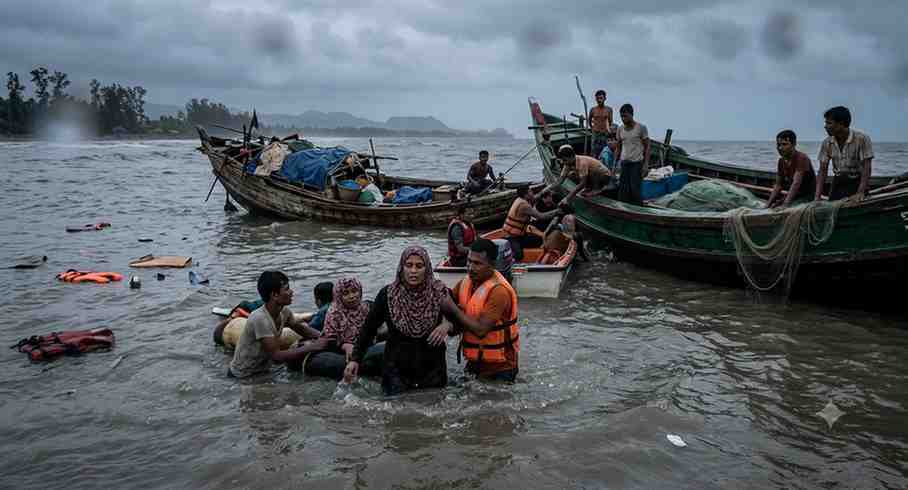
Myanmar is at the centre of a major humanitarian tragedy after two overcrowded boats reportedly capsized off its coast, leaving more than 500 people feared dead and raising fresh concerns over one of the world’s deadliest refugee crises. The United Nations has expressed deep concern over the tragedy, although rescue efforts and official confirmation of the full casualty count are still underway.
Two Boats Reportedly Sank During Dangerous Sea Journey
According to preliminary information released by the International Organization for Migration (IOM) and the United Nations High Commissioner for Refugees (UNHCR), the two vessels departed Myanmar’s Rakhine State in late June. The passengers were predominantly Rohingya refugees, including families who had also travelled from refugee camps in neighbouring Bangladesh in search of safety and better living conditions.
One of the boats, believed to have been carrying around 250 people, reportedly disappeared shortly after leaving the coast. A second vessel carrying approximately 280 passengers is believed to have sunk near Myanmar’s Ayeyarwady coast on July 8. Communication with both boats was lost, prompting fears that hundreds may have drowned.
UN Voices Alarm Over Potential Humanitarian Disaster
The UN agencies said they are deeply concerned by the reports, stressing that the incidents and the number of casualties are yet to be independently verified. However, based on available information, the agencies warned that the tragedy could become one of the deadliest maritime disasters involving Rohingya refugees in recent years.
Read Also: India Raises Windfall Tax on Diesel And ATF Exports, Cuts Petrol Export Levy
Officials noted that dangerous monsoon weather, overcrowded vessels and unsafe travel conditions significantly increase the risks faced by people attempting sea crossings in the Bay of Bengal and the Andaman Sea. The agencies have called for urgent regional cooperation to support search-and-rescue operations and protect vulnerable refugees.
Rohingya Continue to Risk Their Lives at Sea
The Rohingya, a Muslim minority from Myanmar, have faced years of persecution, displacement and restrictions on their basic rights. Hundreds of thousands fled Myanmar following the military crackdown in 2017, while many continue living in overcrowded refugee camps in Bangladesh with limited access to employment, education and essential services.
With prospects for safe return remaining uncertain and humanitarian assistance declining, increasing numbers of Rohingya have turned to dangerous sea routes in hopes of reaching countries such as Malaysia and Indonesia. Smuggling networks often transport refugees in overcrowded wooden boats lacking adequate food, drinking water and safety equipment.
Conflict and Aid Shortages Fuel Desperation
The continuing conflict in Myanmar’s Rakhine State has further reduced opportunities for displaced families to rebuild their lives. Humanitarian organizations say worsening insecurity, combined with shrinking international aid budgets, has intensified desperation among refugee communities.
The UN has repeatedly warned that cuts in food assistance and limited livelihood opportunities have left many Rohingya families with few options other than undertaking hazardous sea journeys. Human rights organizations have also highlighted the growing role of human trafficking and smuggling networks exploiting vulnerable refugees.
Calls for Stronger Regional Response
Following reports of the suspected shipwrecks, UN agencies urged governments across South and Southeast Asia to strengthen maritime rescue operations and ensure that refugees rescued at sea receive humanitarian protection instead of being turned away.
The agencies also appealed for greater international support to improve living conditions for displaced Rohingya populations and address the root causes forcing families to flee. They emphasized that preventing future tragedies requires both humanitarian assistance and long-term political solutions.
Rescue teams and authorities are continuing efforts to gather more information about the missing boats, while relatives anxiously await confirmation of the fate of their loved ones. If confirmed, the disaster would rank among the worst maritime tragedies involving Rohingya refugees in recent years and once again highlight the severe risks faced by people fleeing conflict and persecution in search of safety.
Click here to join our WhatsApp Channel for real-time news updates and exclusive coverage.