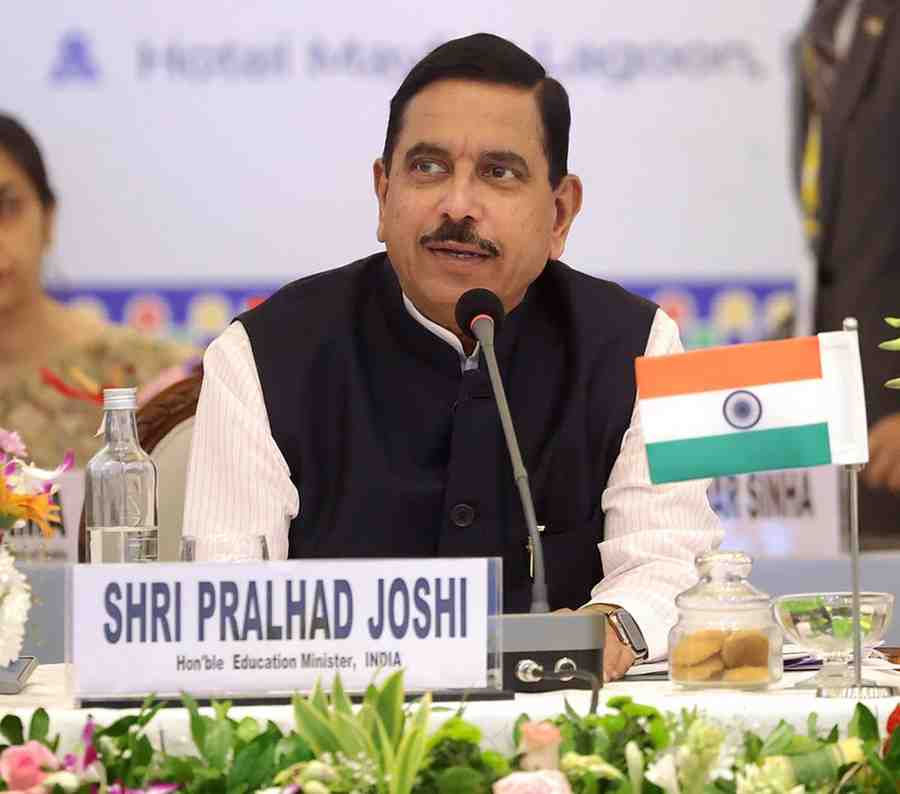
India has reaffirmed its commitment to placing people, learners and human values at the heart of BRICS cooperation as the 13th BRICS Education Ministers’ Meeting concluded in Bhubaneswar, Odisha, with the adoption of the 13th BRICS Education Ministers’ Declaration.
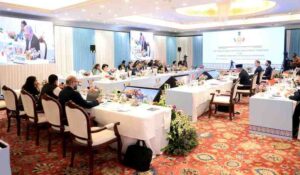
Union Minister for Education Pralhad Joshi chaired the meeting, bringing together ministers, senior officials and delegates from BRICS member countries, including Brazil, Russia, China, South Africa, Indonesia, Iran, Ethiopia and the United Arab Emirates.
The meeting marked an important milestone in India’s BRICS Chairship 2026 and strengthened the education bloc’s focus on resilience, innovation, cooperation and sustainability.
India Places People At Centre Of BRICS Education Agenda
Addressing the gathering, Pralhad Joshi stressed that education systems must evolve with changing global realities while continuing to uphold human values.
India’s BRICS Chairship is being guided by the theme, “Building for Resilience, Innovation, Cooperation and Sustainability.” Joshi said this vision requires education systems to equip young people with the skills needed for emerging opportunities while ensuring that learners, teachers, researchers and youth remain central to policymaking.
The Union Minister described education as a foundation for inclusive growth and shared prosperity. He said the newly adopted declaration demonstrated the collective determination of BRICS countries to deepen cooperation in key areas of education.
Traditional Knowledge Gets Major Push
A significant aspect of the meeting was the emphasis on traditional and indigenous knowledge systems.
Joshi highlighted the importance of protecting, studying and passing traditional knowledge to future generations. He argued that innovation and heritage should not be viewed as competing priorities, but as complementary forces capable of shaping sustainable development.
India also introduced the BRICS Guiding Principles on Strengthening Academic Collaboration on Traditional and Indigenous Knowledge Systems. The meeting suggested that the BRICS Network University could explore adding traditional and indigenous knowledge as an International Thematic Group.
The initiative reflects India’s broader effort to connect modern education and innovation with the civilisational heritage of BRICS nations.
Five Priority Areas Shape New BRICS Education Roadmap
The 13th BRICS Education Ministers’ Declaration established a shared roadmap covering five priority areas identified during India’s Chairship.
Early Childhood Care and Foundational Learning: BRICS countries agreed to promote universal and inclusive access to quality Early Childhood Care and Education (ECCE). The agenda also includes improving school readiness, strengthening foundational literacy and numeracy, and encouraging age-appropriate digital tools for early learning.
Skills Development and Technical Education: The role of the BRICS TVET Cooperation Alliance was recognised as an important mechanism for strengthening collaboration in technical and vocational education and training. The declaration also welcomed an upcoming Biennial Progress Report and Compendium of Sustainable Skill Initiatives.
India’s proposal for an International Skill Gap Study was also acknowledged, with interested BRICS members able to participate voluntarily.
Research, Innovation and Start-ups: The declaration called for stronger joint research, deeper collaboration among universities and researchers, and greater support for innovation-led entrepreneurship. It also highlighted the need for Artificial Intelligence to be used safely, ethically and in a human-centred manner in education.
Also Read: Chamba: 7 Killed, 11 Injured After Private Bus Skids Off Road
Mutual Recognition of Qualifications: BRICS members agreed to continue discussions through the relevant Working Group on a possible Memorandum of Understanding on Mutual Recognition of Qualifications. The initiative is expected to support academic mobility and facilitate stronger educational cooperation.
Academic Leadership and Institutional Development: The meeting encouraged continued BRICS Rectors’ Forum activities, faculty and leadership exchanges and scholarship programmes, particularly in STEM disciplines. Members also supported exploratory efforts towards developing a BRICS University Global Ranking and Evaluation System.
Odisha’s Educational Heritage Highlighted
Joshi also drew attention to Odisha’s long-standing legacy as an ancient centre of learning. Connecting the state’s heritage with India’s civilisational philosophy, he invoked the principles of “Atithi Devo Bhava” and “Vasudhaiva Kutumbakam”.
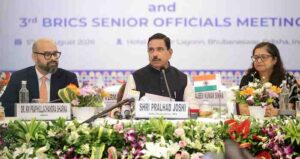
He stressed that despite differences in traditions, cultures and national experiences, the development of BRICS countries remains interconnected.
The Ministry of Education also hosted the 3rd BRICS Senior Officials’ Meeting on August 5 in Bhubaneswar under India’s 2026 BRICS Chairship.
The discussions focused on building inclusive, resilient and future-ready education systems through enhanced cooperation, innovation and knowledge exchange.
With the ministerial declaration now adopted, India is expected to continue advancing the agreed initiatives during its BRICS Chairship.
BRICS Summit To Conclude India’s 2026 Chairship
India will host several BRICS ministerial meetings across different sectors during its 2026 chairship. The year-long programme will culminate in the 18th BRICS Summit in New Delhi on September 12–13, 2026.
The education declaration provides a concrete framework for cooperation at a time when countries are confronting rapidly changing technology, evolving workforce demands and the need to preserve cultural knowledge.
By combining skills, research, AI, academic mobility and traditional knowledge, India’s BRICS education agenda seeks to create a more resilient and human-centred model of international educational cooperation.
Click here to join our WhatsApp Channel for real-time news updates and exclusive coverage.