
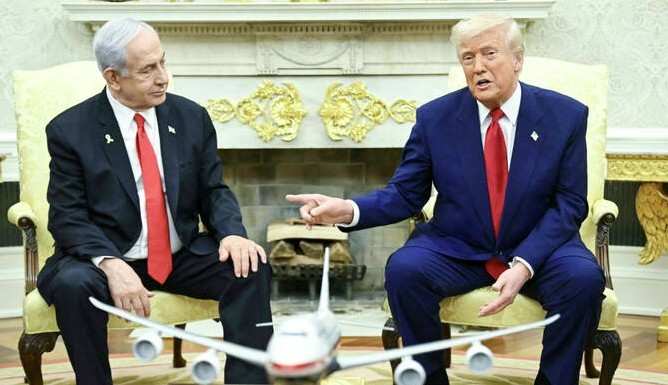
A sharp warning from US President Donald Trump to Israeli Prime Minister Benjamin Netanyahu has emerged as a key factor behind Israel’s decision to scale back plans for a broader military response against Iran, according to multiple international media reports.
The development comes amid renewed tensions between Israel and Iran following missile exchanges that threatened to shatter a fragile ceasefire and trigger another round of regional conflict.
According to reports, the US President Donald Trump held a direct conversation with Israeli PM Benjamin Netanyahu after Iran launched missile attacks on Israel. During the call, President Trump reportedly urged restraint and warned the Israeli leader against actions that could further destabilize the Middle East. The US President Trump is said to have delivered a blunt message: “Be careful, Bibi,” while indicating that Israel could find itself increasingly isolated if it pursued a large-scale confrontation with Tehran.
The conversation took place at a time when fears were growing that the exchange of strikes between the two regional rivals could escalate into a wider war. Iranian missile launches followed Israeli military operations linked to Hezbollah targets, raising concerns across the region and among international powers.
Reports suggest the US President Donald Trump emphasized that Washington was working to keep diplomatic channels open with Iran and did not want renewed hostilities to undermine ongoing efforts aimed at reducing tensions. During the discussion, he reportedly advised Netanyahu to delay or reconsider retaliatory strikes that could derail prospects for negotiations.
In an interview cited by international media, President Trump revealed that he had warned Israeli PM Netanyahu that a return to full-scale conflict with Iran could leave Israel fighting without the same level of American backing it has traditionally relied upon. He reportedly told the Israeli leader that he needed to be careful because Israel might soon be “on its own” if it chose a path of escalation.
The warning appears to have had a significant impact. Reports indicate that Israel ultimately reduced the scope of its planned military response, avoiding what officials feared could become one of the largest attacks on Iran since previous ceasefire arrangements were put in place.
The latest tensions erupted after Iran launched missiles toward Israeli territory, prompting discussions within Israel about a stronger retaliatory response. Although the missile attacks caused alarm, they also intensified international efforts to prevent a broader regional war. Several countries and mediators have called for restraint from both sides.
The US President Donald Trump’s intervention highlights the delicate balance Washington is attempting to maintain in the region. While the United States remains a close ally of Israel, the administration has also signaled a preference for diplomacy and conflict management rather than another prolonged military confrontation in the Middle East.
Israeli Prime Minister Benjamin Netanyahu, meanwhile, continues to face pressure from security officials and political allies who argue that Iran and its regional partners pose a continuing threat to Israel. However, the Israeli government must also weigh the risks of a wider war that could draw in multiple actors across the Middle East and further strain international relations.
The episode underscores growing international concern over the volatility of the Israel-Iran relationship. Although immediate fears of a major escalation appear to have eased for now, analysts caution that the underlying tensions remain unresolved. Any future military exchange could once again test diplomatic efforts and regional stability.
For the moment, the US President Donald Trump’s message to PM Benjamin Netanyahu has become one of the defining moments of the latest crisis, illustrating Washington’s determination to avoid a new regional war while encouraging both sides to step back from the brink.