India strongly criticized Pakistan during a United Nations Security Council (UNSC) meeting on Afghanistan, accusing Islamabad of engaging in what it termed “trade and transit terrorism” while also contributing to instability in the region through support for extremist groups and military actions that have resulted in civilian casualties in Afghanistan.
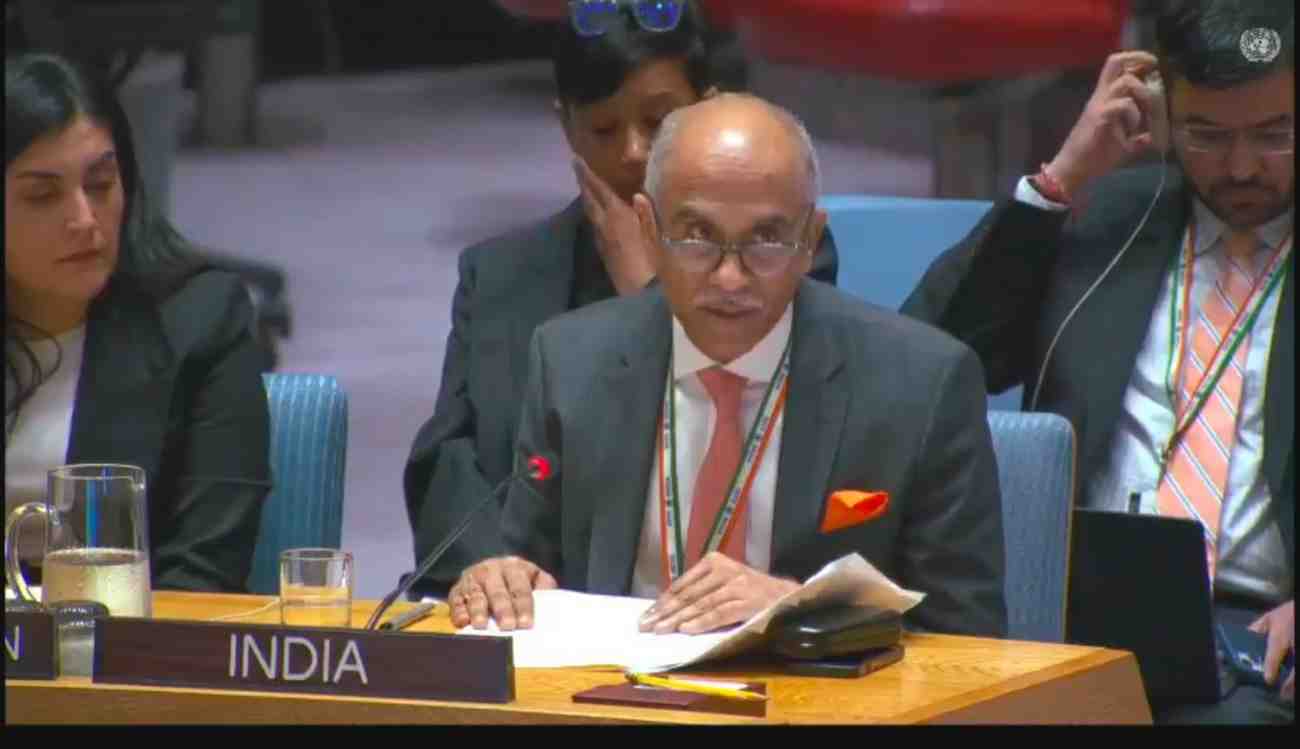
Speaking during the Security Council session, India’s Ambassador Parvathaneni Harish rejected Pakistan’s criticism of regional countries and argued that Islamabad lacked credibility when discussing terrorism and regional security. New Delhi asserted that Pakistan has for decades used terrorism as a strategic tool while simultaneously creating obstacles to regional economic cooperation and connectivity.
India specifically referred to “trade and transit terrorism,” a phrase used to describe policies that restrict or obstruct the free movement of goods and economic connectivity in the region. According to the Indian delegation, Pakistan has repeatedly used its geographical position to deny or limit transit access, affecting regional trade and economic integration. India argued that such actions have harmed development opportunities for Afghanistan and other countries seeking greater connectivity and economic cooperation.
The Indian representative Mr. Harish said that while the international community is working to improve economic prospects for Afghanistan, policies that hinder trade routes and transit facilities have had a damaging impact on the country’s long-term growth. New Delhi maintained that genuine regional cooperation requires open and reliable connectivity rather than politically motivated restrictions.
At the same time, India accused Pakistan of continuing to provide an environment in which terrorist organizations have been able to operate. The Indian delegation said that terrorism remains one of the most serious threats facing Afghanistan and emphasized that countries associated with supporting extremist networks cannot portray themselves as victims while ignoring their own role in fostering instability.
India told the United Nations Security Council that the Afghan people have endured decades of violence, conflict, and insecurity because of terrorist groups that have found support, training, financing, and safe havens across borders. New Delhi urged the international community to remain united in combating terrorism in all its forms and to ensure accountability for those who aid or shelter terrorist organizations.
The issue of civilian casualties also featured prominently in India’s remarks. Referring to Pakistani military operations inside Afghan territory, India expressed concern over reports of civilian deaths and injuries. The Indian delegation stated that military actions resulting in harm to innocent civilians are unacceptable and only deepen humanitarian suffering in an already fragile environment.
According to India, respect for Afghanistan’s sovereignty and territorial integrity is essential for lasting peace in the region. New Delhi argued that cross-border military actions and airstrikes have contributed to tensions and undermined efforts to create stability. It called on all countries to prioritize diplomacy, dialogue, and cooperation over military escalation.
India further highlighted its long-standing partnership with Afghanistan and reiterated its commitment to supporting the Afghan people. New Delhi noted that its engagement with Afghanistan has focused on development assistance, humanitarian support, infrastructure projects, healthcare, education, and capacity-building initiatives. India stressed that its approach has consistently been guided by the welfare and aspirations of the Afghan people.
The Indian delegation also warned about the continued presence of terrorist organizations operating in and around Afghanistan. It said these groups pose a threat not only to Afghanistan but to the wider region and the international community. India urged the United Nations and member states to strengthen counter-terrorism cooperation and ensure that Afghan territory is not used for planning or carrying out attacks against other countries.
During the debate, India emphasized that sustainable peace in Afghanistan requires both security and economic opportunity. The country argued that unrestricted regional trade, improved connectivity, and development partnerships are critical for Afghanistan’s recovery. New Delhi suggested that policies amounting to “trade and transit terrorism” work against these objectives by isolating Afghanistan and limiting its economic potential.
India also called for greater international attention to humanitarian challenges in Afghanistan, including poverty, food insecurity, and the needs of vulnerable communities. It stressed the importance of supporting women, children, and marginalized groups affected by years of conflict and economic hardship.
The remarks underscored the continuing tensions between India and Pakistan over terrorism, regional connectivity, and Afghanistan’s future. While Pakistan has often raised concerns about security challenges emanating from Afghanistan, India has consistently maintained that Pakistan’s policies have contributed to the growth of extremist networks and hindered regional cooperation.
Concluding its intervention, India reaffirmed its support for a peaceful, stable, sovereign, and prosperous Afghanistan. It urged the international community to remain committed to combating terrorism, protecting civilians, promoting regional connectivity, and supporting the Afghan people in their efforts to rebuild their country.
The exchange at the UN Security Council highlighted the sharp differences between New Delhi and Islamabad over the causes of instability in South Asia, with issues of terrorism, trade access, transit rights, and civilian protection remaining at the center of the debate.