Ayurveda is entering a new phase of global expansion as India combines its traditional knowledge base with research, quality standards, international cooperation and a rapidly growing wellness economy. With the 11th Ayurveda Day scheduled for September 23, 2026, the theme “Ayurveda for a Healthier Tomorrow” highlights the growing focus on preventive healthcare, wellbeing and responsible globalisation.
The transformation is being driven by several major developments, ranging from the expansion of the Ayush economy to stronger global recognition and efforts to establish evidence-based frameworks.
Ayush Economy Expands Rapidly
India’s Ayush sector has recorded substantial economic growth over the past decade. The market increased from USD 2.85 billion in 2014 to USD 43.4 billion in 2023, while exports also grew significantly. The expanding market has created greater opportunities for businesses, startups, manufacturers and service providers operating across Ayurveda and other Ayush systems.
The growth is helping create a stronger commercial foundation for Ayurveda, while government efforts to support entrepreneurship and innovation are opening new avenues for investment.
Domestic Acceptance Creates a Strong Base
Ayurveda’s international ambitions are supported by its substantial domestic presence. India’s growing use of traditional healthcare systems provides an important foundation for developing services, products and preventive wellness programmes.
The wider acceptance of Ayush is also encouraging investment in healthcare infrastructure, education, research and professional training, helping strengthen the ecosystem around traditional medicine.
Medical Value Travel Creates New Opportunities
India is increasingly positioning Ayurveda within its medical value travel and wellness offerings. The introduction of the Ayush Visa in 2023 created a dedicated pathway for foreign nationals seeking treatment through Ayush systems.
The approach could allow Ayurveda to connect healthcare with wellness, hospitality and tourism, potentially creating a distinctive model for international visitors seeking traditional and integrative health services.
NITI Aayog Sets Out a Global Roadmap
One of the most significant recent policy developments has been NITI Aayog’s Strategic Roadmap for Making Ayurveda Global, released in July 2026.
The roadmap outlines a long-term pathway towards 2047, with emphasis on regulation, standards, research, education, exports, international collaboration, branding and medical value travel.
The strategy recognises that global expansion will require consistent quality, credible research, trained professionals, robust infrastructure and regulatory systems that international markets can understand and trust.
WHO’s Traditional Medicine Agenda Strengthens
Ayurveda’s global journey is also taking place against the backdrop of increasing international attention towards traditional, complementary and integrative medicine.

The World Health Organization has been working with countries to strengthen evidence, safety, regulation and appropriate integration of traditional medicine into healthcare systems. WHO and India’s Ministry of Ayush have also strengthened cooperation on traditional, complementary and integrative medicine.
This international framework creates greater opportunities for India to contribute its experience and expertise while ensuring that traditional systems are evaluated responsibly.
India Emerges as a Global Traditional Medicine Hub
India’s international role has expanded significantly through the establishment of the WHO Global Traditional Medicine Centre in Jamnagar, Gujarat.
Also Read — PM Modi To Inaugurate SEMICON 2026 As India Accelerates Global Chip Revolution
The centre is designed to advance work around evidence and learning, data and analytics, sustainability, equity, innovation and technology. Its presence in India gives the country an important platform for contributing to the global development of traditional medicine.
India has also hosted major international discussions on traditional medicine, strengthening its position as a key participant in the global conversation.
International Classification Support
A major step towards greater international documentation came with the inclusion of Ayurveda, Siddha and Unani morbidity codes in ICD-11.
The framework enables relevant conditions to be documented and reported through an internationally comparable classification system. This can support data collection, research and greater visibility of traditional medicine within global health information systems.
However, the classification itself should not be interpreted as WHO endorsement of the scientific validity or effectiveness of individual traditional medicine practices. The broader objective is improved documentation, research and international comparability.
Research and Evidence Become Central to Global Growth
Perhaps the most important requirement for Ayurveda’s international future is stronger scientific evidence.
Bangladesh Signals Bold Reset With India As Dhaka Seeks To Heal Deep Bilateral Strain
The Ministry of Ayush’s research infrastructure and digital repositories are expanding the availability of studies and information relating to Ayurveda and other traditional systems. Building a larger evidence base can help inform standards, improve quality and support responsible development of Ayurveda-based services and products.
At the same time, India’s challenge will be to combine modern research methodologies with the distinctive principles and knowledge traditions that define Ayurveda.
Ayurveda’s Global Future Enters a New Phase
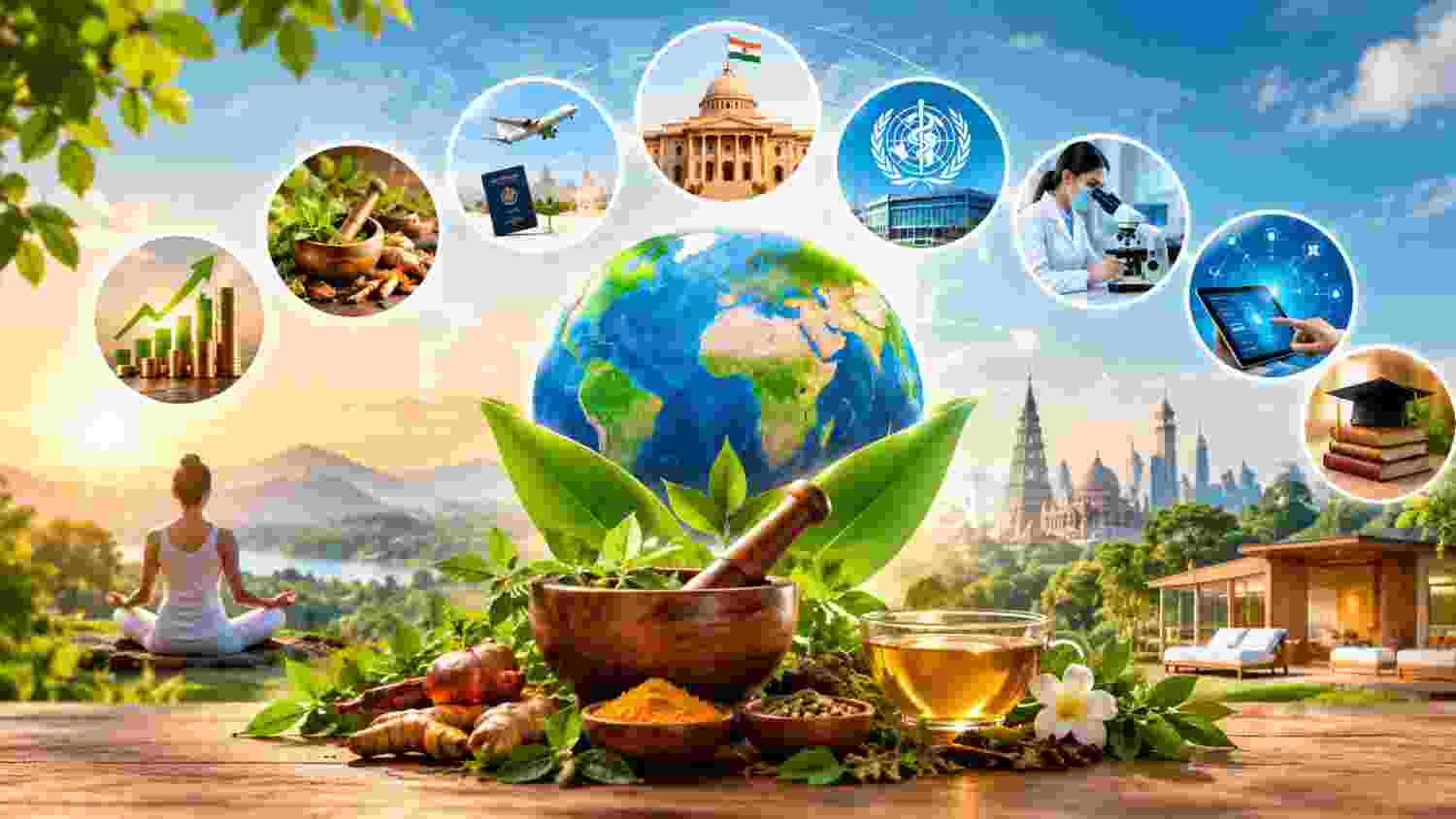
The convergence of economic growth, domestic adoption, medical value travel, government policy, international cooperation, global classification and research is creating a new environment for Ayurveda.
As India observes the 11th Ayurveda Day on September 23, the theme “Ayurveda for a Healthier Tomorrow” reflects an increasingly forward-looking vision for the traditional system.
The future of Ayurveda’s global expansion, however, will depend on credibility as much as visibility. Strong evidence, quality assurance, professional expertise, innovation and responsible regulation will be essential for building international confidence.
For India, the opportunity is significant: to take Ayurveda beyond cultural recognition and develop it into a globally respected component of preventive healthcare, wellness and sustainable living—while ensuring that its international growth remains evidence-informed, responsible and rooted in its traditional knowledge system.
Click here to join our WhatsApp Channel for real-time news updates and exclusive coverage.