A powerful 7.8-magnitude earthquake struck the southern Philippines on Monday, leaving at least five people dead, injuring hundreds, and causing widespread destruction across parts of Mindanao. Authorities fear the death toll could rise as rescue teams continue searching through collapsed buildings and damaged infrastructure.
The earthquake hit near General Santos City in the southern region of Mindanao, sending strong tremors across several provinces. Residents rushed out of homes, schools, offices, and shopping centers as buildings shook violently. The quake was followed by multiple aftershocks, raising concerns about further damage and risks to rescue workers.
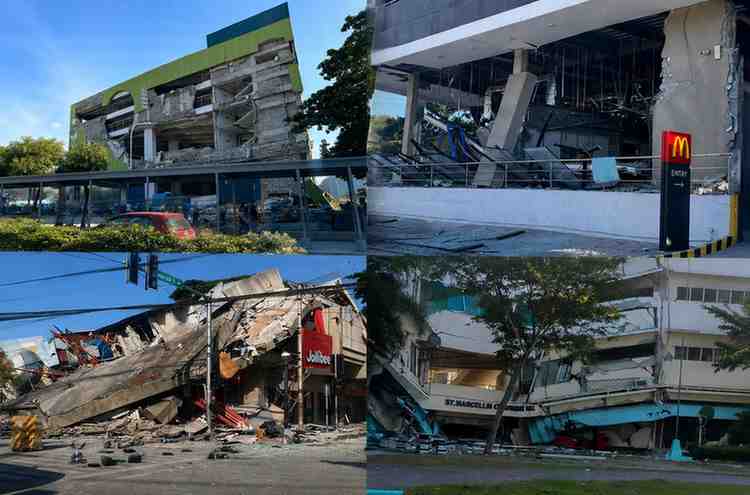
Several buildings suffered severe structural damage, with reports of commercial establishments, residential structures, and public facilities partially or completely collapsing. Roads were cracked in some areas, while power outages and communication disruptions affected emergency response efforts.
Local authorities confirmed that at least five people lost their lives in the disaster, while more than 200 others were injured. Hospitals in affected areas were placed on high alert as medical teams treated victims suffering from injuries caused by falling debris, collapsed structures, and panic during evacuations.
The powerful quake also triggered tsunami warnings for coastal areas of the Philippines and parts of neighboring countries. Residents living along vulnerable coastlines were ordered to move to higher ground as authorities monitored sea conditions. Emergency agencies later reported tsunami activity in some coastal regions, prompting continued vigilance among local communities.
Search-and-rescue teams, supported by police, military personnel, and disaster response agencies, were deployed to the worst-hit areas. Rescue workers have been combing through rubble in search of survivors, while heavy equipment has been brought in to clear debris and reopen blocked roads.
Philippine President Ferdinand Marcos Jr. directed government agencies to provide immediate assistance to affected communities. Authorities have begun assessing damage to critical infrastructure, including schools, hospitals, bridges, airports, and government buildings. Emergency shelters have been established to accommodate families displaced by the earthquake.
Classes and government operations were suspended in several areas as safety inspections of buildings continued. Officials warned residents not to return to damaged structures until engineers complete structural assessments.
Present Situation
Rescue and relief operations remain underway across southern Mindanao. Emergency teams are continuing to verify casualty figures and assess the full scale of the disaster. Many residents spent the day in evacuation centers or open spaces, fearing strong aftershocks.
Authorities have urged people to remain alert and follow official advisories as seismic activity continues in the region. Power restoration efforts are ongoing, while humanitarian organizations are helping provide food, drinking water, medical assistance, and temporary shelter to affected families.
The Philippines, located along the Pacific Ring of Fire, frequently experiences earthquakes due to intense tectonic activity. However, officials describe this latest quake as one of the strongest to hit the southern region in recent years.
With rescue teams still searching damaged buildings and authorities evaluating the extent of destruction, the focus remains on saving lives, assisting survivors, and restoring essential services to communities affected by the disaster.