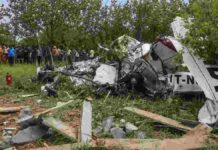
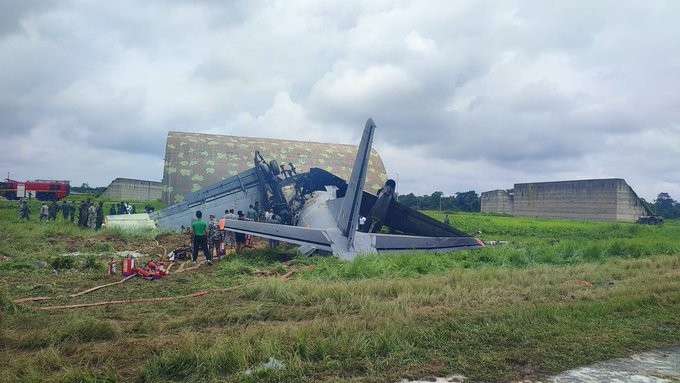
An Indian Air Force (IAF) AN-32 transport aircraft was involved in an accident at the Air Force Station in Jorhat, Assam, on Saturday, triggering an immediate response from military authorities and emergency teams.
The Indian Air Force confirmed the incident through an official statement, saying that the AN-32 aircraft met with an accident at the Jorhat airbase. While the Air Force acknowledged the occurrence, it did not immediately provide details regarding the condition of the crew, possible casualties, or the extent of damage to the aircraft.
The accident reportedly took place during aircraft operations at the airbase. Initial reports suggest that the transport aircraft encountered difficulties while landing at Jorhat. However, officials have not yet released information on the exact circumstances that led to the mishap.
Visuals and eyewitness accounts circulating on local media platforms indicated that the aircraft suffered significant damage after the accident. Some reports suggested that the aircraft caught fire following the incident, although authorities have not officially confirmed these details. Emergency response personnel were quickly deployed to the scene to contain the situation and assess any risks.
The AN-32 is a twin-engine tactical transport aircraft that has been a key component of the Indian Air Force’s logistics and transport fleet for decades. The aircraft is extensively used for troop movement, cargo transport, disaster relief operations, and missions in difficult terrains, including the northeastern region and high-altitude areas along India’s borders.
Jorhat Air Force Station serves as one of the IAF’s important operational bases in the Northeast and plays a vital role in supporting military operations and logistical connectivity in the region. The station has historically been associated with transport aircraft operations due to its strategic location.
Defence authorities are expected to launch a detailed investigation to determine the cause of the accident. Standard operating procedures in such cases involve a Court of Inquiry, which examines technical, operational, and environmental factors that may have contributed to the incident.
The Indian Air Force has not yet issued an official statement regarding injuries or fatalities. More information is expected as rescue teams complete their assessment and investigators gather evidence from the accident site.
The incident has once again drawn attention to the challenges of operating military aircraft in demanding conditions and the importance of continuous maintenance and safety oversight within the armed forces. As authorities continue their inquiry, the focus remains on the welfare of the crew and understanding the circumstances that led to the accident.
The latest accident has revived memories of a tragic Indian Air Force mishap in Assam earlier this year. In March, two IAF pilots lost their lives when a Sukhoi Su-30MKI fighter aircraft crashed in the Karbi Anglong district.
The twin-seat combat jet had taken off from Jorhat Air Force Station on a routine training mission on March 5. During the sortie, contact with ground control was lost at approximately 7:42 pm, raising immediate concern among aviation authorities. Subsequent search efforts revealed that the aircraft had crashed in a remote and mountainous region of Karbi Anglong, around 60 kilometres from Jorhat.
The incident prompted a detailed investigation by the Indian Air Force to determine the factors that led to the crash. The loss of the two pilots was widely mourned across the defence community and highlighted the risks associated with military aviation operations.