
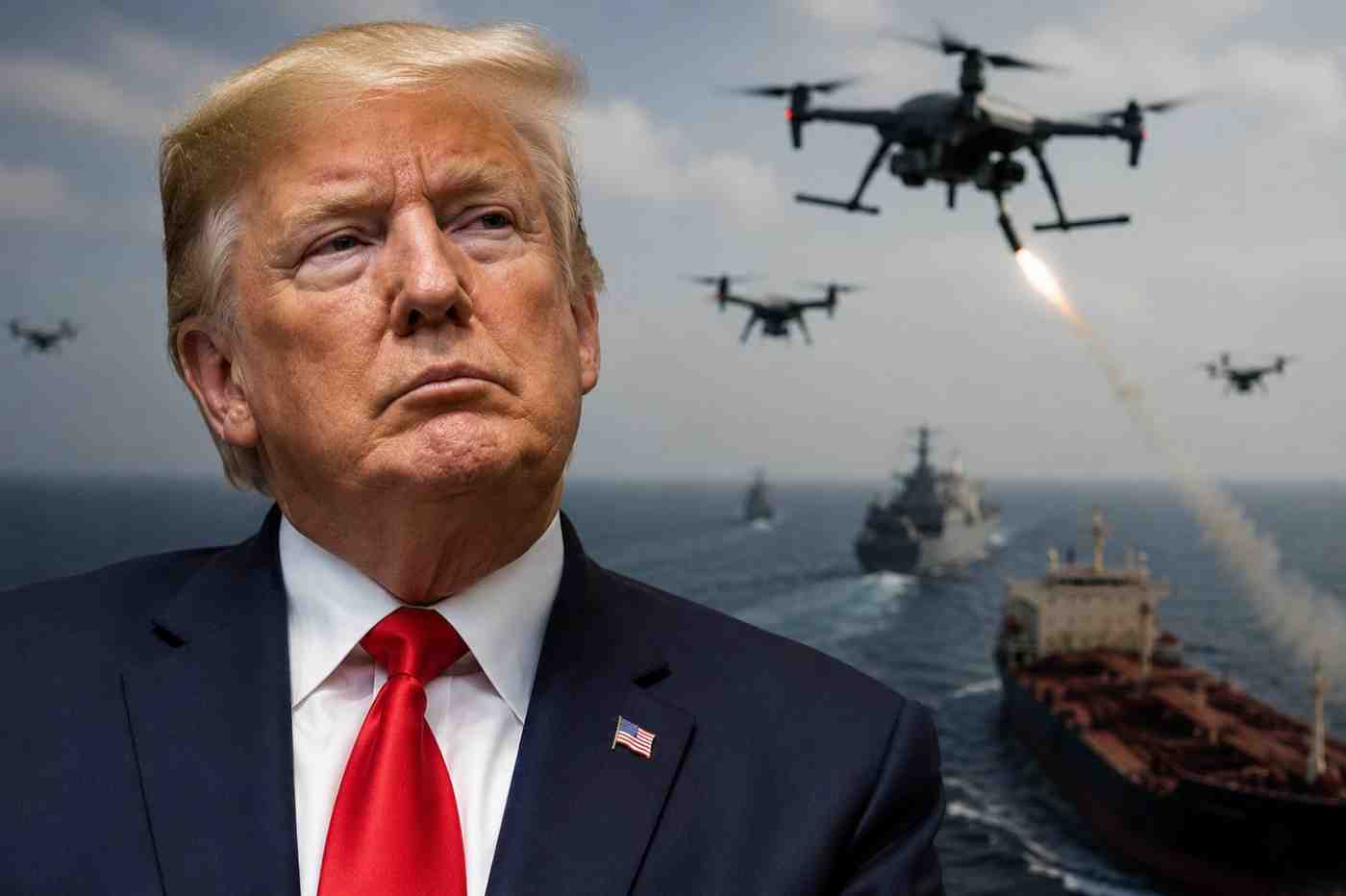
The US President Donald Trump has accused Iran of carrying out a drone attack targeting Indian ships near the Strait of Hormuz, calling the alleged action “totally unacceptable.” The remarks came amid renewed tensions between Washington and Tehran over a proposed peace agreement that both sides appear to be interpreting differently.
In a statement posted on his Truth Social platform, Trump rejected details published by Iranian state-linked media regarding a potential US-Iran agreement. He claimed that the information released by Tehran did not accurately reflect the terms being discussed and questioned Iran’s sincerity in ongoing negotiations.
The US President Donald Trump said on Truth Social, “The terms that Iran leaked out to the Fake News have NOTHING to do with the terms that were agreed to, in writing. What they said, including their weak and pathetic statement on having a deal, bears no relation to the truth. Very dishonorable people to deal with. With them, there is no such thing as dealing in good faith. AMAZING! Also, their totally rebuffed Drone attack last night against Indian Ships leaving the Hormuz Strait is TOTALLY UNACCEPTABLE. They better get their act together, and FAST!”
The US leader also expressed outrage over what he described as an Iranian drone strike against Indian vessels navigating the strategically important Strait of Hormuz, one of the world’s busiest maritime trade routes. Trump said such actions undermine trust and complicate efforts to reach a diplomatic settlement.
The allegations emerge at a sensitive moment, with reports suggesting that Washington and Tehran have been engaged in indirect talks aimed at easing months of conflict and restoring stability in the Gulf region. Trump recently indicated that a framework for a broader agreement was close to completion, though Iranian officials have publicly denied that any final deal has been reached.
According to reports, one of the major disagreements concerns Iran’s nuclear programme, sanctions relief, and the future of maritime security in the Strait of Hormuz. Iranian media outlets reportedly outlined provisions that Trump later dismissed as inaccurate, triggering a fresh war of words between the two sides.
The Strait of Hormuz has remained a focal point of regional tensions in recent months. Several military incidents involving drones, missiles and commercial shipping have raised concerns about the safety of international maritime traffic. US forces have previously reported intercepting Iranian drones in the area, while Tehran has accused Washington of escalating the conflict through military operations and blockades.
The latest dispute comes against the backdrop of a fragile ceasefire and intermittent military exchanges involving the United States, Iran and their regional allies. While diplomatic channels remain open, both sides continue to exchange accusations over violations and conflicting interpretations of proposed peace terms.
For India, the developments are significant because thousands of Indian seafarers work aboard commercial vessels operating in the Gulf region. Any threat to shipping in the Strait of Hormuz could have implications for maritime security, energy supplies and international trade. The waterway handles a substantial portion of global oil shipments and is considered one of the most critical chokepoints in the world economy.
As of now, Iranian authorities have not publicly accepted responsibility for the alleged drone attack on Indian ships. Meanwhile, uncertainty continues over whether the reported US-Iran agreement can move forward amid growing mistrust and fresh security concerns in the Gulf.
Trump’s remarks highlight the growing complexity of US-Iran relations, where diplomatic engagement is unfolding alongside serious security accusations. The allegation of a drone attack on Indian-linked shipping underscores the vulnerability of key maritime routes in the Gulf, particularly the Strait of Hormuz.
For India, any escalation could affect energy imports, trade flows and the safety of Indian seafarers operating in the region. The dispute also raises questions about the viability of ongoing negotiations between Washington and Tehran. If tensions continue to rise, regional stability and global shipping security could face renewed challenges.