
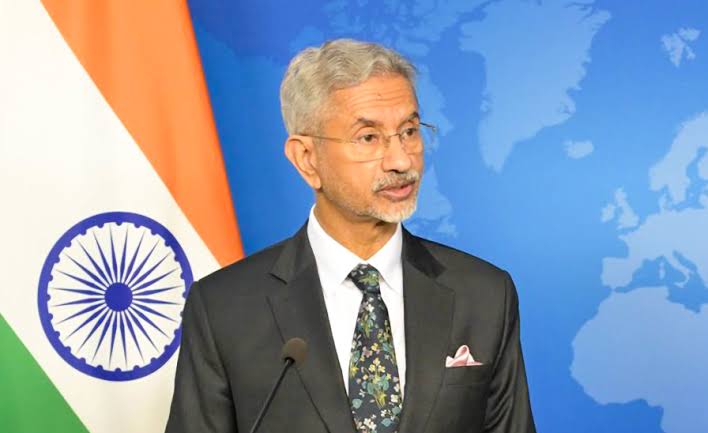
NEW DELHI: Indian External Affairs Minister Dr S Jaishankar has lodged a strong diplomatic protest with the United States after three Indian sailors lost their lives in a strike on a commercial vessel in the Gulf region, prompting to take up the matter directly with US Secretary of State Marco Rubio. EAM Jaishankar said on X, “Spoke to US Secretary of State Marco Rubio this evening. I reiterated India’s strong protest at the attacks by the US Navy in the Gulf that killed three Indian mariners. Such lethal actions against commercial shipping are not justified.”
External Affairs Minister S. Jaishankar discussed the matter with US Secretary of State Marco Rubio and expressed India’s deep concern over the deaths. During the conversation, Jaishankar reportedly underlined that the use of force against commercial shipping cannot be justified when it puts civilian lives at risk. He stressed that seafarers carrying out their professional duties should not be caught in the crossfire of geopolitical conflicts.
The deaths of the three Indian nationals have triggered outrage and concern in India, with New Delhi emphasizing that commercial vessels and civilian mariners must not become victims of military operations. The incident occurred amid heightened tensions in West Asia, where military actions linked to the ongoing confrontation involving Iran have increased risks for merchant shipping and international trade routes.
According to reports, the three sailors were serving aboard a commercial tanker operating near the Gulf of Oman when it came under attack during a US military operation. While details surrounding the strike continue to emerge, Indian authorities confirmed that the sailors had died, turning what was initially a rescue and search effort into a tragic loss of life.
Dr. S Jaishankar also highlighted India’s long-standing position that freedom of navigation and the safety of international maritime routes are critical for global trade and economic stability. He called for greater caution in military operations conducted near busy commercial shipping lanes and urged steps to ensure that similar incidents do not occur in the future.
In a significant diplomatic move, India summoned the US chargé d’affaires in New Delhi to formally register its protest. The meeting marked the second time in recent days that the American envoy had been called by Indian authorities regarding attacks on vessels carrying Indian crew members in the region. Officials conveyed India’s expectation that civilian ships and their crews must be protected regardless of the broader security situation.
The Ministry of External Affairs expressed its condolences to the families of the deceased sailors and assured that all necessary assistance would be provided. Indian missions in the region have also been directed to remain in contact with shipping companies and local authorities to monitor the welfare of Indian nationals working aboard merchant vessels.
The deaths have once again drawn attention to the large number of Indian seafarers employed across the global maritime industry. India is among the world’s leading suppliers of maritime manpower, with hundreds of thousands of Indian sailors serving on cargo ships, tankers and commercial vessels operating across international waters. Any escalation in conflict zones directly affects the safety and security of these workers.
Maritime experts have warned that the Gulf region remains one of the most strategically important shipping corridors in the world. A substantial share of global energy supplies and commercial goods passes through nearby waterways, making any military confrontation a matter of international concern. Attacks on commercial vessels not only threaten human lives but also disrupt supply chains, increase insurance costs and create uncertainty for global markets.
The latest incident comes amid a broader escalation in tensions involving the United States and Iran. Military strikes, retaliatory actions and heightened naval activity have increased risks for merchant vessels operating in and around the Gulf of Oman, the Arabian Sea and the Strait of Hormuz. Several shipping companies have already reviewed their routes and security protocols in response to the deteriorating security environment.
India has consistently advocated dialogue and diplomacy as the preferred means of resolving regional disputes. Following the deaths of the sailors, New Delhi reiterated its call for restraint by all parties and urged efforts to prevent further escalation. Officials noted that continued conflict would only increase dangers for civilians, including seafarers who play a vital role in maintaining global commerce.
Families of the deceased sailors are now awaiting the return of the bodies and further details about the circumstances that led to the strike. Government agencies are coordinating with shipping authorities and foreign governments to facilitate necessary procedures and support affected relatives.
While India and the United States continue to maintain a strong strategic partnership across defence, trade and technology sectors, New Delhi’s response underscores the seriousness with which it views the loss of Indian lives. By raising the issue directly with Marco Rubio and summoning the US envoy, India has sent a clear message that the safety of its citizens remains a top priority and that civilian casualties in military operations demand accountability.
As investigations and diplomatic engagements continue, the focus remains on securing justice for the victims, supporting their families and ensuring stronger protections for commercial shipping in one of the world’s most volatile maritime regions.