
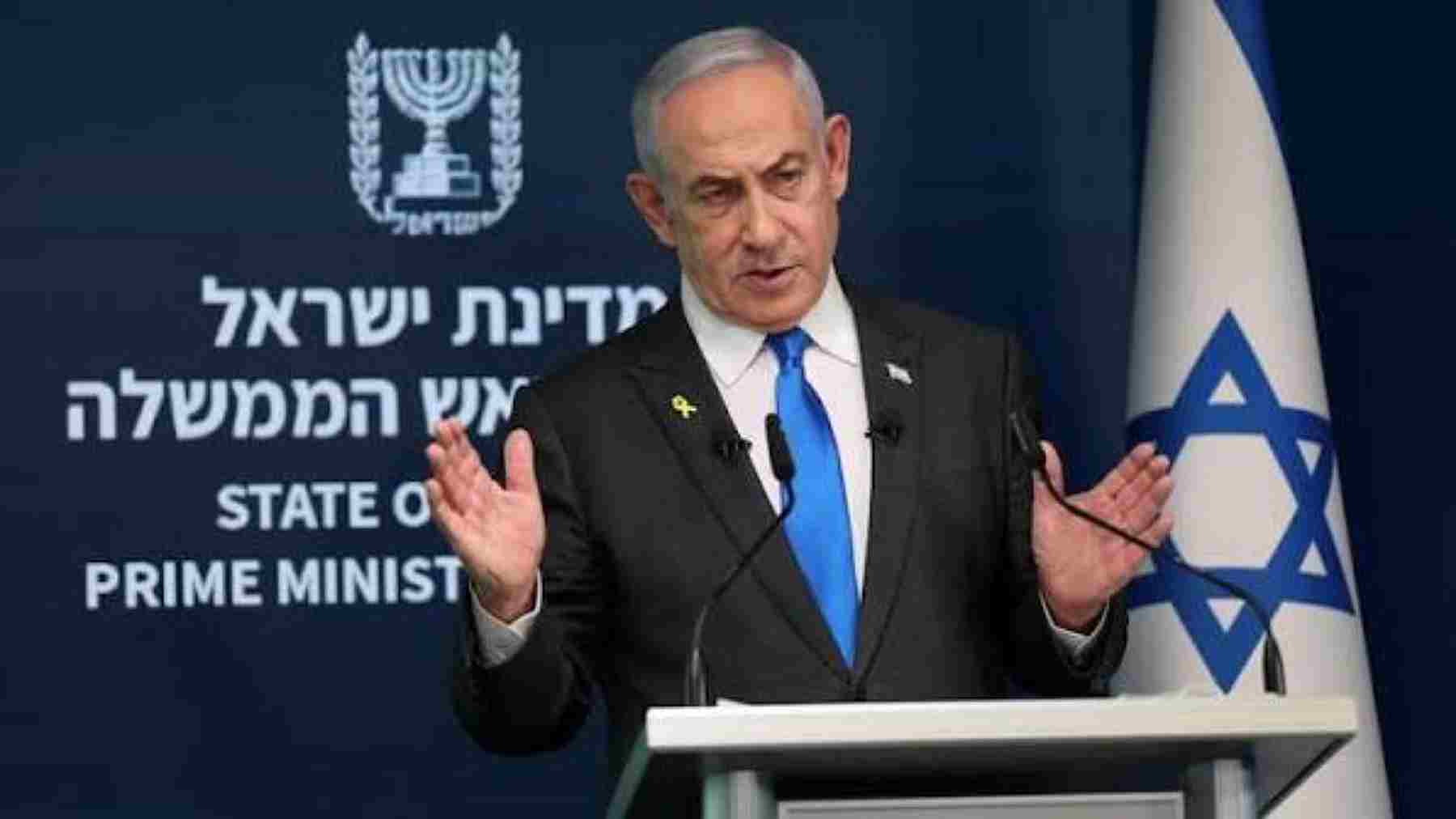
Israeli Prime Minister Benjamin Netanyahu has rejected the latest US-backed Gaza peace proposal, drawing a sharp line against key elements of the plan and declaring that there will be no Palestinian state as long as he remains prime minister. His stance threatens to deepen disagreements between Israel and the administration of US President Donald Trump over the future of Gaza and the broader Israeli-Palestinian conflict.
Netanyahu made the remarks while addressing his cabinet on Sunday, firmly opposing the latest 15-point proposal associated with Trump’s Board of Peace. The Israeli leader said his government would not accept arrangements that, in his view, could compromise Israel’s security or allow Hamas to retain military capabilities.
The announcement comes at a sensitive moment for diplomatic efforts aimed at ending the prolonged Gaza conflict. The US-backed framework seeks to move negotiations into a new phase involving Hamas disarmament, an Israeli military withdrawal, international security arrangements and the establishment of a new Palestinian administrative structure.
Netanyahu Draws a Red Line on Palestinian Statehood
One of the strongest elements of Netanyahu’s statement was his rejection of Palestinian statehood.
He said that “as long as I am prime minister, no Palestinian state will arise,” reinforcing his long-standing opposition to the creation of an independent Palestinian state under current circumstances. The declaration is likely to create another major obstacle for international diplomatic efforts seeking a political solution to the conflict.
The issue of Palestinian statehood has remained one of the most contentious subjects in negotiations involving Israel, the Palestinians, Arab countries and Western governments. While several international actors have backed a two-state framework, Netanyahu and members of his governing coalition have repeatedly opposed steps that could lead directly to Palestinian sovereignty.
His latest statement therefore places the question of statehood at the centre of the growing disagreement surrounding the US-backed Gaza proposal.
Israel Demands Complete Hamas Disarmament
Netanyahu also rejected the idea of an Israeli military withdrawal from Gaza before Hamas is fully disarmed.
According to his position, Israel’s military will not withdraw until Hamas has undergone what he described as genuine disarmament. Israel is demanding that Hamas surrender its weapons and eliminate its military capabilities rather than simply agreeing to a symbolic or partial weapons handover.
Netanyahu stressed that Israel wants “real disarmament,” including the removal of weapons beyond major military equipment. His government has argued that allowing Hamas to retain any significant armed capability could create a future security threat to Israeli communities.
The demand has emerged as one of the biggest sticking points in the implementation of the proposed peace framework.
Trump’s Plan Faces a Major Setback
Trump had promoted the Gaza initiative as a potential route toward a new phase of the conflict and described progress on the proposal as an important diplomatic development.
The framework reportedly envisages Hamas disarmament alongside a phased Israeli withdrawal. It also includes plans for an international stabilisation force and a new Palestinian police structure intended to support security and governance in Gaza.
However, Israel and Hamas have different interpretations of the order in which these measures should take place.
Israel insists that Hamas must first be fully disarmed before Israeli troops withdraw. Hamas, meanwhile, has sought guarantees that Israeli military operations will stop and that Israel will proceed with its withdrawal as part of the broader process.
That fundamental disagreement could make implementation extremely difficult.
Hamas Disarmament Becomes Central Challenge
The question of Hamas’ weapons remains at the heart of the diplomatic deadlock.
Hamas has indicated willingness to place weapons under the control of a US-backed technocratic administration, but Israel has demanded verifiable and comprehensive disarmament. Israeli officials have repeatedly expressed concern that Hamas could rebuild its military infrastructure if Israeli forces leave before the process is completed.
For Netanyahu, the issue is directly linked to Israel’s national security. His government argues that the events that triggered the Gaza war demonstrated the dangers of allowing Hamas to maintain a powerful armed presence.
The Israeli position could consequently force Washington to reconsider how it intends to bridge the gap between the two sides.
Political Pressure Adds to Netanyahu’s Hardline Position
Netanyahu’s rejection also comes amid intense political pressure inside Israel.
His coalition includes far-right ministers who have consistently opposed concessions involving Gaza and Palestinian statehood. Those political allies have backed a tougher approach toward Hamas and have argued that reconstruction and political arrangements should not proceed until the militant group is dismantled.
Netanyahu must therefore balance pressure from Washington with demands from his domestic political base and concerns within Israel’s security establishment.
Also Read- Jobs in India: AI Skills Could Transform Careers And Create 51,000+ New Opportunities
The disagreement could become even more significant as Israel moves toward its next political cycle.
Humanitarian Crisis Raises Pressure for a Deal
The diplomatic stalemate comes against the backdrop of a devastating humanitarian crisis in Gaza.
Years of conflict have caused enormous destruction, displacement and loss of life, while efforts to establish a durable political and security arrangement have repeatedly encountered obstacles. The continuation of military operations and uncertainty over the future of Gaza have increased pressure on international actors to find a workable settlement.
Any agreement would need to address not only Israel’s security demands but also Gaza’s reconstruction, governance, humanitarian needs and the political future of Palestinians.
What Happens Next?
Netanyahu’s latest declaration could intensify diplomatic pressure on Washington and other mediators to find a compromise acceptable to Israel while preserving the core objectives of the proposed Gaza framework.
The most difficult questions remain unresolved: when Israeli forces should withdraw, how Hamas would surrender its weapons, who would govern Gaza and whether Palestinians would eventually have a path toward statehood.
For now, Netanyahu has made his position unmistakable. Israel will not accept an arrangement that allows Hamas to remain armed, and he has ruled out Palestinian statehood while he remains prime minister. That hardline position could deliver a major setback to Trump’s Gaza peace initiative and prolong uncertainty over the territory’s political and security future.
Click here to join our WhatsApp Channel for real-time news updates and exclusive coverage.