
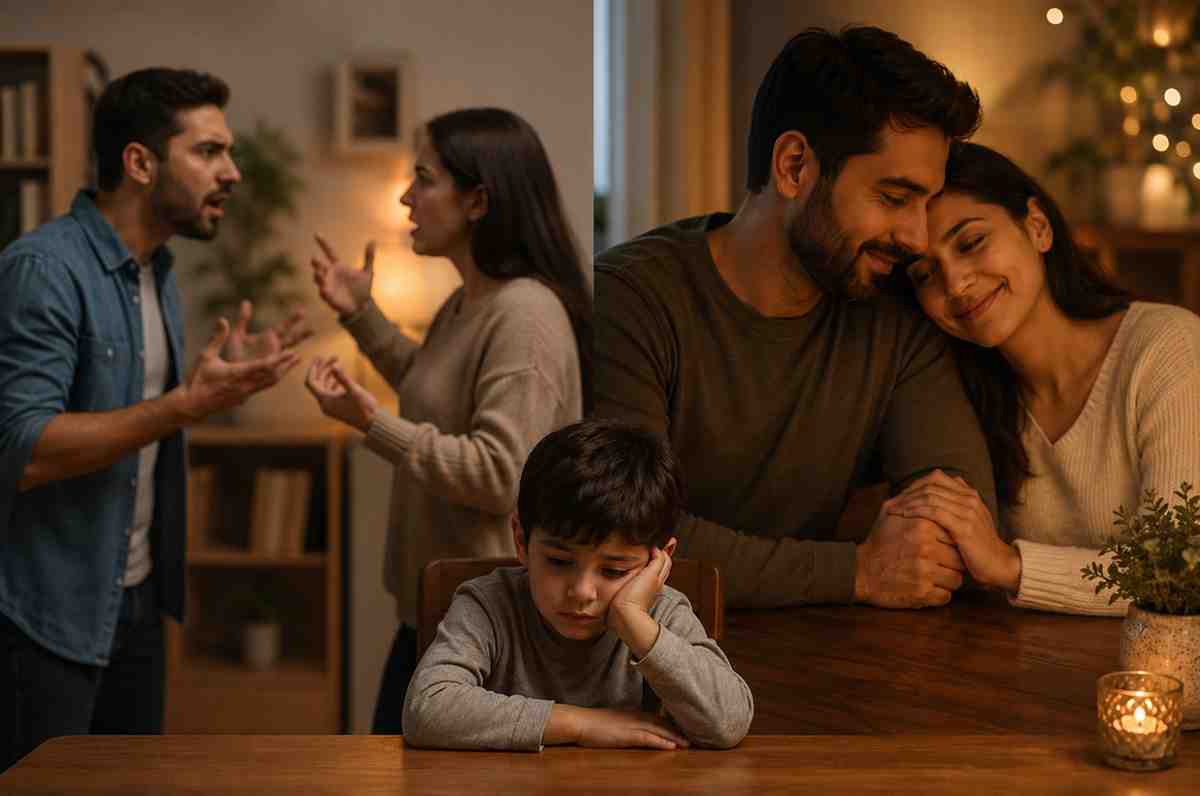
Across the world, millions of couples begin their relationships with passion, excitement, and unwavering commitment. In the early days, many partners go out of their way to make each other feel loved—sending thoughtful messages, planning surprises, making time despite busy schedules, and listening with genuine interest.
Yet for many couples, something changes after marriage.
As responsibilities increase, conversations decrease. The effort that once came naturally begins to fade. Some partners become emotionally distant, some hide problems instead of discussing them, and in some cases, repeated dishonesty slowly replaces trust. Relationship experts warn that this pattern is becoming one of the hidden contributors to marital dissatisfaction, emotional separation, and divorce.
The greatest victims are often not only the husband and wife—but also their children.
Why Does Interest Decline? The Psychology Behind It
According to relationship psychologists, lasting love depends on more than strong emotions. It requires intentional effort.
During the early stage of romance, the brain releases large amounts of dopamine—the chemical associated with excitement, anticipation, and reward. Every phone call, message, and meeting feels thrilling.
However, as the relationship becomes familiar, dopamine naturally decreases. This is a normal psychological process known as hedonic adaptation.
Healthy couples understand that while excitement changes over time, love can deepen through trust, friendship, respect, and emotional intimacy.
Unfortunately, some people mistake the end of the “honeymoon phase” for the end of love itself.
Instead of investing in the relationship, they begin searching for excitement elsewhere.
When Lust Replaces Commitment
Experts explain that lust and lifelong commitment are not the same.
Lust seeks novelty.
Commitment chooses one person repeatedly.

Some individuals become addicted to the excitement of being admired, desired, or pursued. Once the relationship becomes stable, they may start seeking validation from someone new—not because their spouse lacks value, but because they continue chasing the emotional “high” of new attention.
Psychologists emphasize that this pattern reflects emotional immaturity or poor self-regulation rather than a healthy model of love.
The Hidden Damage of Repeated Lies
One of the most destructive habits in any marriage is continuous lying.
Whether the lies concern finances, online conversations, friendships, whereabouts, or broken promises, repeated dishonesty gradually destroys emotional safety.
A spouse who is repeatedly lied to often begins to experience:
- Constant anxiety
- Overthinking every conversation
- Difficulty trusting even truthful statements
- Emotional withdrawal
- Loss of self-confidence
- Feelings of loneliness despite being married
Eventually, the relationship shifts from partnership to suspicion.
Trust, once broken repeatedly, becomes extremely difficult to rebuild.
Children See More Than Parents Realize
Children may not know the details of adult conflicts, but they notice emotional distance.
They observe:
- Silence replacing conversation
- Arguments replacing laughter
- Coldness replacing affection
- Distrust replacing teamwork
Research suggests that children who grow up amid chronic, unresolved conflict are at increased risk of anxiety, behavioral difficulties, and challenges in their own future relationships. At the same time, experts also note that remaining in a marriage marked by ongoing abuse or severe hostility is not healthier than a respectful separation. What benefits children most is a stable, emotionally safe environment.
Also Read: Suspended Badrinath Temple Committee Employee Arrested In Donation Theft Case
What Every Husband Should Remember
Marriage is not won on the wedding day.
It is won every ordinary day afterwards.
Psychologists encourage husbands to ask themselves:
“Am I treating my wife with the same care I showed when I was trying to win her heart?”
Love is not proven only by providing financially.
It is also shown through daily emotional presence.
10 Habits That Can Save a Marriage
1. Keep Dating Your Wife
Marriage should never end courtship.
Plan simple outings.
Celebrate small moments.
Continue making her feel chosen.
2. Tell the Truth—Even When It Is Difficult
Honesty builds emotional safety.
One uncomfortable truth is less damaging than months of hidden lies.
Transparency creates security.
3. Listen Before Solving
Many partners do not always need immediate solutions.
Sometimes they simply want to feel understood.
Listen without interrupting.
Validate feelings before giving advice.
4. Protect Your Marriage From Temptation
Set healthy boundaries with colleagues, friends, and social media.
Avoid secret conversations that would make your spouse uncomfortable if discovered.
Faithfulness begins with daily choices, not just major decisions.
5. Communicate Every Day
Even twenty uninterrupted minutes of meaningful conversation can strengthen emotional intimacy.
Ask questions.
Share feelings.
Express gratitude.
Stay curious about each other’s lives.
6. Share Responsibilities
Household work and parenting should be a partnership.
When responsibilities are shared fairly, resentment decreases and teamwork grows.
7. Never Stop Showing Appreciation
Simple words such as:
“Thank you.”
“I’m proud of you.”
“I appreciate everything you do.”
can have a powerful psychological impact over time.
8. Manage Conflict Respectfully
Disagreements are normal.
Humiliation is not.
Attack the problem—not each other.
Avoid insults, contempt, and threats.
9. Seek Help Early
Counseling is not a sign of failure.
It is often easier to repair small cracks than rebuild a collapsed foundation.
Early intervention can prevent years of resentment.
10. Choose Commitment Every Day
Feelings naturally rise and fall.
Commitment is a daily decision.
Strong marriages are built by ordinary acts of kindness repeated consistently over many years.
A Message to Society
Marriage should not be viewed merely as a legal relationship.
It is an emotional partnership that shapes the next generation.
Schools teach mathematics, science, and history—but very few people receive formal education in emotional intelligence, conflict resolution, communication, or healthy relationships.
Experts increasingly recommend relationship education, premarital counseling, and greater public awareness of mental health as practical ways to strengthen families.
The Final Word
Love is not sustained by grand gestures alone.
It survives through honesty, transparency, patience, respect, forgiveness, and consistent effort.
A husband who continues to invest emotionally in his wife after marriage gives his family more than financial security—he gives them emotional security.
A wife who feels heard, respected, and valued is more likely to build a peaceful home.
And children who grow up watching love expressed through trust, kindness, and teamwork carry those lessons into the relationships they build as adults.
Saving marriages is not about pretending problems do not exist.
It is about facing them together—with truth, empathy, and the courage to keep choosing each other every day.
Click here to join our WhatsApp Channel for real-time news updates and exclusive coverage.