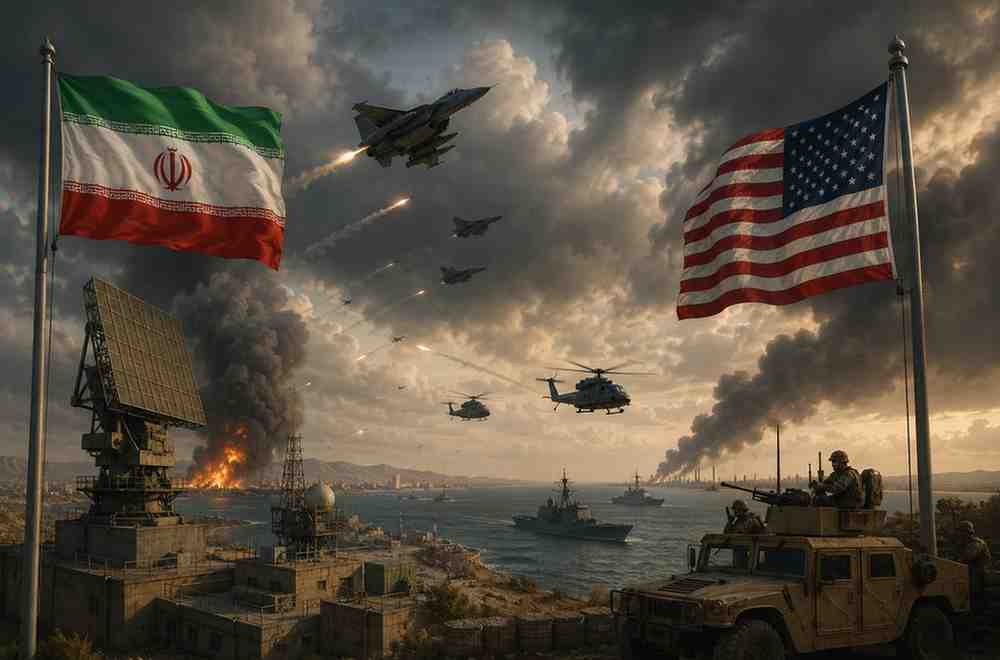
The United States has launched a new wave of military strikes against multiple targets in Iran, significantly escalating tensions in the ongoing conflict. The strikes came after US President Donald Trump warned Tehran that it would face consequences for what he described as delays in negotiations aimed at ending the war.
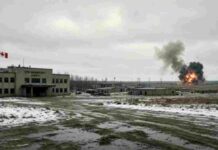
The US Central Command confirmed on Wednesday that American forces were carrying out attacks on several locations inside Iran. According to the military, the operations were conducted in response to what it called Iran’s continued aggression and hostile actions in the region.
The latest strikes follow a series of confrontations that intensified after a US Army helicopter crashed near the Strait of Hormuz. President Trump blamed Iran for the incident and ordered retaliatory action. The helicopter reportedly collided with an Iranian drone during operations in the area, though investigations into the exact circumstances remain ongoing. Both crew members survived and were rescued without injuries.
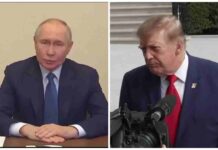
As military action continued, Trump once again urged Iran to agree to a deal that would bring an end to the conflict. However, his remarks suggested growing frustration with the pace of negotiations.
“Iran is taking too long to negotiate a deal,” Trump said, adding that Tehran would now “have to pay the price.”
Earlier in the day, US forces also targeted an oil tanker accused of transporting Iranian crude oil in violation of an American-led blockade. The vessel, identified as the Palau-flagged M/T Settebello, was reportedly disabled after US aircraft struck its engine room with precision-guided munitions.
India’s Ministry of External Affairs stated that three Indian sailors aboard the tanker remain missing, while 21 others were rescued. The Indian government did not directly comment on the US operation but said efforts were underway to determine the status of the missing crew members.
The conflict has increasingly centered around the Strait of Hormuz, one of the world’s most critical energy corridors. Iran has repeatedly indicated that its ability to disrupt shipping through the waterway provides it with significant leverage in any negotiations. The strategic route handles a large share of global oil and gas exports.
Trump claimed that US military operations had helped commercial vessels bypass Iranian interference in the strait through what he described as a “secret mission.” According to the President, more than 100 million barrels of oil had successfully moved through the region despite Iranian attempts to restrict maritime traffic. Independent confirmation of that figure was not immediately available.
Iran, meanwhile, condemned the latest attacks and accused Washington of violating its sovereignty. Iranian Foreign Minister Abbas Araghchi denounced the strikes, while Foreign Ministry spokesperson Esmail Baghaei said Tehran would reassess its position on peace negotiations following the new military action.
Iran’s ambassador to the United Nations, Amir Saeid Iravani, also rejected US pressure tactics. Addressing the UN Security Council, he stated that Iran would not negotiate under threats and would not surrender to external pressure.
Despite the escalating violence, diplomatic efforts remain underway. Reports indicated that a Qatari delegation arrived in Tehran for discussions after consultations with US officials, signaling continued attempts to find a political solution to the conflict.
The broader war has also drawn in regional actors. Iran and Israel continued exchanging attacks, while fighting involving the Iran-backed Hezbollah movement in Lebanon intensified. Israeli strikes in southern Lebanon reportedly killed several people, adding another layer of instability to an already volatile region.
The conflict has had major economic consequences worldwide. Global energy markets have reacted sharply, with benchmark crude oil prices rising above $93 per barrel—an increase of more than 25 percent since the war began. The surge in energy costs has contributed to higher prices for transportation, food, and other essential goods across multiple countries.
A key obstacle to any settlement remains Iran’s nuclear programme. Washington is demanding that Tehran surrender its stockpile of highly enriched uranium, arguing that the material could potentially be used for nuclear weapons. Iran insists its programme is peaceful and has refused to relinquish the uranium without significant sanctions relief and access to frozen assets.
With both sides maintaining firm positions and military operations intensifying, prospects for a swift resolution remain uncertain despite ongoing diplomatic efforts.