
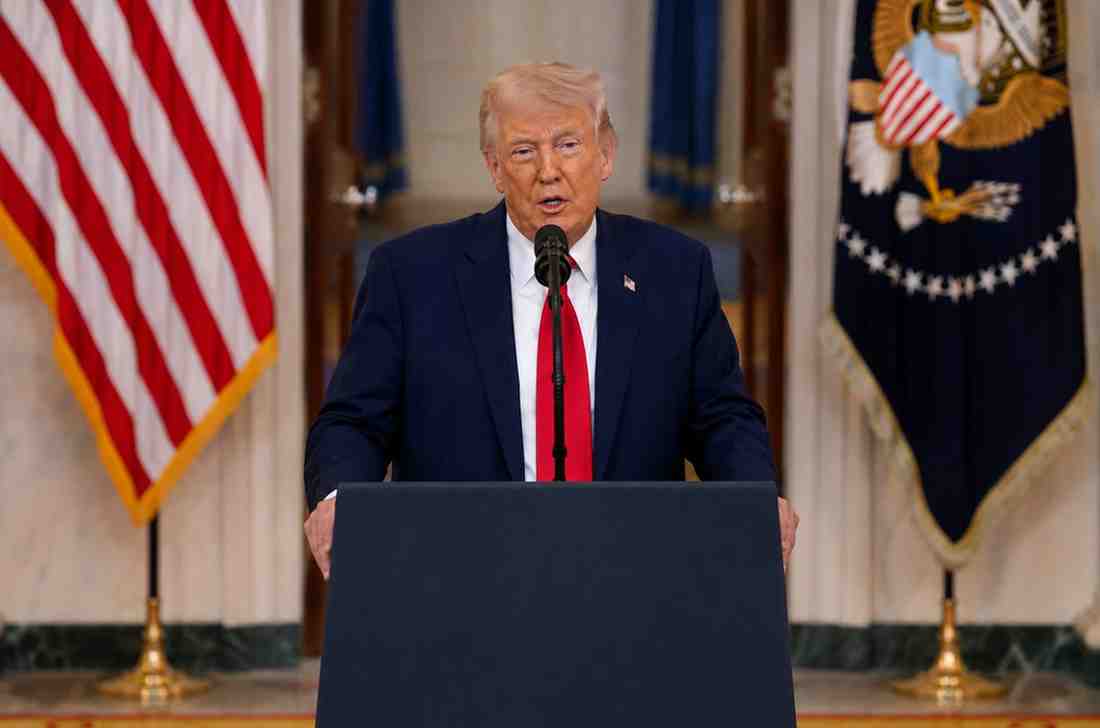
Efforts to secure a ceasefire in the ongoing West Asia conflict have encountered a fresh hurdle after US President Donald Trump reportedly requested significant revisions to a proposed agreement aimed at ending hostilities between Iran, Israel and the United States.
According to reports from American media outlets, Trump has sent a modified version of the peace framework back for further consideration by Iranian authorities, introducing new conditions that could extend negotiations and delay a final settlement.
Officials familiar with the discussions indicated that the original proposal had been nearing completion before the US President sought changes to several key provisions. While the exact details of the revisions have not been publicly disclosed, reports suggest that Trump wanted stronger safeguards concerning Iran’s nuclear programme and the handling of the country’s nuclear materials.
The development comes at a crucial stage in diplomatic efforts to end the conflict that erupted following joint US-Israeli military strikes on Iranian targets on February 28. Since then, the region has witnessed heightened tensions, military exchanges and growing concerns over the wider impact of the war on global energy supplies and regional stability.
Sources in Washington had earlier indicated that negotiators were awaiting Trump’s approval before moving ahead with the proposed agreement. However, following a high-level meeting in the White House Situation Room on Friday, the President reportedly withheld immediate approval and instead requested additional modifications.
The latest move has created uncertainty around the timeline for a potential breakthrough. Diplomats involved in the process now expect further rounds of consultations before Tehran decides whether to accept the revised terms.
Trump has repeatedly outlined two primary objectives for any future agreement with Iran. The first is a permanent commitment from Tehran not to pursue nuclear weapons development. The second is the reopening of the strategically important Strait of Hormuz, which has faced disruptions during the conflict.
The Strait of Hormuz remains one of the world’s most critical maritime routes, serving as a passage for nearly one-fifth of global oil shipments. Any prolonged disruption in the waterway could have significant consequences for international energy markets, fuel prices and global economic stability.
Analysts believe the President’s insistence on stricter conditions reflects Washington’s desire to secure a more comprehensive agreement rather than a temporary ceasefire. At the same time, observers warn that additional demands could complicate negotiations and make it more difficult to achieve consensus among the parties involved.
Iran has not yet publicly responded to the revised proposal. However, officials and diplomats closely monitoring the talks say Tehran’s reaction will be crucial in determining whether the peace initiative moves forward or enters another prolonged phase of negotiations.
The conflict has already reshaped the geopolitical landscape of West Asia, drawing international attention to the risks of escalation between major regional powers. Governments across Europe, Asia and the Middle East have repeatedly called for restraint and a diplomatic resolution to prevent a broader regional crisis.
As negotiations continue behind closed doors, the focus now shifts to whether the revised framework can bridge the remaining differences between the parties. Until a final agreement is reached, uncertainty is likely to persist over both the future of the conflict and the stability of one of the world’s most strategically important regions.