India is preparing for a major technology-led transformation of its mining and metals sector, with the government calling for greater adoption of artificial intelligence, automation, digitalisation and advanced technologies across the entire mineral value chain.
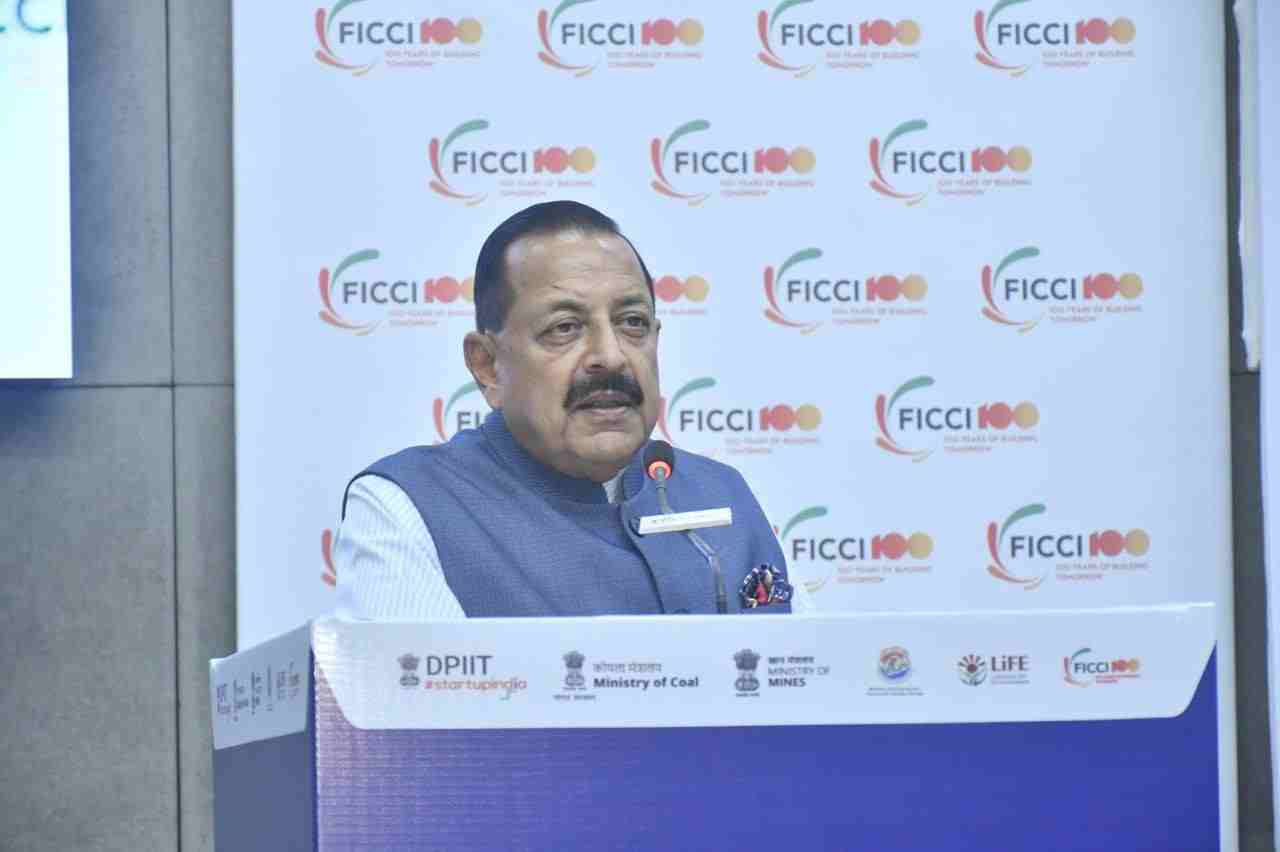
Union Minister of State (Independent Charge) for Science & Technology and Earth Sciences and MoS in the Prime Minister’s Office, Personnel, Public Grievances, Pensions, Atomic Energy and Space, Dr. Jitendra Singh, said India must move beyond its traditional resource advantage and build technology-driven competitiveness in mining and metals.
Addressing the third edition of the FICCI conference on “Digitalization, AI, Automation & Technology Integration in Mining & Metals: Enhancing Competitiveness of the Sector,” Singh said technology should be integrated from geological exploration and mining to processing, logistics, recycling and downstream manufacturing.
Technology to Reshape India’s Mining Value Chain
Dr. Jitendra Singh said the future competitiveness of India’s mining and metals industry would not be determined simply by the volume of minerals extracted or metals produced.
Instead, he said the focus must increasingly be on how efficiently, safely, sustainably and intelligently geological resources are converted into high-value and resilient material supply chains.
The Minister called for a shift from isolated tech experiments to connected, scalable and trusted technology systems capable of delivering industrial-scale transformation.
According to Singh, digital technologies can integrate geological, operational, equipment, process, energy, logistics and market data. Such integration can provide companies with better visibility and enable faster decision-making, predictive capabilities, improved coordination and greater automation.
Advanced process technologies can also help improve extraction and recovery rates, utilise low-grade ores and residues, lower energy and water consumption and support low-carbon metal production.
AI and Automation to Improve Competitiveness
The Minister highlighted the potential of technology to strengthen India’s capabilities in separation, refining, advanced materials and recycling.
Such developments, he said, could help lower production costs while improving the competitiveness of Indian minerals and metals in both domestic and international markets.
Singh emphasised that tech solutions must be designed according to India’s specific operating conditions. Tech companies and start-ups need to account for India’s diverse geology, existing brownfield plants, challenging environmental conditions, affordability requirements, interoperability and the need for large-scale deployment.
“We should not be content only by adopting the next generation of mining and metals technologies. Our ambition should be to develop, demonstrate and scale technologies in India, for India and for the world,” Singh said.
Mining Sector Eyes Technology-Led Competitive Advantage
Prof. Gobardhan Das, Member of NITI Aayog, said India’s mining and metals industry must transition from a resource advantage to a technology-led competitive advantage.
He said digitalisation, AI, automation and tech integration should no longer be treated as isolated tools or individual pilot projects. Instead, they should become strategic enablers across exploration, extraction, beneficiation, refining and recovery.
Das identified five critical elements for the sector’s technology transition: measurable value from tech adoption, reliable data and strong digital foundations, industrial test beds and demonstration partnerships, future-ready talent, and collaboration across the wider ecosystem.
He stressed that the success of technology adoption should ultimately be assessed by whether innovations are validated, commercially adopted and replicated rather than merely by the number of pilots, patents or digital platforms created.
Industry Calls for Measurable Tech Outcomes
Subhrakant Panda, Past President of FICCI and Managing Director of Indian Metals and Ferro Alloys Ltd, said the industry’s focus must shift from production volumes alone towards efficiency and sustainability.
He emphasised that India’s mineral wealth can deliver greater economic value when companies adopt modern technologies and improved operational practices.
Panda also called for technology investments to deliver measurable outcomes and said the industry must move beyond experimentation. He highlighted the importance of developing people and skills alongside investments in machinery and software.
Ranjan Dhar, Co-Chair of the FICCI Steel Committee and Director and Vice President – Sales & Marketing at AM/NS India, stressed the importance of sustained technology adoption.
Also Read | Trump Signs Russia Sanctions Law, India Faces Fresh 100% Tariff Threat Over Russian Oil
He pointed to the enormous amount of data generated across the mining and metals industry, saying effective use of this data could help companies achieve efficiency levels comparable with leading global standards.
Digital Transformation and Responsible AI
S B Mohanty, Chairman and Managing Director of IREL (India) Ltd, said mining and steel operations need to become more productive, sustainable, safe and agile.
He described digital transformation as a strategic accelerator but noted that scaling digital solutions across organisations remains a major challenge.
Mohanty highlighted the importance of responsible AI, reliable data and strong digital foundations. Fragmented data, legacy systems, skill shortages and limited cross-functional ownership, he said, can restrict the impact of digital initiatives.
FICCI-TEXMiN MoU and Technology Report Released
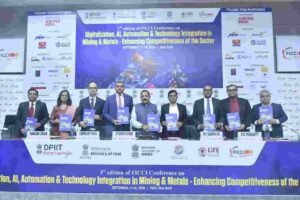
The conference also witnessed the signing of a Memorandum of Understanding between FICCI and TEXMiN (Technology Translation Research Park) under the Department of Science & Technology, Government of India.
A new FICCI-KPMG report, titled “Mineral Extraction to Metals Production: India’s Technology Pivot for Competitiveness,” was also released at the event.
The report identifies three major priorities for India’s mining and metals technology transition: strategic technology leadership, scaling innovations from pilot projects to commercial deployment, and strengthening the ecosystem for faster technology adoption.
The discussions underscored the growing role of AI, automation, digital infrastructure and innovation in preparing India’s mining and metals sector for the country’s long-term Viksit Bharat 2047 development ambitions.
Click here to join our WhatsApp Channel for real-time news updates and exclusive coverage.