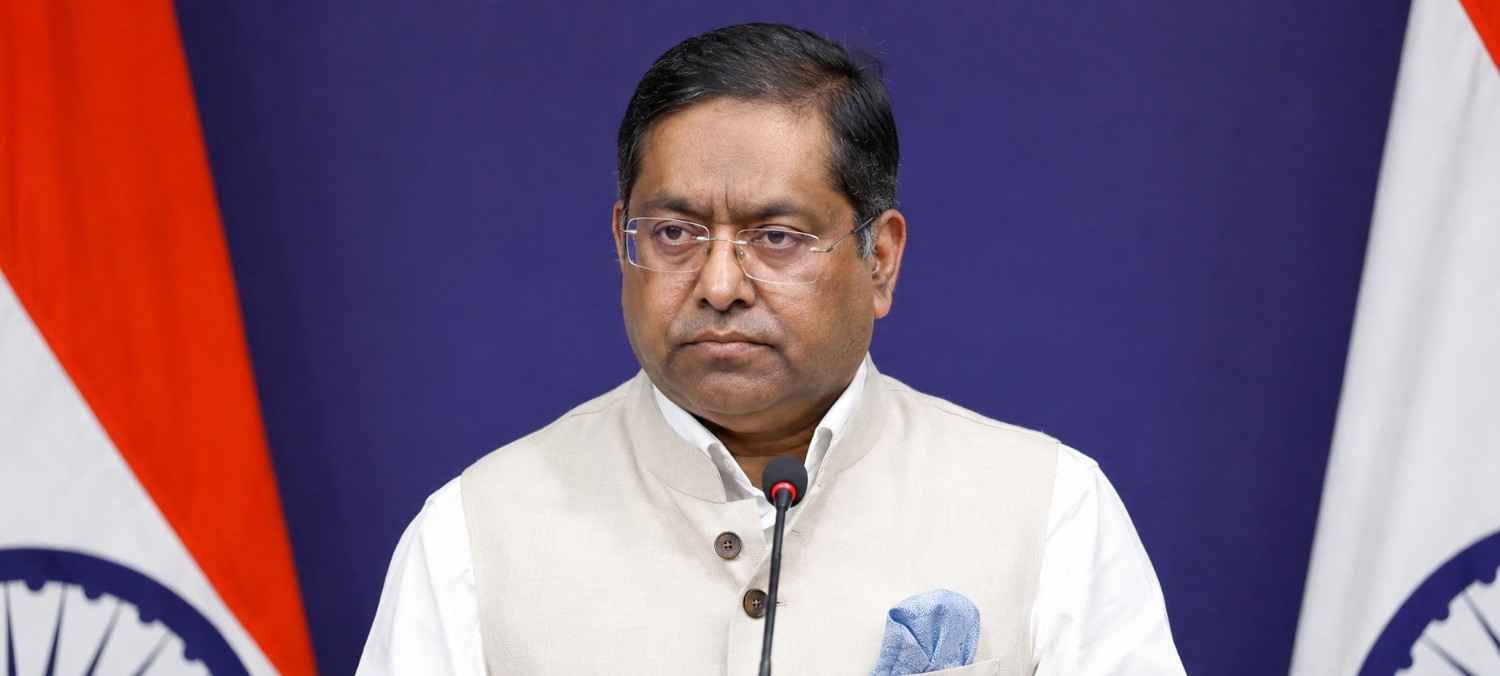
India on Wednesday strongly rejected the operationalisation of the Pakistan-China Boundary Joint Commission, asserting that the mechanism has no legal basis and cannot affect India’s sovereignty over territories it considers integral to the country. The Ministry of External Affairs (MEA) also reiterated that India has never recognised the 1963 China-Pakistan Boundary Agreement.
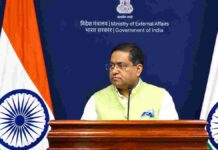
MEA spokesperson Randhir Jaiswal made the remarks in response to media queries on September 16, 2026, after Islamabad announced that it and China had operationalised the joint commission in Islamabad. Pakistan described the move as a mechanism for greater cooperation in areas including border management, joint surveys, trade flows and people-to-people connectivity.
India Rejects Pakistan-China Boundary Commission
Jaiswal said New Delhi’s position on the issue remained “clear and consistent”, maintaining that India does not recognise a Pakistan-China boundary in the context of the territories claimed by India.
India rejected what it described as the “so-called” Joint Commission, arguing that the mechanism lacks a legal foundation from New Delhi’s perspective. The statement came shortly after the first meeting of the commission was held at Islamabad’s Ministry of Foreign Affairs in Islamabad.
According to Pakistan’s Foreign Office, the commission is intended to provide an institutional framework for cooperation relating to border management, joint border surveys, trade and connectivity between the two countries. Islamabad termed its operationalisation a significant development in bilateral relations.
India Reaffirms Position on Jammu and Kashmir, Ladakh
The MEA statement also reiterated India’s position concerning the Union Territories of Jammu and Kashmir and Ladakh.
New Delhi stated that both Union Territories are integral and inalienable parts of India. It further argued that Islamabad does not have the authority, from India’s standpoint, to enter into arrangements involving territories that India says are under Pakistan’s illegal and forcible occupation.
The Indian government has consistently maintained that developments involving these territories cannot alter its stated position on sovereignty or territorial integrity.
New Delhi Rejects 1963 China-Pakistan Boundary Agreement
Another central point in the MEA response was India’s longstanding opposition to the China-Pakistan Boundary Agreement of 1963.
Also Read — Anant Nag To Receive Dadasaheb Phalke Award 2024 For Landmark Cinema Journey
Jaiswal reiterated that India has never recognised the agreement and continues to regard it as illegal and invalid. New Delhi has previously objected to arrangements between Beijing and Islamabad involving territories that India claims as part of the former state of Jammu and Kashmir.
India’s position has also included opposition to the China-Pakistan Economic Corridor (CPEC) because portions of the corridor pass through areas of Pakistan-occupied Jammu and Kashmir, according to reporting on the government’s position.
India Warns Against Changing Status of Occupied Territories
The MEA further stated that India would oppose attempts to change the status of territories it considers occupied or to legitimise what it describes as illegal occupation.
New Delhi said any China-Pakistan boundary cooperation concerning Indian territories would be unacceptable from India’s perspective and would not affect its stated sovereignty over those areas. The statement therefore sought to make clear that agreements or mechanisms established between Beijing and Islamabad would not be accepted by India as altering its territorial claims.
The response reflects India’s longstanding position that third-party arrangements involving territory claimed by India cannot determine the status of those areas without New Delhi’s acceptance.
MEA Calls on Islamabad to Vacate Territory
In its strongest portion, the Indian statement called on Islamabad to withdraw from territories that New Delhi says remain under its illegal and forcible occupation.
Jaiswal urged Islamabad to focus on vacating such areas rather than pursuing what he characterised as “theatrics”. The remarks underline the sharp disagreement between India’s position and the framework presented by Pakistan and China through the newly operationalised commission.
The development comes amid continuing diplomatic engagement between India and China on broader bilateral issues. India’s latest response, however, makes clear that any China-Pakistan arrangements concerning territories claimed by India remain a major point of contention for New Delhi.
Click here to join our WhatsApp Channel for real-time news updates and exclusive coverage.