
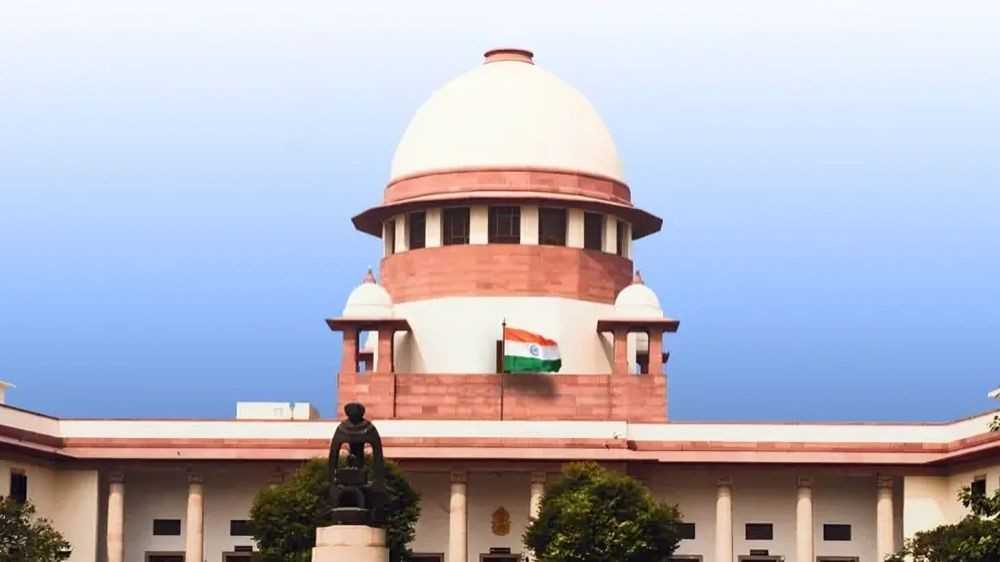
NEW DELHI: The Supreme Court on Thursday delivered a sharp rebuke to civic authorities and government officials over the continuing menace of illegal constructions across Delhi-NCR and other parts of the country, observing that authorities have been engaging only in “face-saving exercises” instead of taking meaningful action against those responsible for dangerous building violations. The court warned that officials who fail to enforce building regulations could soon face personal accountability for negligence.
Court Questions Lack of Action Against Officials
A Bench headed by Justice Ahsanuddin Amanullah expressed serious concern over the recurring incidents of building collapses and devastating fires, stating that authorities have largely focused on arresting builders while ignoring the role of officials entrusted with monitoring construction activities.

The court observed that illegal structures cannot continue to flourish without administrative failures or official negligence. According to the Bench, merely taking action after a tragedy occurs does little to prevent future disasters.
The judges recalled earlier observations made in May, when concerns had already been raised over rampant unauthorised construction in several parts of Delhi. Despite those warnings, multiple fatal incidents have occurred, prompting the court to question whether authorities had implemented any meaningful corrective measures.
Building Disasters Trigger Judicial Intervention
The Supreme Court referred to several recent incidents that have highlighted the risks posed by unsafe constructions.
Among them were the collapse of a multi-storey building in Delhi’s Saket area, the deadly fire in Malviya Nagar, and the massive blaze at a commercial building in Lucknow’s Aliganj locality. These incidents resulted in significant loss of life and injuries, raising concerns about whether municipal authorities had failed to act against illegal structural modifications and safety violations.
The Bench remarked that these tragedies were well documented and should have prompted immediate and comprehensive action from local administrations.
Instead, the court noted that little appeared to have changed despite repeated judicial directions.
MCD Faces Strong Criticism
The Municipal Corporation of Delhi (MCD) also came under severe criticism during the hearing.
The court observed that while notices may have been issued against illegal constructions, authorities had failed to pursue effective follow-up action. It questioned how unauthorised construction activities continued despite court orders and existing legal provisions.
Justice Amanullah reportedly remarked that construction activities had continued in several areas despite judicial restrictions, indicating possible collusion between violators and officials responsible for enforcement.
The Bench warned that its forthcoming orders could impose significant consequences on officers found responsible for allowing illegal structures to flourish.
It made it clear that accountability would no longer remain limited to builders or property owners.
IIT Delhi Experts to Conduct Inspection
To independently assess the situation on the ground, the Supreme Court directed the formation of a specialised inspection team.
Also Read: PM Modi On Operation Sindoor: “Explosions At Terror Camps Echoed Across World”
The committee will include two senior professors from IIT Delhi along with two experienced draftsmen. The team will inspect several areas where concerns regarding illegal construction and unsafe buildings have repeatedly surfaced.
Initially, inspections will cover Malviya Nagar, Saket and Lajpat Nagar in Delhi. A similar exercise has also been ordered in Lucknow’s Aliganj area.
Municipal officials will accompany the inspection team during the surveys, and the exercise will be coordinated by the Additional Solicitor General.
The committee has been asked to submit an objective report that will help the court determine the extent of violations and recommend corrective measures.
Court Seeks Wider Accountability
The hearing was not confined to Delhi alone. The Supreme Court also sought reports regarding action against illegal constructions from other states, including Tamil Nadu. It emphasised that unsafe and unauthorised buildings represent a nationwide governance issue rather than an isolated urban problem.
The Bench stressed that authorities across states must demonstrate concrete action instead of relying on routine paperwork or symbolic enforcement drives.
Officials were warned that future proceedings could include direct responsibility for administrative failures if illegal constructions continue to threaten public safety.
Earlier Warnings Ignored
The court recalled that it had already highlighted widespread violations in areas such as Lajpat Nagar and Sarojini Nagar during previous hearings.
It had then observed that many illegally modified buildings were structurally unsafe because additional floors or excessive loads had been added beyond approved plans.
The latest tragedies, according to the Bench, demonstrate the consequences of ignoring those earlier judicial concerns.
The judges expressed disappointment that authorities had not taken stronger preventive measures despite repeated warnings from the apex court.
Public Safety Takes Centre Stage
The Supreme Court’s latest observations underline growing judicial concern over urban safety, particularly in densely populated cities experiencing rapid and often unregulated construction.
Experts have frequently pointed out that illegal additions to buildings, inadequate fire safety systems, weak structural standards and poor enforcement create conditions that significantly increase the risk of disasters.
By seeking independent inspections and warning officials of personal consequences, the court has signalled that administrative accountability will now receive greater scrutiny.
The outcome of the inspection reports and subsequent hearings is expected to shape future directions on tackling illegal constructions and strengthening urban safety mechanisms across the country.
Click here to join our WhatsApp Channel for real-time news updates and exclusive coverage.