
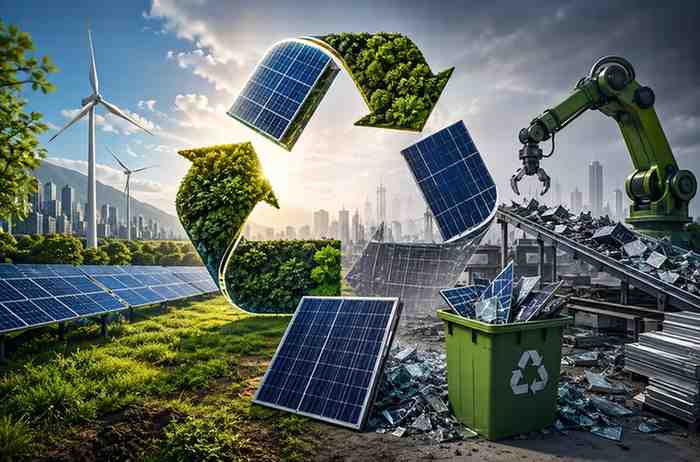
When we look at panels on rooftops and in the desert, we feel happy about the future being cleaner. Solar panels are really good at making energy without making a noise. They help us stop using fossil fuels. Solar panels do not last forever, and a lot of them are getting old. What happens when the things that are supposed to help the Earth start hurting it? This is a question we need to think about. Solar panels give us energy now, but they might cause a big problem with waste later if we do not do something about it. We need to figure out how to make and get rid of panels in a way that does not hurt the Earth. There are panels all over the world now on roofs and in fields. They use sunlight to make electricity, which helps us stop using coal and oil. Solar power is growing faster than any other kind of energy. Today, we have solar panels to give power to more than 300 million homes.
This sounds like something to be proud of. But there is a problem that we are not talking about enough: all these solar panels will become garbage someday.. We are not prepared for that. By the year 2050, there will be so many old solar panels that it will be a big problem. The question is not if this will happen; it is whether we will be ready when it does. We need to think about what to do with all the solar panels because solar panels are a big part of our lives now, and we want solar panels to keep helping us have clean energy so we need to deal with old solar panels responsibly.
A Mountain of Waste Coming Our Way
By the year 2050, we will have a lot of solar panels that do not work anymore. These dead solar panels will weigh 78 million tons. To put that in perspective, that is the weight of 200 Empire State Buildings. It is also similar to the weight of 20 million cars. Some people who know a lot about this think that the number of solar panels could be even higher. This is because some solar panels might break easily or get damaged in the weather.
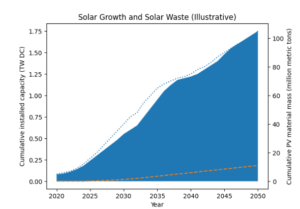
The big problem is that the amount of waste from these solar panels is going to increase very quickly. Now, in the year 2025, we are getting rid of about 250,000 tons of solar panels every year. By the year 2035, the amount of panels we throw away will go up to 5 million tons per year.. By the year 2050, we will be dealing with 10 million tons of old solar panels every single year. The reason for this increase is that a lot of solar panels were installed between the years 2010 and 2025. Solar panels are the reason for this huge amount of waste. We need to think about what to do with all these solar panels.
By 2035, that will jump to 5 million tons. By 2050, we’ll be dealing with 10 million tons every single year. This huge increase is due to the installation of so many panels between 2010 and 2025. This waste is different from old phones or computers. Those are small. But a single large solar farm can have hundreds of thousands of panels. When all those panels die at once, that’s a lot of waste in one place. Most towns and cities aren’t ready to handle that much. The first modern solar panels were put up between 1995 and 2005. Those are dying now. But this is just the beginning. The solar panels we put in during the 2010s and 2020s will start to stop working around 2040 to 2050. This is when we will have a problem with the solar panels. The solar panels will be very old, by then. Will not work like they used to. We will have to deal with a lot of solar panels around 2040 to 2050.
What’s Inside a Solar Panel?
From far away, a solar panel looks simple: a dark rectangle in a metal frame. But up close, it’s actually quite complex. It’s like a sandwich made of different materials, all glued together with super-strong glue that’s meant to last for 30 years in rain, wind, and sun. A typical solar panel is made of several layers. The front is thick glass, making up about 76% of the panel’s weight. This protects the solar cells underneath. The solar cells are thin slices of silicon, a material that creates electricity when sunlight hits it.
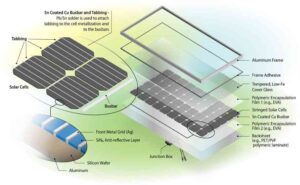
The solar cells are safe because they are, underneath a layer. The solar cells are really pieces of silicon. Silicon is a material that makes electricity when the sun shines on it. These solar cells are placed inside sheets of plastic. The plastic sheets are not very heavy they are about 10% of the total weight of the solar cells and the plastic. The solar cells are a part of this they need to be protected so they can keep making electricity from the sunlight.
Silver paste creates the electrical wires on each cell. Copper ribbons connect the cells. An aluminium frame holds everything in place (about 8% of the weight). The back is sealed with more plastic. A small box on the back contains connectors and protective parts. This design creates a big problem for recycling. The glue holding everything together is super strong. It’s designed to never break down. That’s great for keeping the panel working for 30 years.
But it’s terrible when you want to take the panel apart and recycle it. Breaking apart glass from plastic, silicon from silver, and aluminium from glue is very hard. Some panels use different technologies and contain even more unusual materials. These can include cadmium, tellurium, selenium, and indium.
These materials are both valuable and dangerous to human health. The annoying thing is that solar panels have things like silver, silicon, copper and aluminium inside them. There is 10 grams of silver in each solar panel.. It is just too expensive to get these things out of the solar panels.
A solar panel might have materials around 20 dollars but it actually costs, between 25 dollars and 30 dollars to recycle the solar panel properly. This is why companies do not want to recycle panels. They do not get any money from recycling panels.
The Problem with Clean Energy
Here’s the irony: solar panels are supposed to help the environment. If we do not handle panels correctly when they stop working solar panels can be really bad for the environment. Solar panels have things in them that can hurt the earth if we are not careful. For example solar panels have lead in the wires and connections. This lead can make the soil and water very sick. Some solar panels also have cadmium and cadmium can give people cancer. The plastic parts of panels are also bad because they can release chemicals that stay in the earth forever.
When solar panels are thrown away in landfills the bad things, in them do not just go away. Solar panels can still hurt the earth even after they are thrown away.Over time, the panels crack and break. Rain seeps in. The dangerous stuff leaks into the ground. Studies have found that crushed panels release lead levels ten times higher than what’s considered safe. Since each panel contains about 12 grams of lead (more than a car battery), this is a real problem. Things get worse in poor countries.
Rich countries sometimes ship their old panels to places with weak environmental rules, calling them “used panels.” Workers in these countries burn panels to get copper and aluminium, breathing toxic smoke. They smash panels with hammers, breathing lead dust and getting cut by glass. The leftover waste (usually most of the panel) gets dumped wherever, poisoning local water.
We are wasting something important. Solar panels have things like silicon, aluminium, silver and copper in them. It takes a lot of energy to get these things from the earth. It makes a lot of bad things go into the air. When we get copper from the earth it makes a lot of air. To make silicon that’s very pure we need to heat it to over 1,800 degrees Celsius.
When we throw away panels instead of making them into new things we have to get more materials, from the earth. This makes bad things go into the air two times: from the old solar panels that we threw away and again from getting new materials to make new solar panels. Solar panels are. This is a big problem.
We need to think about panels and how we can make sure we do not waste them. This creates pollution twice: once from the waste, and again from getting new materials. Research shows that recycling could cut the energy needed to make new panels by 60%. It could also reduce carbon emissions from making panels by 30 to 40%. Every panel we don’t recycle is a wasted opportunity and doubles the environmental damage.
Why Recycling Doesn’t Make Money
Why don’t we already recycle all solar panels? Because it loses money. Recycling costs more than what you can sell the recovered materials for. Companies will not recycle if there are no laws that make them do it. Recycling a panel that weighs 30 kilograms is really expensive. It costs between 15 and 30 dollars.
When you recycle a panel you get some materials back like glass, aluminium, silicon and copper.. These materials are not worth a lot of money. You can only sell them for 2 to 10 dollars. So even if everything goes well the people who recycle still lose money. Recycling solar panels is just not worth it, for companies if they have to pay for it themselves. Solar panels are the problem because they are so expensive to recycle.
That’s why, in countries without strict rules, panels end up in landfills where disposal costs just $1 to $5 per panel. The problem is built into the system. Glass makes up most of the panel’s weight, but it’s worth almost nothing as recycled material, just a few cents per kilogram. The aluminium frame is worth more, but it’s easy to remove. So, some companies just take the frame and dump the rest. The really valuable stuff (silver, copper, and pure silicon) is in such small amounts that it’s hard and expensive to get out
There are three main ways to recycle panels:
Mechanical recycling means shredding panels and using magnets and other tools to separate different materials. This is the cheapest method, but it produces low-quality materials. The glass gets mixed with plastic and metal bits, making it less valuable. Silicon mixes with other stuff and can’t be used to make new panels.
Thermal processing means heating panels to 400-600 degrees Celsius to burn off the plastic. This lets you separate glass, metals, and silicon more easily. But it uses a lot of energy and can release toxic smoke if not done carefully.
Chemical processing uses acids or other chemicals to dissolve the glue and separate materials. This can recover up to 95% of a panel’s parts at high quality, including silicon good enough for new solar cells. But it’s the most expensive method, uses dangerous chemicals, and creates chemical waste that needs special treatment.
Some advanced facilities combine these methods. They use heat first, then chemicals to extract the valuable materials. This works well but requires expensive equipment and skilled workers. At today’s waste levels and material prices, it’s not profitable.
The good news? This might change. As more panels become waste, recycling facilities can get bigger and more efficient. Bigger facilities cost less per panel. Also, as prices for materials like silver go up, recycled materials become more valuable. Some experts think that by 2035, selling recycled materials could cover recycling costs, making it self-sustaining.
Different Rules in Different Places
Countries around the world handle solar waste very differently. Some are doing a good job. Others are doing almost nothing. This creates problems because waste can be shipped from strict countries to lax ones. The European Union has been the leader. Since 2012, solar panels have been treated as electronic waste with special rules.
Companies that make panels must pay for collecting and recycling them. People can return old panels for free. Recyclers must recover at least 85% of a panel’s weight and recycle 80% of it. If companies don’t follow these rules, they get big fines. Because of this, Europe has the best solar recycling system in the world. France, Germany, Italy, and Belgium have special facilities processing thousands of tons each year. France’s program (called Soren) is the biggest in Europe. It collects panels from over 17,000 locations and claims to recycle up to 95% of materials.
Germany’s system is also very good and fits into their overall recycling system, which is one of the best in the world. Japan requires people who own solar systems to save money for the eventual recycling of them. This smart approach makes sure money will be available decades from now when panels need to be thrown away. But Japan doesn’t have many actual recycling facilities yet, so they’re investing heavily to build them.
China’s approach is still developing. Since China makes and uses more solar panels than anyone else, it’ll face huge amounts of waste. The government says it will create complete recycling rules and is paying for research into better recycling technology. But the rules aren’t consistent yet, and enforcement varies a lot by region. What China does in the next ten years will be very important. The United States is worried. There are almost no federal rules.
Solar panels are classified as “universal waste” or sometimes as hazardous waste because of lead. This means rules are totally different depending on which state you’re in. California, Washington, and North Carolina have made companies responsible for recycling their panels. Most other states let panels go into regular trash dumps. This creates a strange situation where waste gets trucked from strict states to less-regulated states for cheaper disposal. This patchwork of rules has real consequences. Some panels get shipped overseas, where they enter shady international waste networks.
The lack of federal standards also stops companies from building recycling facilities; they’re afraid to invest millions when rules might change or when panels can be easily dumped elsewhere. India is just starting to deal with solar waste as its solar use grows. Australia has voluntary programs but no requirements.
Southeast Asian countries, which are installing lots of solar panels, generally have no specific rules at all. This is worrying for future waste management. This messy situation isn’t just inefficient; it’s unfair. It lets rich countries ship their waste problems to poor ones. We’ve seen this pattern before with electronic waste, plastic waste, and other trash from consumption.
New Ideas and Solutions
Despite the problems, people are coming up with good ideas. Researchers, business owners, and smart companies are creating new technologies and business plans that could turn solar waste from a problem into a resource. Scientists at the National Renewable Energy Laboratory have found a way to repair damaged panels and make them work almost like new again. This could make panels last for years or even decades longer.
The technique finds and fixes broken cells and connections, giving us a middle option between throwing panels away and using them when they don’t work well. Companies like ROSI Solar in France and Veolia are leading advanced recycling that gets materials pure enough to make new panels. ROSI’s process can pull out silicon wafers intact, which can then be made into new cells. This is true recycling. Veolia’s factory in France processes over 4,000 tons of panels every year, recovering 95% of materials, including glass, silicon, and precious metals. Design improvements are also important.
Some companies are making panels with clips instead of glue, so they’re easy to take apart. Others are removing lead entirely, using different materials for wiring and connections. There are efforts to standardise panel designs so that robots can recycle them automatically, similar to how bottle and can recycling works. Some companies are trying a leasing model instead of selling panels. The company owns the panels for their entire life and handles installation, maintenance, and recycling. This aligns with monetary interests when the company pays for recycling; they have a reason to make panels that are easy to recycle.
The market for used panels is also growing. Panels that don’t work well enough for power companies anymore (maybe working at 80-85% of original power) might be fine for off-grid uses in developing areas. Companies like PV2, Sunrise Energy Solutions, and We Recycle Solar are building businesses around testing and reselling used panels. This makes panels last longer, delays waste, and provides cheap solar power to communities that need it.
Some people are testing blockchain technology to track panels throughout their life, creating clear records of where they came from, how they performed, and where they ended up. This could help enforce company responsibility, prevent illegal dumping, and provide useful information about how long panels really last. Some researchers are even trying to make panels with parts that break down naturally. While fully biodegradable panels are far away, designs that use natural materials for some parts could reduce permanent waste. Others are studying panel designs that use more common, less toxic materials, for example, replacing silver contacts with copper or aluminium.
Real Examples: What Works and What Doesn’t
Real-world examples show us what’s possible and what can go wrong.
Europe’s Success: The European Union proves that strict rules work. EU countries collect and recycle over 65% of solar panels, with some countries reaching over 80%. This didn’t happen by accident. It required laws that make companies pay for recycling, clear rules about who’s responsible, easy ways for people to return panels, and consistent enforcement. Now Europe has a real system that can handle growing amounts of waste.
Veolia’s French Factory: This factory shows what’s technically possible. The plant uses robots to take panels apart, heat to separate glass from other materials, and chemicals to extract silicon, silver, and copper. The clean materials are sold back to panel makers. The facility proves that nearly complete recycling works, though it still needs government support and fees to be profitable.
California’s Struggle: Even progressive places have problems. California classifies solar panels as hazardous waste and requires proper disposal. But enforcement is hard. A 2021 investigation found many panels dumped in regular landfills or shipped out of the country illegally. The rules are confusing (they vary depending on panel type and testing), which creates costs that make people want to cheat.
Problems in Poor Countries: Investigations in Ghana, Pakistan, and other countries have found containers of “used panels” arriving from Europe and America. Many are damaged or broken. These become waste that local people can’t handle safely. Workers take panels apart by hand in conditions that would be illegal in rich countries. This shows the unfairness built into how we handle waste globally.
India’s Hope: India’s National Solar Energy Federation has partnered with recycling companies to create collection networks and processing facilities. While still new, these efforts show that developing countries don’t have to become dumping grounds. With proper support and technology sharing, they can build their own sustainable systems.
What Companies Need to Do
Solar panel companies face an important choice. The companies that created and grew this technology must now deal with what happens when their products die. Some are stepping up. Others are falling behind. First Solar, a major panel maker, has run a complete take-back and recycling program since 2006. The company accepts any of its panels, anywhere in the world, for free. Returned panels go to company-owned facilities where over 90% of materials are recovered.
Importantly, First Solar designed its panels from the start to be recyclable, avoiding some of the glue problems that other panels have. SunPower has promised to develop a circular supply chain and invest in recycling partnerships. The company is researching panel designs that are easier to take apart and recycle. These efforts show that doing the right thing and doing good business can work together. Panels designed for recycling might also be cheaper to make and last longer.
However, many companies, especially those focused on making cheap panels, have been slower to act. The solar industry is competitive with small profits and intense price pressure. This makes companies not want to spend extra money on recycling. When panels from company A look the same as those from company B once they’re on a roof, individual companies have no reason to invest in recycling that benefits everyone.
This is exactly why laws are necessary. Rules that make all companies responsible for recycling level the playing field. They make sure that companies doing the right thing aren’t beaten by competitors who ignore end-of-life costs. By requiring all makers to pay for collection and recycling, these laws put waste management costs into product prices—a more honest way to count true costs.
What We Need to Do Now
Fixing this problem requires action on many fronts. No single solution will work. We need a complete plan that addresses technology, money, laws, and people.
Strong Laws: Governments must make laws requiring companies to pay for collecting and recycling panels. These programs should work internationally to prevent waste from crossing borders to places with weak rules. Landfill bans for solar panels should be everywhere, with few exceptions, only for panels proven safe through strict testing.
Build Recycling Facilities: We need public and private money to build specialised recycling plants with enough capacity to handle future waste. This requires long-term policy certainty; companies won’t invest millions in recycling plants if laws might change or if they can’t count on steady supplies of panels. Government loan guarantees, grants, and other financial tools can help reduce risk.
Research Better Solutions: We need much more research. We need recycling technology that’s both better and cheaper. We need panel designs that make material recovery easier. We need non-toxic materials to replace dangerous substances. We need testing methods to accurately measure how much life panels have left, which enables a strong market for used panels. Both public research institutions and private companies should work on these problems.
International Cooperation: Countries must work together to stop “waste tourism”, shipping waste to countries with weak rules. Company responsibility should cross borders, with exporting countries and companies responsible for making sure the panels they send overseas are handled properly. Technology sharing and financial support should help developing countries build proper systems instead of becoming trash dumps for rich nations.
Educate People: Most solar panel owners probably haven’t thought about what happens when their panels die. Clear information about recycling options, including easy take-back programs, will be necessary to make sure panels actually get recycled instead of ending up in dumpsters or attics.
Design for the Future: Future panels should be designed from the start for taking apart, repairing, and recycling. Materials should be chosen not just for performance and cost but for recoverability and environmental safety. Standardisation should enable automated processing. These changes won’t happen on their own; they require laws that encourage them, industry cooperation, and a willingness to think about the whole lifecycle instead of just short-term costs.
The Real Test of Clean Energy
Solar waste is more than just a technical or financial problem. It’s a test of whether we can actually do what we say about the circular economy and sustainable development. If we can’t manage waste from solar panels (a relatively simple product made from well-known materials), what chance do we have with the much more complex waste from batteries, electric cars, electronics, and countless other modern products?
The stakes go beyond protecting the environment. They include public trust and political support. The shift to renewable energy depends on people supporting it. If communities see solar farms as time bombs that will eventually dump toxic waste on them, support will fade. People who deny climate change and support fossil fuels will use solar waste as proof that renewable energy isn’t actually cleaner. We can’t let them be right.
Fortunately, we have what we need. We know what to do. The technology exists or is being developed quickly. The business models are appearing. What we need now is will—the political will to make strong laws, the financial will to invest in facilities, and the social will to demand accountability from companies and governments. The solar panels on rooftops around the world represent humanity’s biggest attempt to align our energy system with nature. They’re symbols of hope, creativity, and the possibility of change. But symbols can become problems if not managed thoughtfully. By dealing with the solar waste challenge now, proactively and completely, we can make sure these panels stay what they were meant to be: signs of a truly sustainable future, from making them through using them and, crucially, responsibly handling them when they die.
The mountain of waste is coming. Whether it becomes a monument to short-term thinking or proof of human cleverness in closing the loop depends entirely on the choices we make in the next few years. The clean energy revolution isn’t complete until we’ve solved this final, critical piece of the puzzle.
Maharashtra: A Case Study of Solar Revolution and Waste Challenge
Maharashtra has a solar energy problem, but not the kind most people imagine. The state doesn’t suffer from a lack of solar power; it suffers from its own success. That success, however, is quietly building a future problem: a massive wave of solar waste that no one is truly prepared to handle. Travel across Maharashtra today, and solar panels are everywhere. They line factory rooftops in Pune’s industrial belts, crown apartment buildings across Mumbai, stretch over farmlands in drought-prone Marathwada, and even power the sacred kitchens of the Shirdi temple that feeds thousands of pilgrims every day.
This is what a clean-energy success story looks like. But there is a truth rarely spoken aloud. Every one of these panels has a limited life. In 20 to 25 years, they will stop producing power. And when they do, Maharashtra will be left with thousands of tonnes of ageing, toxic solar waste and no clear system to deal with it.
Maharashtra’s Solar Success Story
The change happened fast. A decade ago, solar was a curiosity in Maharashtra. Today, it’s everywhere. The state now has over 15,000 megawatts of solar capacity installed, which is enough to power millions of homes every single day. About 4,100 megawatts come from rooftop installations. These are the panels you see on buildings across cities. The remaining 9,300 megawatts come from large solar farms, massive fields covered with thousands of panels, all tilted toward the sun. This makes Maharashtra India’s second-biggest state for rooftop solar, trailing only Gujarat. Mumbai alone hosts 150 megawatts on its rooftops.
Across the entire state, solar panels now generate over 38% of all renewable energy. It’s an achievement worth celebrating. The state got lucky with geography. Maharashtra enjoys 250 to 300 days of sunshine every year. That’s a lot. The sun’s intensity here is strong, delivering between 4 and 6 kilowatt-hours per square meter daily. The landscape is mostly flat, especially in regions like Vidarbha and parts of western Maharashtra. This means panels face the sun directly without hills or tall buildings blocking them. Under these perfect conditions, solar panels in Maharashtra produce about 1.5 million units of electricity per megawatt each year. For comparison, panels in cloudier or hillier regions produce much less. Nature gave Maharashtra an advantage, and the state seized it.
Maharashtra Government Solar Projects
Maharashtra’s solar story goes far beyond small rooftop panels. The state is also home to some of India’s largest and most visible solar installation projects that show just how seriously Maharashtra has embraced clean energy at scale.
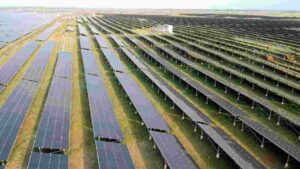
One of the most prominent solar regions in Maharashtra is the Dhule–Nandurbar belt, where several large-scale solar projects have been developed over the years. The region was identified for a planned solar park of around 500 megawatts, reflecting the state’s ambition to scale up renewable energy. Spread across vast stretches of land, these installations create a striking landscape, row after row of dark blue panels stretching toward the horizon, symbolising Maharashtra’s push toward clean energy.
Nearby is the Sakri Solar Plant, one of Maharashtra’s largest single-location solar power projects, with an installed capacity of around 125 megawatts. The electricity generated here is fed directly into the state grid, helping reduce reliance on coal-based power while strengthening regional energy security.
Further east, the Maharashtra I Solar Park near Chatgaon village in Beed district shows how solar power is reaching drought-prone and rural regions. Spread across about 306 acres and operational since 2017, the plant has an installed capacity of 67.2 megawatts and uses over 200,000 solar panels. Each year, it generates enough electricity to support tens of thousands of people while avoiding substantial carbon emissions, highlighting how large-scale solar projects can deliver both environmental and social benefits.
Then there is something truly unusual: the solar project at the Shirdi temple. The Shri Saibaba Sansthan Trust has installed a 1.5-megawatt solar power system that meets a significant share of the temple complex’s electricity needs. Even more remarkable is its solar cooking system, which prepares up to 50,000 meals a day for pilgrims. Together, these systems save nearly 100,000 kilograms of cooking gas every year, clear proof that solar energy can work at scale, even at one of India’s most visited religious sites.
Even wildlife conservation has joined Maharashtra’s solar transition. The Pench Tiger Reserve became India’s first fully solar-powered wildlife sanctuary, where solar energy supports forest operations, surveillance systems, and field equipment, showing that clean energy can work hand in hand with environmental protection.
Beyond these landmark projects, Maharashtra hosts hundreds of smaller, distributed solar installations across factories, hospitals, schools, IT parks, and commercial buildings. Companies such as CleanMax and other developers have played a key role in expanding rooftop and captive solar systems across the state. Individually, these installations may seem modest, but together they contribute dozens of megawatts of clean electricity and quietly form the backbone of Maharashtra’s solar success.
How the Government Made It Happen
Maharashtra’s solar boom did not happen by chance. It was driven by deliberate government action through policy support, financial incentives, and long-term planning. Understanding these programs explains not only why solar energy expanded so rapidly, but also why the challenge of solar waste is now inevitable. The main blueprint for this expansion is the Maharashtra Integrated Non-Conventional Energy Generation Policy 2020. Launched on December 31, 2020, the policy set an ambitious target of adding 12,900 megawatts of new solar capacity by March 2025. Its longer-term vision is to reach 30,000 megawatts of solar power, gradually shifting Maharashtra’s renewable energy mix from being dominated by wind to being led by solar.
The Maharashtra Energy Development Agency (MEDA) sits at the centre of this transformation. It coordinates solar projects across homes, businesses, and farms, approving installations, distributing subsidies, and tracking progress. If Maharashtra’s solar expansion is a machine, MEDA is its engine. But policy alone doesn’t build panels. The real momentum came from targeted schemes that put public money behind ambitious goals. These programs turned solar power from something limited to wealthy homeowners and large corporations into a practical option for farmers and ordinary families.
One of the most important initiatives is the Chief Minister’s Solar Agriculture Feeder Scheme 2.0, designed specifically for farmers. Agriculture consumes enormous amounts of electricity in Maharashtra, mainly for pumping groundwater for irrigation. For decades, farmers have faced unreliable supply, nighttime power, and high diesel costs.
This scheme offers a structural fix. Under it, MAHAGENCO is installing 1,071 megawatts of solar capacity dedicated to agricultural feeders. These are not small panels on individual farms, but centralised solar plants located within 5 to 10 kilometres of electricity substations. The power generated flows directly to farming areas during the daytime, exactly when irrigation demand is highest.
As a result, over 300,000 farmers now receive reliable daytime electricity. In drought-prone regions like Marathwada, this is transformative. Farmers can irrigate when crops actually need water, without worrying about power cuts or diesel expenses.
The state aims to solarise around 30 per cent of agricultural feeders by 2025, reducing stress on both farmers and the grid. Urban and semi-urban households saw a similar shift through the Pradhan Mantri Suryaghar Muft Bijali Yojana, the central government’s rooftop solar scheme. Maharashtra adopted the program aggressively. In August 2024 alone, rooftop solar installations in the state crossed 100 megawatts in a single month. By June 2025, more than 2,380 megawatts had been added under this scheme, bringing solar power to tens of thousands of homes.
Generous subsidies made this possible. Under Maharashtra’s Rooftop Solar Subsidy Scheme, updated in 2025 for low-income households consuming less than 100 units of electricity per month, financial support is substantial. Families below the poverty line, along with Scheduled Caste and Scheduled Tribe households, receive 90 to 95 per cent subsidy. An SC or ST family pays as little as ₹5,000 for a 1-kilowatt system that otherwise costs around ₹50,000. General category households receive 40 to 60 per cent subsidy, depending on system size.
A 1-kilowatt system typically generates about 120 units of electricity per month, often enough to meet an entire household’s needs. This is not charity; it is long-term economic planning. Families that once paid monthly electricity bills now generate their own power, saving money year after year while reducing pressure on the grid. The state also experimented with innovative models. In 2024, Maharashtra launched its first solar village in Satara district, where most local energy needs are met through solar power. The project serves as a live demonstration of what decentralised clean energy can achieve in rural India.
In November 2023, another quiet but important reform followed. Maharashtra reduced the minimum sanctioned load for commercial and industrial solar installations from 1 megawatt to 100 kilowatts, opening the door for small factories, workshops, and businesses to adopt solar energy.
When Clean Energy Turns into Toxic Waste
The state today has more than 15,000 megawatts of installed solar capacity, most of it added in the last decade. Solar panels typically last 25 to 30 years. That means the first large wave of installations will begin failing between 2040 and 2050. When that happens, Maharashtra will not just lose power, it will gain mountains of waste.
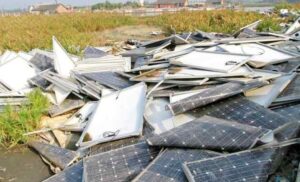
How much waste are we talking about? Conservative estimates suggest 30,000 to 60,000 tonnes of solar panel waste every year once large-scale ageing begins. And that number could be higher. Panels are often damaged early by storms, transport accidents, overheating, or manufacturing defects. Not every panel makes it to year twenty-five.
In 2025, Maharashtra is generating an estimated 3,000 to 5,000 tonnes of solar waste annually from early installations, damaged panels, and replacements. That may sound manageable, but the curve is steep. Because of its large installed capacity, Maharashtra is likely to account for 8 to 10 per cent of India’s total solar waste in the coming decades. Informal recycling has already started. Investigations in parts of Maharashtra and neighbouring states have uncovered unlicensed recycling operations where panels are dismantled by hand. Workers wear no protective gear.
Also Read: Bombay HC Delivers Verdict, Convicts Tarun Tejpal In 2013 Rape Case
Panels are smashed with hammers to extract metal, releasing glass shards and lead dust. Others are burned in open fires to recover copper and aluminium, filling the air with toxic smoke. What cannot be sold often 70 to 80 per cent of the panel is dumped in nearby fields or vacant land. The process is dangerous for workers and poisonous for soil and groundwater.
Despite this, Maharashtra does not have a single dedicated solar panel recycling facility. The state does have electronic waste recyclers that process phones, computers, and household appliances, but solar panels are a different challenge altogether. They require specialised thermal and chemical treatment to safely recover materials like silicon, silver, and lead. A few e-waste plants, such as the one operated by Deshwal Waste Management in Pune’s Wagholi area, can handle limited quantities, but this is nowhere near what the state will need.
Most dead panels either end up in municipal landfills or are shipped elsewhere. In landfills, panels crack over time. Rainwater seeps in. Heavy metals like lead slowly leach into the soil and groundwater. Other panels are transported to other states or even exported, often to places with weaker environmental oversight. Maharashtra is, in effect, exporting a problem it has failed to plan for. Through government schemes, more than 300,000 farmers now rely on solar-powered electricity. These systems were installed with heavy subsidies. Farmers paid little or nothing up front. But no one explained what happens at the end of the panel’s life. Most farmers are unaware that solar panels contain toxic materials such as lead and cadmium.
Outdoor agricultural conditions, such as heat, dust, and moisture, often reduce panel lifespan. Many of these systems may fail in 15 to 20 years, not 25. When that happens, who will take responsibility? Will the government that subsidised installation also handle collection and recycling? Will farmers be expected to transport broken panels dozens of kilometres? Will there be a free collection system? A farmer in Beed district struggling with drought, debt, and crop failure is unlikely to prioritise proper solar waste disposal. If there is no easy, free, and nearby collection system, broken panels will be dumped in fields, discarded at local waste sites, or burned. Not because farmers are careless but because the system has failed them.
What Maharashtra Is (and Isn’t) Doing
On paper, Maharashtra follows India’s national rules on electronic waste. In 2022, the E-Waste Management Rules were amended to explicitly include solar panels under Chapter V. These rules sound reassuring. They require manufacturers to keep records of solar waste, store end-of-life panels instead of dumping them, process waste according to Central Pollution Control Board (CPCB) guidelines, and ensure recyclers meet certain material recovery targets. Solar panels are exempt from Extended Producer Responsibility (EPR) obligations until 2034–35. In simple terms, manufacturers are not yet required to take back or recycle the panels they sell. They only need to track them on paper.
It is a system built around documentation, not responsibility like asking car companies to count every vehicle they produce but never deal with what happens when those cars are scrapped. In June 2025, the CPCB released draft guidelines specifically for solar waste management. This was India’s first serious attempt to address the issue. But these guidelines are still drafts. They have not been finalised or enforced. For now, they remain intentions rather than action. At the state level, the picture is no better. Maharashtra’s State Renewable Energy Policy 2020 focuses overwhelmingly on installing more solar capacity.
It says almost nothing about what happens when panels reach the end of their life. MEDA’s programs are similarly silent on recycling systems, collection networks, or disposal responsibility. This is a serious gap. Maharashtra is aggressively pushing solar adoption, offering subsidies, fast-track approvals, and incentives, but it is building no back-end system to deal with the waste that inevitably follows. It is like expanding a city without planning landfills, sewage, or drainage. The success is real, but it is incomplete.
According to the Council on Energy, Environment and Water (CEEW), India will need around 299 solar recycling facilities by 2047 to manage future waste. If Maharashtra generates 8 to 10 per cent of the country’s solar waste, it will need 25 to 30 dedicated recycling plants of its own. Each facility could employ 50 to 100 skilled workers in collection, dismantling, processing, and material recovery. That translates to 1,250 to 3,000 long-term green jobs, not short-term construction work, but permanent employment that will last decades as panels continue to age. There is also serious money on the table. CEEW estimates that by 2047, India could recover 656,000 tonnes of valuable materials from solar waste, worth about ₹3,709 crore nationally. Maharashtra’s share could be ₹300–400 crore per year by that time. These materials, silicon, copper, aluminium, silver, and high-quality glass, are all in demand and all costly to extract from the earth.
Recycling also supports Maharashtra’s ambition to become a solar manufacturing hub. Today, most raw materials for panels are imported. Recycling could change that. CEEW projects that recycled materials could meet 38 per cent of India’s total material demand for solar manufacturing by 2047, with silicon recovery reaching up to 60 per cent. Building recycling capacity now would create a local supply chain, reduce import dependence, and lower costs for manufacturers.
The climate benefits are equally important. Mining and processing virgin materials are energy-intensive and polluting. Recycling uses far less energy. By choosing recycling over landfilling, Maharashtra could avoid millions of tonnes of carbon emissions in the coming decades. There is also a leadership opportunity. If Maharashtra acts early before the waste crisis fully arrives, it could become India’s centre for solar recycling technology. It could attract private investment, drive research at universities, and export expertise to other states and countries facing the same challenge.
The Economic Opportunity Maharashtra Is Ignoring
Here is what Maharashtra needs to recognise: the solar waste problem is also a major economic opportunity. If handled well, it can create jobs, generate revenue, and position the state as a national leader in clean-energy technology. But this window will not stay open forever. Action now matters. The job potential alone is significant.
According to the Council on Energy, Environment and Water (CEEW), India will need around 299 solar recycling facilities by 2047 to manage future waste. If Maharashtra contributes 8 to 10 per cent of the country’s solar waste, in line with its share of installations, the state will need about 25 to 30 dedicated recycling plants. Each facility could employ 50 to 100 skilled workers in collection, dismantling, processing, and material recovery. That adds up to 1,250 to 3,000 permanent green jobs, long-term employment that will grow as more panels reach the end of their life.
There is also real financial value in solar waste. CEEW estimates that by 2047, India could recover 656,000 tonnes of valuable materials from discarded solar panels, worth about ₹3,709 crore nationally. Maharashtra’s share could amount to ₹300–400 crore every year by that time. These are not abstract numbers. Solar panels contain silicon, copper, aluminium, silver, and high-quality glass, all materials with strong market demand and rising prices.
Recycling also supports Maharashtra’s manufacturing ambitions. The state wants to attract solar panel manufacturers and already offers incentives for setting up plants. But manufacturing requires raw materials, most of which are currently imported or extracted through environmentally damaging mining. Recycling changes this equation. CEEW projects that recycled materials could meet 38 per cent of India’s total material demand for solar manufacturing by 2047, with silicon recovery reaching up to 60 per cent. Building recycling capacity now would create a local supply chain, reduce imports, lower production costs, and strengthen energy security.
The climate benefits are equally compelling. Mining and processing virgin materials, especially copper, aluminium, and silicon, are energy-intensive and highly polluting. Recycling uses far less energy. By choosing recycling over landfilling, Maharashtra could avoid millions of tonnes of carbon emissions over the coming decades, reinforcing the very climate goals that solar power is meant to serve. Finally, there is a leadership opportunity. If Maharashtra moves early before the waste crisis becomes visible, it could emerge as India’s hub for solar recycling technology. The state could attract innovative companies, support research at universities and technical institutes, and develop expertise that can be exported to other states and countries facing the same challenge.
What Maharashtra Must Do Right Now
Maharashtra has a narrow window to turn its coming solar waste problem into an economic and environmental win, but only if it acts now. Instead of waiting for national rules to catch up, the state should lead by building a handful of pilot solar recycling facilities within the next few years, making it attractive for private companies through subsidised land, tax support, and assured access to end-of-life panels. At the same time, Maharashtra needs its own clear solar waste policy, one that requires manufacturers to take responsibility, bans landfilling of panels, and rewards companies that use recycled materials and design panels that are easier to dismantle.
Proper disposal must be simple and free: farmers, households, and institutions should be able to drop off old panels at local collection points just as easily as they do other e-waste. The state’s universities and technical institutes should be funded to develop recycling technologies suited to Indian conditions, while ITIs and polytechnics train a workforce ready for the thousands of green jobs this sector will create. A digital registry tracking every solar installation would help plan collection and recycling before panels fail, not after. Most importantly, Maharashtra should start small, piloting collection and recycling in a few solar villages, parks, and farming districts, learn quickly, and scale what works. Done right, the state can avoid a future waste crisis and instead become India’s leader in solar recycling, jobs, and circular clean energy.
Adopting the Practices from Others Without Repeating Their Mistakes
Maharashtra does not need to invent solutions from scratch. Across India and around the world, governments have already experimented with how to deal with the challenge that follows every successful solar expansion: what to do when panels reach the end of their life. Some approaches have worked, others have failed, and the real value lies in learning from both. Smart policy is not about copying blindly but about understanding what succeeds on the ground and adapting it thoughtfully to local conditions.
Within India, Gujarat offers the most immediate lessons. As the country’s solar leader, the state is already confronting the scale of future solar waste. Gujarat has begun forming partnerships with private recyclers and testing different panel collection mechanisms. The system is still evolving, but it provides practical insights into what works and what doesn’t. Maharashtra would benefit from studying these efforts closely by sending technical and policy teams to observe operations, engage with officials and recyclers, and understand the operational realities behind the numbers.
Internationally, France presents one of the most effective models. Its national solar recycling system collects panels from thousands of locations and recovers the vast majority of materials. The strength of this system lies in its simplicity and clarity: collection is free and convenient, recycling is mandatory, and manufacturers bear the cost. While Maharashtra cannot replicate this framework exactly, the underlying principles of ease for users, responsibility for producers, and strong institutional coordination are highly relevant and adaptable to Indian conditions.
Japan’s approach offers a particularly practical solution for large solar installations. There, project developers are required to set aside funds for future recycling at the time panels are installed. This ensures that when systems reach the end of their life decades later, financial resources are already available. Maharashtra could adopt a similar requirement for medium and large installations, ensuring that future disposal does not become a financial or administrative burden.
California, on the other hand, demonstrates what happens when policy is not matched by infrastructure and enforcement. Although the state classified solar panels as hazardous waste and introduced strict disposal rules, it failed to create sufficient collection systems or enforce compliance effectively. As a result, panels continued to end up in landfills or were transported illegally. The lesson is clear: regulations without supporting systems achieve little and can even worsen outcomes.
Time is not on Maharashtra’s side. The state likely has no more than five years to build recycling facilities, establish collection networks, train a skilled workforce, and put effective policies in place. After that, solar waste will begin arriving in volumes that cannot be managed through improvised or temporary measures. The panels being installed today under national and state solar schemes will start reaching the end of their life around the middle of this century, and many will fail around the same time.
When that moment arrives, ordinary citizens will seek answers. Farmers benefiting from solar-powered irrigation will ask how to dispose of damaged panels. Religious institutions and public buildings running on solar power will look for responsible disposal options. Villages that adopted clean energy with pride will want to know where this waste is going. These questions will be legitimate, and the state must be ready with credible solutions.
Maharashtra has the capacity to meet this challenge. It has a strong industrial base, respected research institutions, and a growing ecosystem of clean-energy entrepreneurs. What is currently missing is political urgency and sustained policy attention. Solar waste management must be treated as an integral part of the energy transition, not an afterthought postponed to the future.
If the state acts now, it has the chance to demonstrate leadership. Maharashtra can build a truly circular solar economy where today’s panels become tomorrow’s raw materials, where jobs are created, public health is protected, and dependence on imports is reduced. This is not only about environmental responsibility or regulatory compliance; it is about long-term planning and protecting the credibility of the clean energy transition. The panels are ageing, the clock is ticking, and every year of delay makes the eventual challenge harder to solve. Maharashtra must move now, while there is still time to do it right.
The Real Test of Clean Energy
Solar waste is not just a technical challenge or a question of funding. It is a real-world test of whether our ideas about circular economy and sustainable development actually mean something beyond policy documents and conference speeches. If we struggle to manage waste from solar panels, a relatively simple product made from familiar materials, then our ability to handle far more complex waste streams from batteries, electric vehicles, electronics, and future technologies must be questioned.
Solar waste is the easiest version of a much harder problem that lies ahead. The stakes extend well beyond environmental protection. They reach into public trust and political legitimacy. The transition to renewable energy depends heavily on people believing in it and supporting it. If communities begin to see solar projects as ticking time bombs that will one day leave behind toxic waste, that support will weaken. Climate sceptics and defenders of fossil fuels will seize on poorly managed solar waste as evidence that renewable energy is not truly clean. If that narrative takes hold, the broader energy transition itself is put at risk.
What makes this moment especially important is that the situation is not hopeless. The solutions are not mysterious. Recycling technologies already exist and are improving rapidly. Business models are emerging. International examples show that functional systems are possible. What is missing is not knowledge, but commitment, the political will to pass strong regulations, the financial will to invest in infrastructure, and the social will to demand responsibility from manufacturers, developers, and governments alike.
Across the world, solar panels on rooftops and fields have become symbols of humanity’s attempt to bring its energy systems back into balance with nature. They represent hope, ingenuity, and the belief that progress does not have to come at the planet’s expense. But symbols can lose their meaning if they are not managed responsibly. If we ignore what happens to these panels at the end of their life, today’s solutions risk becoming tomorrow’s problems.
By addressing solar waste now proactively, honestly, and completely, we can ensure that solar power remains what it was always meant to be: a genuinely sustainable solution from beginning to end. That means thinking not only about how panels are made and used, but also about how they are dismantled, recycled, and reintegrated into the economy when their job is done. A wave of solar waste is coming. Whether it becomes a monument to short-term thinking or a testament to human intelligence and foresight depends entirely on the choices made in the next few years. The clean energy revolution is not finished when the panels are installed. It is finished only when we have solved this final, essential piece of the puzzle.
Click here to join our WhatsApp Channel for real-time news updates and exclusive coverage.






Excellent article! The content is informative, well-written and easy to understand. Thank you for sharing such valuable insights. Keep up the great work.