
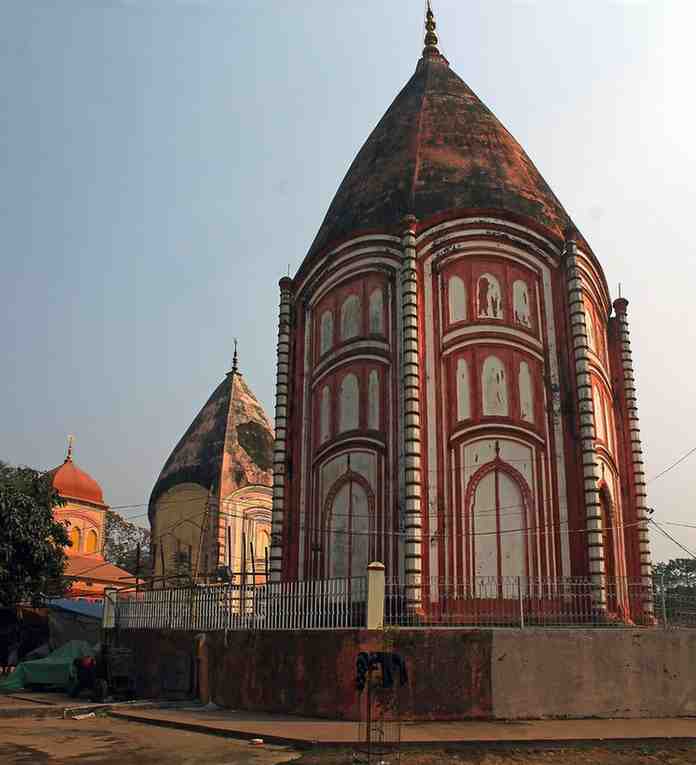
KOLKATA: Nestled on the serene banks of the Churni River in the Nadia district of West Bengal, Shivniwas stands as a remarkable symbol of faith, history, and spiritual grandeur. Located near Majdia in the Krishnaganj subdivision, Shivniwas is not merely a village; it is a sacred landscape where the divine presence of Lord Shiva has been revered for centuries.
The name Shivniwas itself carries deep spiritual significance. It is derived from two words—“Shiv,” referring to Lord Shiva, and “Niwas,” meaning residence. Together, they signify the “Abode of Shiva,” a name that perfectly reflects the religious identity and sacred atmosphere of this historic settlement.
The spiritual legacy of Shivniwas is closely associated with Maharaja Krishnachandra Roy, the celebrated ruler of Nadia. During the turbulent period of the Bargi invasions in Bengal, the Maharaja sought a secure and peaceful location away from constant threats. According to local tradition, while pursuing a notorious robber named Nasrat Khan in the dense forests near present-day Shivniwas, he spent a night in the area. The following morning, as he stood beside the river, a fish unexpectedly leapt from the water and landed before him. This unusual event was interpreted as a divine sign.
Encouraged by his relative Krishnaram of Anulia, who praised the beauty and auspicious nature of the location, the Maharaja decided to establish his new capital there. He fortified the area by utilizing the natural protection offered by the river and named the settlement Shivniwas in honor of Lord Shiva.
Under the patronage of Maharaja Krishnachandra, Shivniwas emerged as an important spiritual and cultural center. The ruler performed the grand Agnihotra Vajpayee Yajna here, attracting renowned scholars from Kashi, Kanchi, and other centres of learning. Impressed by his devotion and scholarship, they conferred upon him the prestigious title of “Agnihotri Vajpayee.” During this period, Shivniwas was regarded as a sacred place comparable to Kashi itself.
Today, the greatest attractions of Shivniwas are its magnificent temples, which continue to draw devotees and history enthusiasts alike. Among them, the Rajrajeshwar Shiva Temple, popularly known as the Buro Shiv Temple, is the most revered. Built in 1754, this unique octagonal temple rises majestically above a high foundation. Its architectural style differs significantly from traditional Bengali temple designs, incorporating striking Gothic influences.
Inside the temple resides an awe-inspiring nine-foot-high Shiva Lingam, one of the tallest in the region. Devotees have long climbed a specially constructed staircase to offer water, milk, and prayers directly upon the sacred Lingam. The immense size of the deity inspires a profound sense of reverence and devotion among worshippers.
Adjacent to the Rajrajeshwar Temple stands the Rajnishwar Shiva Temple, constructed in 1762. Built upon a high platform, this elegant structure houses another impressive Shiva Lingam measuring approximately seven and a half feet in height. Historical inscriptions suggest that the temple may have been dedicated to the Maharaja’s second queen. Like the Rajrajeshwar Temple, it features a staircase allowing devotees to perform traditional rituals with ease.
Completing the sacred complex is the beautiful Ram-Sita Temple, also established in 1762. Dedicated to Lord Rama and Goddess Sita, the temple showcases distinctive architectural features, including Gothic-style arches and an unusually shaped spire. Though different in form from the Shiva temples, it contributes to the spiritual harmony that defines Shivniwas.
Unlike many temples of Bengal, the shrines of Shivniwas are notable for the absence of terracotta ornamentation. Instead, their architectural uniqueness lies in their grand scale, elegant forms, and fusion of indigenous and Gothic influences. Their historical importance was recognised even during the colonial era. In 1824, Bishop Reginald Heber visited Shivniwas during his journey to Dhaka. Deeply impressed by the temples, he later documented his observations, introducing the sacred site to a wider audience.
The temples of Shivniwas have endured the passage of time through careful preservation and restoration. Significant renovation work was undertaken during 1965–66 with the support of the Birla Janaklal Trust, ensuring that future generations could continue to experience their spiritual and historical significance.
Every year, Shivniwas comes alive during the festival of Mahashivratri. Thousands of devotees gather to offer prayers to Lord Shiva, participate in religious ceremonies, and attend the traditional fair that accompanies the celebrations. The atmosphere becomes charged with devotion, transforming the village into a vibrant centre of spiritual awakening.
Even today, a visit to Shivniwas offers far more than a glimpse into history. The tranquil flow of the Churni River, the towering Shiva Lingams, the ancient temples, and the enduring spirit of devotion create an experience of profound inner peace. For pilgrims, seekers, and lovers of heritage alike, Shivniwas remains a sacred destination where faith and history continue to meet in the presence of the eternal Lord Shiva.