NEW DELHI: Political friction has surfaced between Pakistan’s federal leadership and the administration in Pakistan-occupied Kashmir (PoK) after PoK Prime Minister Faisal Mumtaz Rathore publicly criticized Pakistan Defence Minister Khawaja Asif for his controversial remarks questioning the identity of Kashmiris. The episode has triggered fresh debate over governance, regional identity, and Islamabad’s relationship with PoK.
Controversial Remarks Spark Row
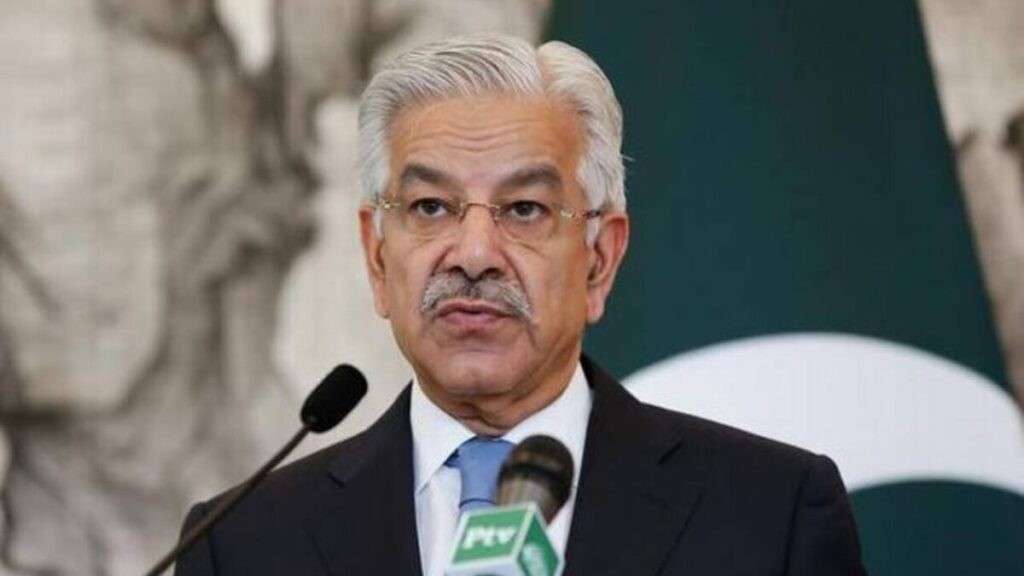
The controversy erupted after Khawaja Asif reportedly stated that some residents of Pakistan-occupied Kashmir were “not proper Kashmiris.” The statement quickly drew criticism from political leaders and the public, with many describing it as insensitive and disrespectful towards the people of the region. The remarks soon became a topic of widespread discussion on social media and in political circles.
Rathore Hits Back Strongly
Responding sharply, Faisal Mumtaz Rathore asserted that Kashmiris do not need validation from anyone regarding their identity. He said the people of Jammu and Kashmir have safeguarded their heritage and identity through decades of struggle and sacrifice, making it unnecessary for any politician to certify who qualifies as a “proper Kashmiri.”
Demand for Public Apology
The PoK Prime Minister called on Khawaja Asif to issue an unconditional public apology. According to Rathore, the defence minister’s comments hurt the sentiments of the people and created unnecessary divisions. He maintained that leaders should work to unite communities instead of making statements that undermine public confidence.
Focus Should Be on Governance
Rathore also accused Pakistan’s federal leadership of diverting attention from pressing governance issues by making controversial remarks. He argued that instead of engaging in debates over identity, Islamabad should focus on addressing economic hardships, unemployment, inflation, and administrative challenges faced by the people of Pakistan-occupied Kashmir.
Rare Public Disagreement
The exchange has attracted significant attention because open disagreements between Pakistan’s federal government and the leadership of Pakistan-occupied Kashmir are relatively uncommon. Political observers believe the incident reflects growing frustration within PoK over governance and the region’s political relationship with Islamabad.
Backdrop of Public Unrest
The controversy comes at a time when Pakistan-occupied Kashmir has witnessed repeated public protests over rising electricity tariffs, inflation, unemployment, and shortages of essential services. These issues have increased public pressure on both the local administration and Pakistan’s central government to deliver better governance and economic relief.
India’s Response
India has also responded to recent statements made by Pakistan regarding Pakistan-occupied Kashmir. New Delhi has maintained that unrest in the region is the result of Pakistan’s own governance failures and long-standing grievances among local residents. Indian officials have repeatedly asserted that Pakistan should focus on addressing the concerns of the people living in territories under its control.
Asif Refuses to Back Down
Despite the criticism, reports indicate that Khawaja Asif has refused to withdraw his remarks or offer an apology. He has defended his statement, insisting that his comments were appropriate. His refusal has further intensified the political dispute and kept the issue in the public spotlight.
Analysts believe the episode highlights deeper tensions within Pakistan over the administration of Pakistan-occupied Kashmir. Questions related to regional identity, political representation, governance, and economic development continue to dominate public discourse. The latest exchange has once again brought these issues into national focus.
What Lies Ahead
The disagreement between Faisal Mumtaz Rathore and Khawaja Asif is expected to keep political attention on Pakistan-occupied Kashmir in the coming days. Whether Islamabad responds to Rathore’s demand for an apology or attempts to ease tensions remains uncertain. However, the controversy has exposed visible differences within Pakistan’s political establishment and reinforced ongoing debates over governance and the identity of the people in the region.
The public dispute between Pakistan’s Defence Minister and the PoK Prime Minister reflects growing political strains within Pakistan over governance and regional identity. Beyond the controversy over remarks, the episode underscores deeper frustrations regarding economic challenges, public accountability, and Islamabad’s relationship with Pakistan-occupied Kashmir. The developments may further intensify political debate and expose widening divisions within the country’s leadership.