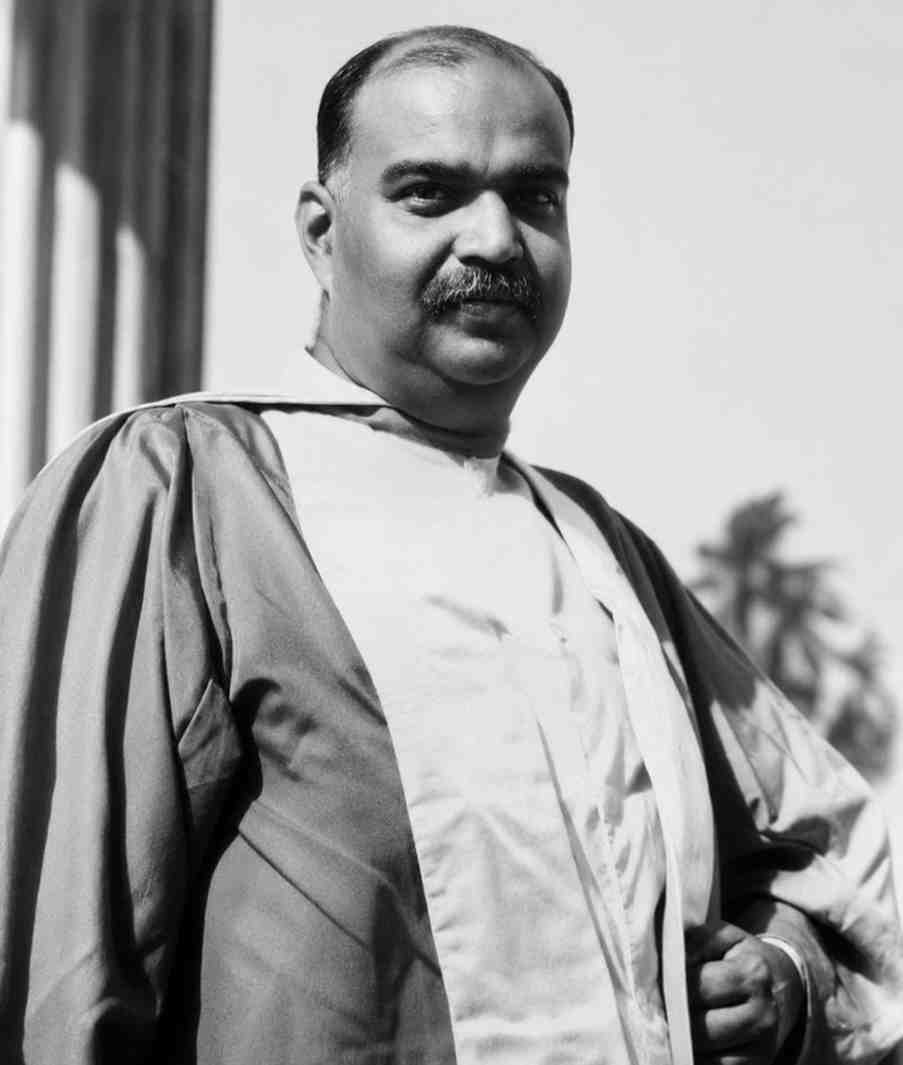
Dr. Syama Prasad Mookerjee remains one of India’s most influential nation-builders, remembered not only for the offices he held or the movements he inspired, but for the enduring ideas and questions he left behind. More than seven decades after independence and long after his untimely death, Mookerjee continues to occupy a powerful place in India’s political and intellectual imagination — not merely because of the causes associated with his name, but because he represents a larger conversation on nation-building, national unity, educational leadership, and self-reliant development.
Too often, however, public memory reduces him to a single episode or slogan. That does an injustice to the scale of his contribution. Dr. Mookerjee was not only a political leader; he was a scholar, an institution-builder, a parliamentarian, and one of the early voices who sought to define what a confident, cohesive, and self-respecting India should look like.
At a time when India is speaking in the language of Viksit Bharat @2047, Atmanirbhar Bharat, and civilizational confidence, revisiting Dr. Syama Prasad Mookerjee is not an exercise in nostalgia. It is a way of asking what nation-building truly demands.
A Scholar Who Entered Public Life with a Purpose
Dr. Syama Prasad Mookerjee’s public life did not begin in the heat of mass politics; it began in the world of ideas, institutions, and education. Born in Kolkata in 1901 into an illustrious intellectual family, he inherited a deep respect for learning and public service. But inheritance alone does not explain his trajectory. What distinguished Mookerjee early on was his remarkable ability to combine scholarship with civic responsibility.
As one of the youngest Vice-Chancellors of the University of Calcutta, he represented a generation that saw universities as central to nation-building. This is perhaps the first major lesson from his life. For Mookerjee, education was never merely about producing degrees or clerical manpower. It was about shaping minds, cultivating discipline, and nurturing a generation capable of serving a nation in transition. In that sense, his contribution to India began not in Parliament, but in the classroom and the university system.
This part of his legacy deserves renewed attention today. In an era when higher education is increasingly judged through placement statistics, rankings, and employability metrics, Mookerjee’s educational vision reminds us that universities are also institutions of character formation, civic reasoning, and national purpose. A country cannot become globally competitive if its institutions of learning lose sight of their public mission.
Nation-Building Begins with Strong Institutions
One of the most overlooked aspects of Dr. Mookerjee’s life is that he was fundamentally an institutionalist. He understood that nation-building is not sustained by sentiment alone; it requires structures, systems, and institutions that can outlast political cycles. Whether as an academic administrator, legislator, or minister, he displayed a deep respect for institutional responsibility.
This was visible in his role as India’s first Minister for Industry and Supply after independence. The new republic had won political freedom, but it still faced the far more difficult task of building economic capability. Mookerjee understood that freedom without productive strength would remain fragile. A newly independent India could not afford to remain dependent, fragmented, or structurally weak in its economic foundations. Industrial capacity, supply systems, and domestic productive strength were therefore not merely economic concerns; they were central to sovereignty itself.
Seen from today’s vantage point, this appears remarkably contemporary. India’s current emphasis on manufacturing, supply-chain resilience, strategic autonomy, and self-reliance reflects many of the same anxieties that shaped the thinking of early post-independence leaders like Mookerjee. Long before “Atmanirbhar Bharat” became a policy slogan, he recognised that a nation unable to build its own capacities would struggle to command its own future.
The Centrality of National Unity
If one theme defines Dr. Mookerjee’s political life more than any other, it is national unity. He belonged to a generation that had seen the trauma of Partition, the fragility of borders, and the real fear of political fragmentation. For him, India was not merely a territorial arrangement or a loose administrative federation. It was a civilizational and constitutional whole that had to be held together by conviction, coherence, and institutional integration.
His position on Jammu and Kashmir emerged from this larger concern. He believed that a nation could not indefinitely sustain multiple political exceptions without weakening the logic of national integration. While the constitutional history of Kashmir is complex and remains the subject of ongoing debate, what stands out in Mookerjee’s political life is his insistence that national unity was non-negotiable.
In today’s India, that concern remains relevant, though in a more layered form. The question of unity is no longer only about territorial integration; it is also about managing diversity in an age of political polarisation, social media fragmentation, regional aspirations, and competing identities. National unity in the twenty-first century cannot be built only through rhetoric. It must rest on trust in institutions, shared constitutional values, equitable development, and a sense of belonging across differences. His life reminds us that nation-building requires not only the defence of unity, but the constant work of deepening it.
Modernity Without Losing Cultural Confidence
Dr. Mookerjee also represented a strand of Indian public thought that refused to see modernity and civilizational rootedness as opposites. He believed India could modernise, industrialise, and strengthen democratic institutions without becoming detached from its own cultural and intellectual foundations. This is an important part of his continuing relevance.
Today, India stands at the intersection of rapid technological transformation and renewed civilizational self-awareness. It is investing in artificial intelligence, digital infrastructure, innovation ecosystems, and global competitiveness while simultaneously trying to reclaim indigenous knowledge traditions, cultural confidence, and historical continuity. The challenge, however, lies in doing both without collapsing into either imitation or insularity.
Mookerjee’s public life offers one way of thinking about that balance. He was deeply rooted in Indian civilizational thought, yet he was also modern in temperament, administrative in approach, and intellectually rigorous in public life. He did not believe that national confidence required withdrawal from the world. Rather, he believed that India should engage the world from a position of self-respect and internal strength.
Also Read: Jaishankar To Travel On Multi-Nation Tour To Boost Bilateral And Strategic Ties
Why His Legacy Matters in the Age of Viksit Bharat
As India looks toward 2047, the centenary of independence, the language of nation-building has returned with renewed force. But if “Viksit Bharat” is to mean more than GDP expansion and infrastructure growth, it must include the deeper questions that leaders like Mookerjee posed.
A developed India cannot be built on economic growth alone. It will require universities that produce critical minds rather than only credentials; industries that generate resilience rather than just output; public institutions that command trust; and a political culture that can hold diversity together without fear or fracture. In that sense, the relevance of Mookerjee lies not in ceremonial remembrance, but in the enduring values he embodied: seriousness in education, strength in institutions, clarity in national purpose, and confidence in India’s civilizational foundations.
His legacy also carries a caution. Nation-building is not a one-time act completed in 1947, nor is it a slogan to be revived only on commemorative occasions. It is a continuous process of renewing institutions, deepening citizenship, strengthening social cohesion, and aligning development with a larger moral purpose. That process remains unfinished.
Conclusion
Like all major public figures, Dr. Syama Prasad Mookerjee belongs to a contested political history. He should neither be flattened into an icon beyond debate nor reduced to a single political position. Serious engagement with his life requires a fuller appreciation of the many roles he played — as an educationist, minister, parliamentarian, and nationalist thinker.
To remember him only as a symbol is to make him smaller than he was. To revisit him as a nation-builder, however, is to reopen a serious conversation on what India must still do to become stronger, fairer, and more self-confident. That is why Dr. Syama Prasad Mookerjee still matters — not simply because of the past he inhabited, but because of the future India is still trying to build.
Click here to join us on WhatsApp Channel and get all the latest news updates