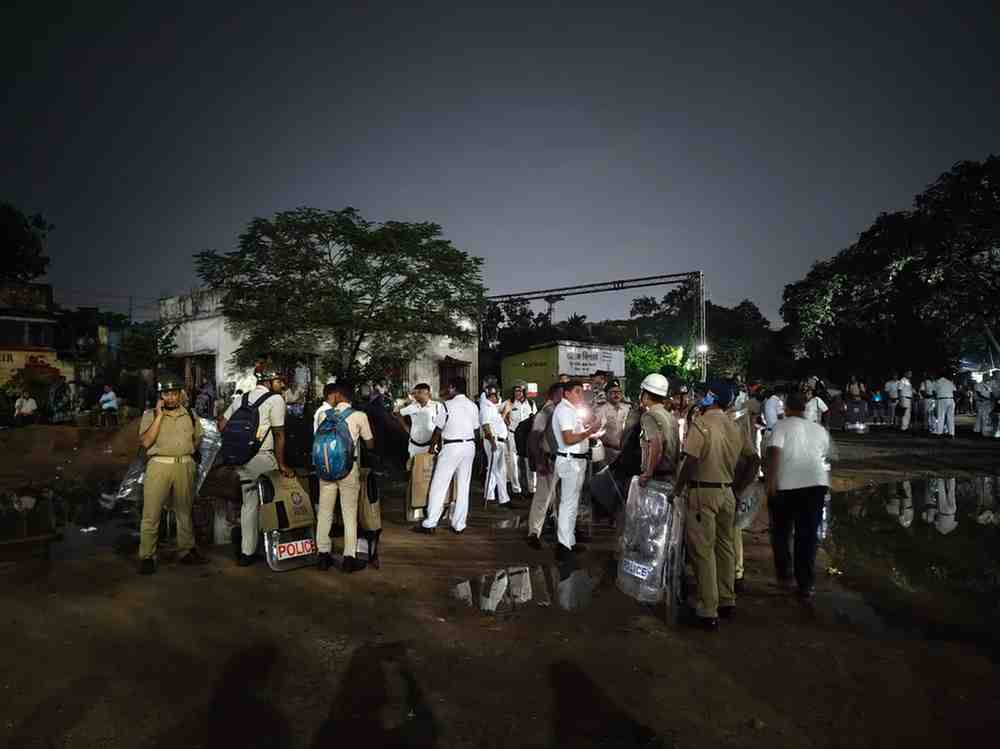
KOLKATA: A late-night eviction drive at Jadavpur railway station in south Kolkata triggered widespread protests, clashes, and allegations of police excess, as railway authorities moved to clear what they described as illegal encroachments and unauthorized structures in the station area. The operation, carried out with the help of heavy machinery and a large security presence, led to the demolition of several shops and temporary constructions, drawing strong opposition from hawkers, local residents, and political activists.
Tension had been building in the area since Sunday evening after reports emerged that an eviction drive was imminent. Several bulldozers were stationed near the Jadavpur station and the adjoining 212 bus stand area, while personnel from the Railway Protection Force, Kolkata Police, and central security forces were deployed in large numbers. Barricades were erected to restrict movement as protesters gathered to resist the operation.
Leaders and supporters of Left parties and the Congress joined the demonstrations alongside hawkers whose livelihoods depended on the shops and stalls facing demolition. Protesters argued that the authorities were proceeding with the eviction without providing adequate rehabilitation or alternative arrangements for those affected. Some demonstrators attempted to block the path of bulldozers, while others staged sit-ins and formed human chains in an effort to halt the operation.
As the night progressed, the situation became increasingly volatile. Protesters alleged that police resorted to baton charges to disperse the crowd and clear the area for the eviction drive. Several individuals reportedly sustained injuries during the confrontation, including activists and cultural figures present at the site. Eyewitnesses claimed that multiple protesters required medical attention after clashes broke out between security personnel and demonstrators.
Among those detained during the operation was CPI(M) leader Srijan Bhattacharyya, who had been actively participating in the protest. According to protesters, several other activists were also taken into custody as police moved to dismantle resistance to the eviction drive. Opposition leaders accused the authorities of suppressing democratic protest and ignoring legal concerns raised by hawkers and residents.
The protesters argued that the eviction process should not have proceeded before the resolution of legal and procedural issues. They referred to previous discussions with railway authorities and claimed that additional time had been sought to produce legal documents related to the status of hawkers operating in the area. Activists alleged that authorities had failed to honour earlier assurances and moved ahead with the demolition despite ongoing efforts to address the matter through legal channels.
Despite the resistance, the eviction drive continued through the night. Bulldozers demolished several structures and roadside establishments near the station premises. By the early hours of Monday, large portions of the encroached area had been cleared. Many affected hawkers were left assessing the damage to their businesses, with some expressing concern about the loss of their primary source of income.
The Jadavpur operation is part of a broader campaign by railway authorities to remove unauthorized stalls and encroachments around major railway stations in Kolkata. Similar drives have recently been conducted around Howrah and Sealdah stations, where hundreds of hawkers and illegal structures were removed as part of efforts to improve access, safety, and infrastructure around transport hubs.
Political reactions to the Jadavpur eviction are expected to intensify in the coming days. Opposition parties have condemned the operation and demanded accountability for the alleged use of force against protesters. Meanwhile, authorities maintain that the drive was necessary to clear illegal structures and ensure smoother functioning of railway facilities.
With emotions running high and several families affected by the demolition, the incident has once again brought the debate over urban development, public infrastructure, and the rehabilitation of informal workers into sharp focus. As legal and political battles continue, the events at Jadavpur are likely to remain a significant point of discussion across West Bengal in the days ahead.