The confrontation between Iran and the United States intensified on Saturday after Tehran accused Washington of violating an existing ceasefire agreement through fresh military strikes on Iranian territory. Iran’s Foreign Ministry strongly condemned the attacks and called on the United Nations to take immediate action against what it described as repeated violations by the American military.
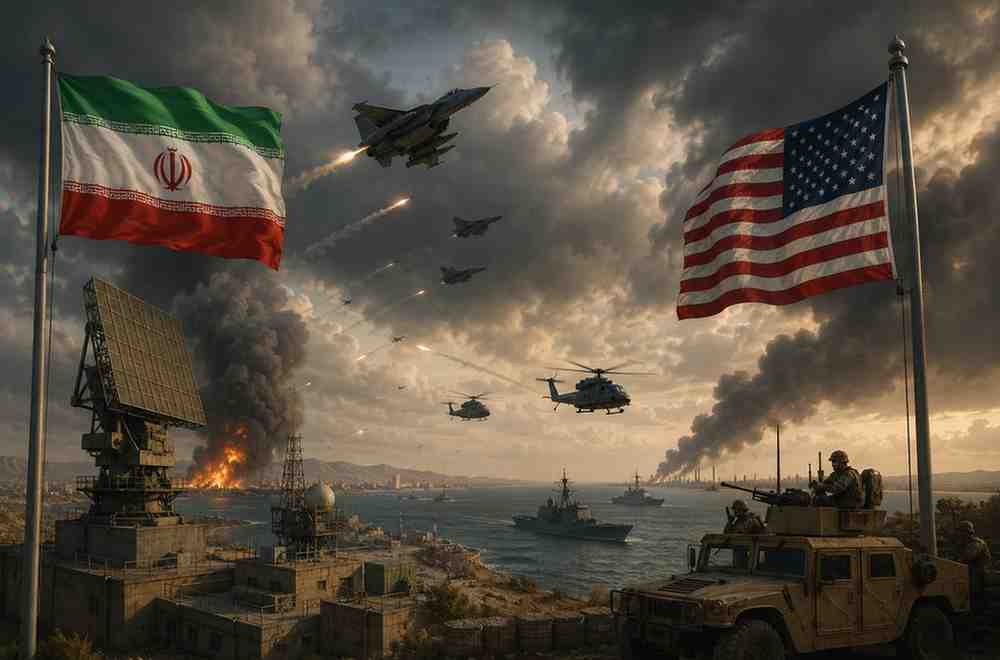
According to the Iranian Foreign Ministry, US forces carried out drone strikes on a telecommunications tower on Qeshm Island and a radar facility in Sirik in southern Iran during the early hours of Saturday. Tehran said the targeted installations were part of Iran’s coastal surveillance and border security network responsible for safeguarding shipping routes and monitoring activities in international waterways. Iranian officials argued that the attacks represented not only a breach of the ceasefire reached earlier this year but also a direct violation of the country’s sovereignty and territorial integrity.
In a statement, the Foreign Ministry criticized what it called Washington’s “hostile and provocative behavior,” asserting that the attacks demonstrated a disregard for international law and the principles enshrined in the United Nations Charter. The ministry urged the UN Secretary-General, the UN Security Council, and other international organizations to respond decisively to what it described as ongoing American aggression.
The latest exchange came after the US military reported intercepting several Iranian drones that it said posed a threat to maritime traffic in and around the Strait of Hormuz, one of the world’s most strategically important shipping lanes. Following those interceptions, US Central Command announced strikes against Iranian coastal surveillance and radar facilities, claiming the operations were defensive in nature and aimed at protecting regional maritime security.
Iran responded swiftly. The Islamic Revolutionary Guard Corps (IRGC) launched retaliatory attacks targeting two American air bases in Kuwait and facilities associated with the US Navy’s Fifth Fleet in Bahrain. Iranian officials described the strikes as a proportionate exercise of the country’s right to self-defense under international law. Tehran maintained that its armed forces acted with vigilance and determination to respond to what it viewed as unlawful aggression.
Reports from the region indicated that missiles and drones were launched toward Kuwait and Bahrain, triggering air defense responses in both Gulf nations. The United States and regional authorities said most of the incoming threats were intercepted before reaching their intended targets. Bahrain activated warning sirens and emergency procedures, while Kuwait’s air defense systems engaged multiple aerial objects. Initial assessments suggested that several missiles were successfully intercepted and others failed to reach their destinations.
The exchange of strikes has further strained already fragile efforts to preserve a ceasefire and advance diplomatic talks between Washington and Tehran. Despite indirect negotiations aimed at ending months of conflict, significant disagreements remain over sanctions relief, regional security arrangements, and broader political issues. Analysts warn that continued military escalation risks undermining ongoing diplomatic initiatives and increasing instability across the Gulf region.
Iran’s Foreign Ministry also renewed its appeal to neighboring countries, urging them not to allow their territories or facilities to be used in military operations against the Islamic Republic. The ministry argued that regional states should avoid becoming platforms for actions that could deepen conflict and threaten collective security.
Tehran further warned that the United States’ actions pose a serious threat to regional peace and stability. Iranian officials stated that responsibility for the consequences of continued military operations would rest with Washington. The ministry insisted that any future acts of aggression would be met with an appropriate response and reiterated that Iran would use all available means to defend its sovereignty and national interests.
The latest flare-up has once again highlighted the volatility of the Gulf region, particularly around the Strait of Hormuz, through which a significant share of global oil shipments passes. As both sides trade accusations and military actions, international attention is increasingly focused on whether diplomatic channels can prevent the crisis from escalating into a broader regional conflict.