Iran has stated that its recent missile and drone attack targeting United States military installations in Kuwait was launched in retaliation for American strikes on Iran’s Qeshm Island, a strategically important location near the Strait of Hormuz. The latest exchange has heightened tensions in the Gulf region and raised concerns about a broader escalation between Tehran and Washington.
According to statements released by Iranian authorities and the Islamic Revolutionary Guard Corps (IRGC), the operation against US-linked targets was a direct response to what Tehran described as an act of aggression by American forces. Iranian officials said the attack was intended to demonstrate that any military action against Iranian territory would be met with a response.
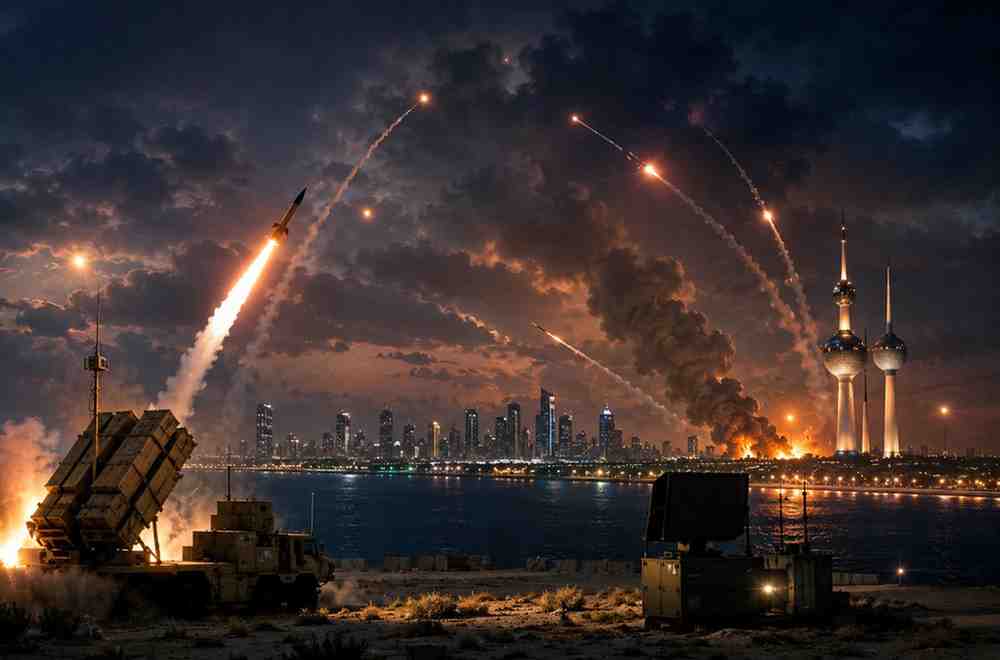
US Central Command reported that several missiles and drones were launched toward Kuwait and Bahrain. American and regional air defense systems intercepted many of the incoming threats, while some projectiles reportedly failed before reaching their intended targets. Officials said there were no immediate reports of significant casualties or major damage.
The United States has maintained that its military actions on Qeshm Island were defensive in nature. US officials said the strikes targeted Iranian military infrastructure, including facilities linked to drone and missile operations, following what Washington described as attempted attacks against US forces and regional assets.
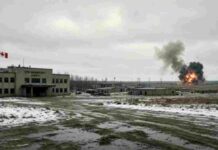
Qeshm Island, located near the Strait of Hormuz, holds strategic importance because of its proximity to one of the world’s busiest energy shipping routes. The area has increasingly become a focal point in the ongoing confrontation between Iran and the United States. Reports indicated that explosions were heard near the island around the time of the US operation.
Iranian military officials defended the strikes as a legitimate act of retaliation, arguing that the attacks were aimed at military targets rather than civilian infrastructure. State media claimed that the operation was carried out in response to US actions against Iranian facilities and personnel.
Meanwhile, authorities in Kuwait confirmed that air defense systems were activated as missiles and drones approached the country. Warning sirens were reportedly heard in parts of the region, and security agencies closely monitored the situation. Similar alerts were also issued in Bahrain as regional defense forces worked to intercept incoming threats.
The exchange comes at a sensitive time, with diplomatic efforts aimed at reducing hostilities facing increasing challenges. Recent negotiations and ceasefire discussions involving regional actors have struggled to gain momentum amid continuing military incidents. Analysts warn that repeated retaliatory strikes could undermine efforts to stabilize the region and increase risks to international shipping and energy markets.
International observers are closely watching developments as both sides continue to exchange accusations. While Tehran insists it acted in response to US military actions, Washington maintains that its operations were necessary to protect its forces and regional interests. The latest confrontation underscores the fragile security situation in the Gulf and the possibility of further escalation if tensions remain unresolved.