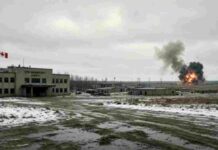
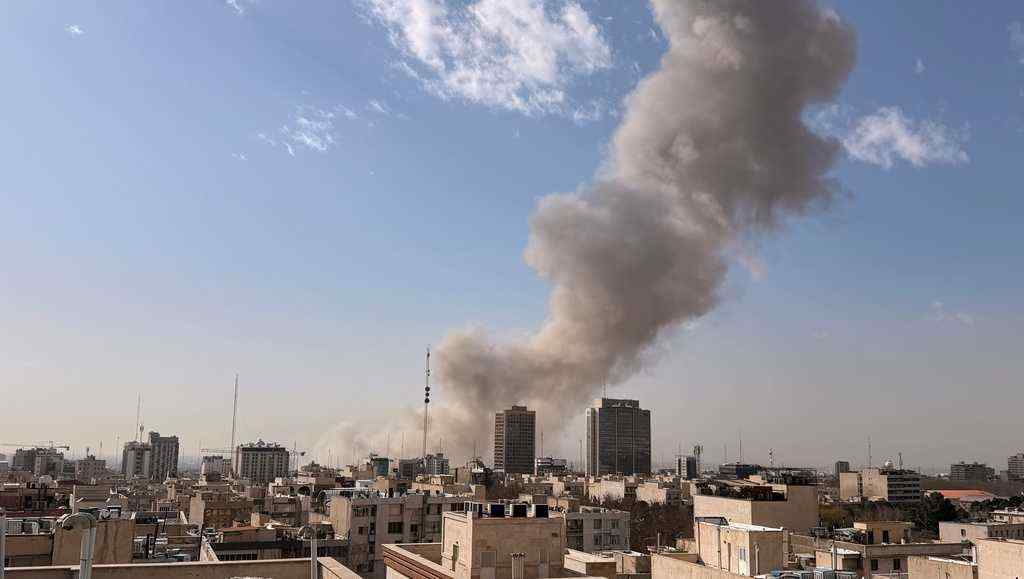
Iran launched missile and drone strikes against the United States (US) military installations across the Gulf region on Thursday, marking another dangerous escalation in the rapidly intensifying Middle East conflict. The attacks came shortly after fresh US military operations inside Iran, further weakening hopes that a fragile ceasefire could prevent a broader regional conflict. The latest developments unfolded as Iran held the burial ceremony of its slain Supreme Leader, adding an emotional and symbolic dimension to the ongoing crisis.
Iran Claims Retaliatory Attacks on US Bases
Iranian military officials stated that the latest operation targeted American military infrastructure in several Gulf countries, including Kuwait, Bahrain, Qatar and Jordan. According to Iranian authorities, the strikes were carried out in response to recent US attacks on military facilities in southern and eastern Iran.
The Iranian military claimed that missiles and drones successfully struck selected military targets, including air defence systems and logistical facilities. Tehran described the operation as a legitimate act of self-defence and warned that further military action would follow if the United States continued its campaign against Iranian territory.
Gulf Nations Activate Air Defences
Following Iran’s announcement, several Gulf nations activated their air defence systems. Air raid sirens were heard in Bahrain, while Kuwait reported intercepting multiple missiles and drones before they could reach their intended targets. Jordan also confirmed that its air defence units intercepted projectiles entering its airspace.

Although officials in the affected countries reported limited physical damage, emergency services remained on high alert. Governments across the region urged residents to remain cautious as security forces monitored the evolving situation.
Military analysts believe the attacks demonstrate Iran’s ability to strike US-linked facilities across the Gulf despite sustained military pressure over recent months.
US Continues Military Operations
The latest Iranian strikes followed another round of US military attacks inside Iran. American forces reportedly targeted strategic military installations near Iran’s southern coastline and infrastructure believed to support missile and drone operations.
Iranian state media reported casualties among military personnel and damage to several facilities. Officials accused Washington of expanding the conflict instead of supporting diplomatic efforts to restore stability.
The United States has maintained that its military operations are intended to safeguard international shipping routes and protect American forces operating in the region after attacks on commercial vessels and continued threats to maritime security.
Burial of Iran’s Slain Supreme Leader
The military escalation coincided with the burial of Iran’s late Supreme Leader, whose death in an earlier US strike dramatically altered the political landscape of the country.
Also Read: Australia Opens Uranium Exports To India In Landmark Energy Deal
Large crowds gathered in the holy city of Mashhad to participate in funeral ceremonies. The event was marked by widespread displays of national mourning, with senior political, military and religious leaders attending the final rites.
Iranian officials vowed that the country’s response to the assassination would continue until what they described as “justice” had been achieved. The funeral also became a platform for renewed calls for national unity during the ongoing conflict.
Strait of Hormuz Remains a Global Concern
The latest fighting has once again raised fears over the security of the Strait of Hormuz, one of the world’s most important energy shipping routes.
Iran has accused the United States of disrupting maritime trade, while American officials argue that military operations are aimed at ensuring freedom of navigation after repeated threats to commercial shipping.
Any prolonged disruption in the Strait could have major consequences for global oil supplies and international energy markets. Analysts warn that even temporary instability in the region could increase shipping costs, insurance premiums and fuel prices worldwide.
International Calls for Restraint
Several regional governments and international organisations have appealed for immediate de-escalation. Countries including Qatar, Oman and Turkey have urged both Washington and Tehran to resume diplomatic engagement before the conflict expands further.
Diplomatic observers warn that continued military exchanges could destabilise the wider Middle East, drawing neighbouring countries into a conflict with significant humanitarian and economic consequences.
Global leaders continue to monitor developments closely, with renewed diplomatic initiatives expected once the immediate military exchanges subside.
Uncertain Road Ahead
The latest exchange of attacks has placed the already fragile ceasefire under intense pressure. While neither side has declared a full-scale war, the pace and scale of military operations suggest that tensions remain dangerously high.
With retaliatory strikes continuing, regional security hanging in the balance and diplomatic efforts struggling to gain momentum, the Middle East faces one of its most volatile periods in recent years. The coming days are expected to determine whether international mediation can restore calm or whether the conflict enters an even more dangerous phase.
Click here to join our WhatsApp Channel for real-time news updates and exclusive coverage.