
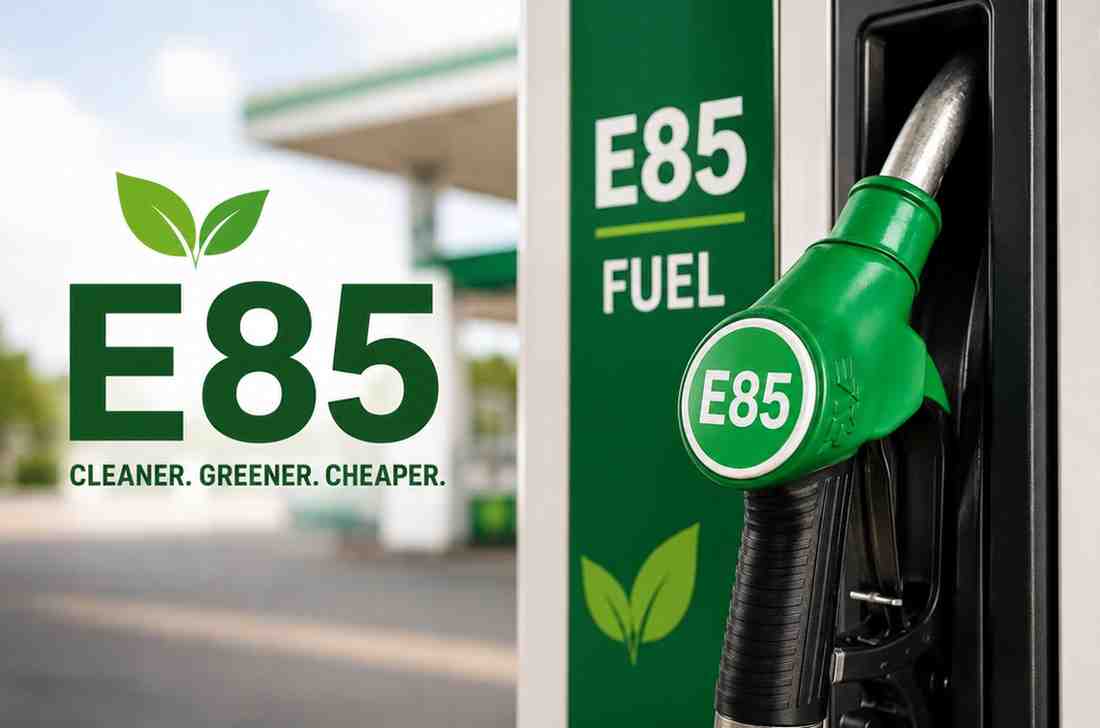
NEW DELHI: India has taken a major step toward cleaner and more affordable transportation with the launch of E85 fuel, a high-ethanol petrol blend that will be sold at a discount of ₹20 per litre compared to conventional E20 petrol. The initiative forms part of the government’s broader strategy to promote biofuels, reduce dependence on imported crude oil, and strengthen India’s energy security.
The new fuel was launched by Union Petroleum and Natural Gas Minister Hardeep Singh Puri at an Indian Oil fuel station in New Delhi on World Environment Day. E85 fuel contains between 80 and 85 percent ethanol and the remaining portion consists of petrol. Unlike regular petrol, it can only be used in specially designed flex-fuel vehicles capable of operating on higher ethanol blends.
The government has fixed the price of E85 at around ₹82.12 per litre in Delhi, while E20 petrol is currently priced at approximately ₹102.12 per litre. The substantial price difference is intended to encourage consumers and vehicle manufacturers to embrace flex-fuel technology and support the country’s transition toward cleaner energy alternatives.
Officials believe the initiative will help India further expand its ethanol blending programme, which has already achieved remarkable growth over the past decade. Ethanol blending in petrol has risen from just 1.53 percent in 2014 to around 20 percent today, allowing the nation to meet its blending targets years ahead of schedule. According to government estimates, the programme has resulted in significant foreign exchange savings and reduced the country’s reliance on imported crude oil.
The rollout of E85 fuel will initially begin at select fuel stations across key regions, including Delhi-NCR, Mumbai, Pune and Nagpur. The government plans to rapidly expand the network, targeting 500 outlets by the end of 2026 and nearly 5,000 stations by the end of 2027. This expansion is expected to create the infrastructure necessary for widespread adoption of flex-fuel vehicles.
Industry experts say ethanol-based fuels offer multiple advantages. Since ethanol is produced domestically from agricultural feedstocks such as sugarcane and grains, increased usage can reduce India’s dependence on imported fossil fuels while generating additional income for farmers. The government estimates that a large-scale shift toward flex-fuel vehicles could significantly boost ethanol demand, create new revenue opportunities in rural areas, and strengthen the agricultural economy.
Environmental benefits are also central to the initiative. Studies cited by the government suggest that flex-fuel vehicles operating on E85 can substantially reduce lifecycle greenhouse gas emissions compared to conventional petrol-powered vehicles. Ethanol’s higher octane rating can also contribute to cleaner combustion and lower particulate emissions, making it an attractive alternative fuel option.
Automobile manufacturers have already begun responding to the government’s push. Several companies have introduced or showcased flex-fuel vehicles capable of operating on ethanol blends ranging from E20 to E85. The government expects more automakers to enter this segment as fuel availability expands across the country.
Officials have pointed to Brazil’s successful experience with flex-fuel technology as a model for India. In Brazil, a large share of vehicles run on ethanol-based fuels, demonstrating that high-ethanol mobility can be both practical and economically viable when supported by suitable infrastructure and policy measures.
While E85 promises lower fuel costs, experts note that consumers will need compatible flex-fuel vehicles to benefit from the new fuel. Nevertheless, the launch marks an important milestone in India’s efforts to build a cleaner, more self-reliant energy future. With expanded fuel infrastructure, growing vehicle availability, and supportive government policies, E85 could play a significant role in reshaping the country’s transportation and energy landscape in the coming years.