
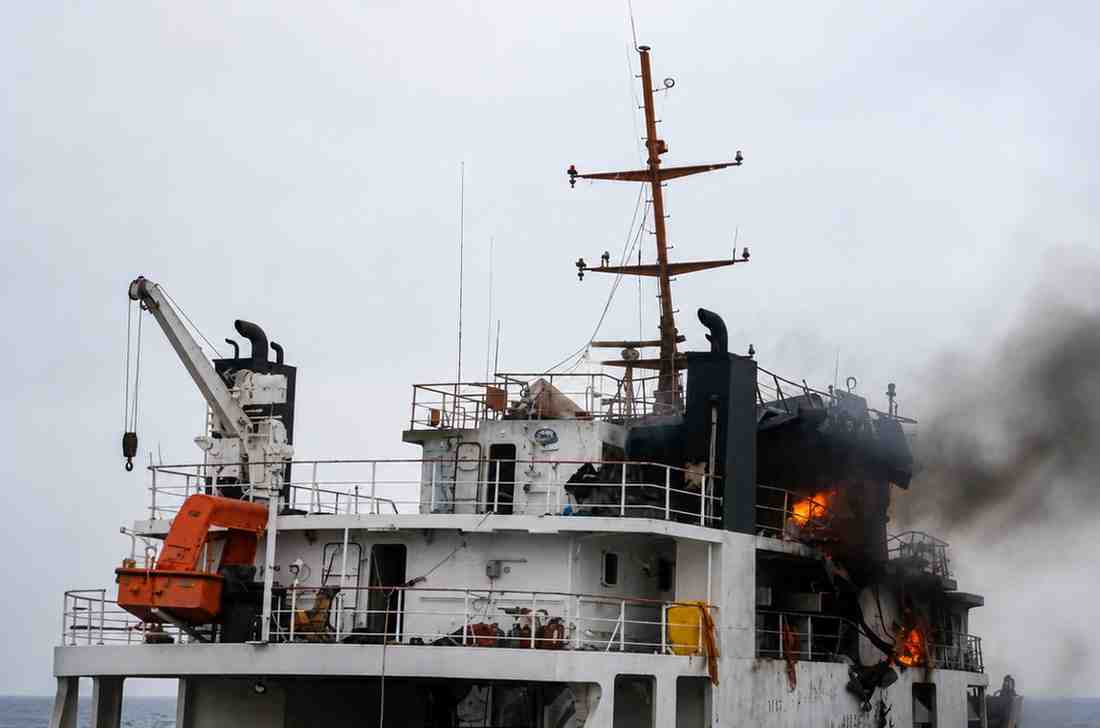
A deadly Houthi attack on a commercial cargo vessel in the strategically vital Bab el-Mandeb Strait has raised fresh fears over maritime security and global shipping, with four crew members reportedly killed in the missile strike.
The attack took place on Tuesday, August 11, as tensions across West Asia continue to escalate. Yemeni authorities said the vessel was targeted by Yemen’s Iran-aligned Houthi movement, which has repeatedly threatened commercial shipping in the Red Sea region.
According to Yemen’s internationally recognised government, the dead included three Pakistani nationals and one Indonesian crew member. The Houthis have not officially claimed responsibility for the attack.
Cargo Ship Hit by Multiple Ballistic Missiles
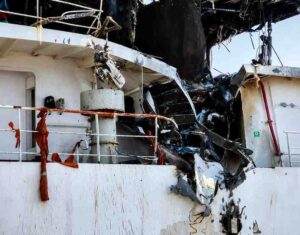
Yemen’s Transportation Ministry said the commercial vessel was struck by three ballistic missiles. A fourth missile was reportedly fired toward rescue teams attempting to reach the damaged ship, injuring a Yemeni rescuer.
The vessel was identified in reports as the Tanzania-flagged Tihamah, a small cargo ship linked to Egyptian ownership and management. Maritime security sources said the ship was attacked while in the Bab el-Mandeb area, near Perim Island.
Reuters reported that the vessel was believed to have been at anchor northeast of Perim Island when it was struck. After the attack, the crew reportedly lost control of the vessel before Yemeni coastguard personnel moved toward the ship.
The incident has become particularly significant because it represents a major escalation in the threat to merchant vessels operating through one of the world’s most important maritime chokepoints.
Four Sailors Killed as Rescue Operation Comes Under Fire
The reported deaths have highlighted the growing danger faced not only by commercial crews but also by emergency teams responding to maritime attacks.
Yemeni officials said the missile attack caused multiple casualties among the crew. While initial reports varied over the exact nationality breakdown, the latest reports from Yemeni authorities and international news agencies identify Pakistani and Indonesian sailors among those killed.
The reported attack on the rescue operation has further intensified concerns about the safety of maritime emergency responses in the region.
The Houthis have yet to publicly acknowledge responsibility, meaning some operational details surrounding the attack remain subject to further verification.
Why Bab el-Mandeb Strait Is So Important
The Bab el-Mandeb Strait is a narrow maritime passage connecting the Red Sea with the Gulf of Aden. It lies between Yemen and the Horn of Africa, with its narrowest point measuring roughly 30 kilometres.
The waterway is critical to international trade because vessels travelling between Europe and Asia often use the Red Sea and Suez Canal route. Disruption in the strait can force ships to take much longer routes around Africa, increasing fuel consumption, insurance costs and delivery times.
The strait has become even more strategically important amid the continuing disruption around the Strait of Hormuz. The Bab el-Mandeb is also a major route for energy shipments and other commercial cargo. Hindustan Times reported that around 12% of global trade passes through the waterway.
Shipping Traffic Already Under Severe Pressure
The latest attack comes as shipping activity through the Bab el-Mandeb has already fallen sharply because of security concerns.
Reuters reported that traffic through the Bab el-Mandeb and Red Sea has dropped by more than 50% compared with the period before the previous wave of Houthi attacks. Kpler data showed that an average of about 32 ships a day crossed the strait last week, compared with roughly 50 before the Houthis announced their latest maritime blockade.
The decline reflects growing reluctance among shipping companies to send vessels through an increasingly dangerous corridor.
Houthi Threats Add to Regional Crisis
The attack follows the Houthis’ declaration of a maritime embargo against Saudi Arabia in July. The group said its action was linked to what it described as a Saudi siege, a claim Riyadh has rejected.
The latest violence comes against the backdrop of the wider conflict involving Iran, Israel and the United States. The Strait of Hormuz has also faced severe disruption, placing additional pressure on alternative maritime routes.
Also Read — Har Ghar Tiranga 2026: Kuljeet Singh Chahal Unveils Patriotic Art Exhibition In Delhi
With both the Strait of Hormuz and Bab el-Mandeb facing heightened security threats, shipping companies are confronting an increasingly complicated operating environment.
Global Trade Faces Fresh Shock
The deadly strike could have consequences well beyond Yemen. Continued attacks on commercial vessels could push more shipping companies to avoid the Red Sea altogether.
Longer alternative routes around the Cape of Good Hope can add significant sailing time and fuel costs. Those additional expenses can eventually affect freight rates, insurance premiums and the prices of goods reaching international markets.
The situation also raises concerns about energy supplies because the wider Red Sea corridor plays an important role in the movement of oil and other commodities.
For countries dependent on maritime trade, any prolonged disruption could therefore create economic as well as security challenges.
Regional Tensions Continue to Escalate
The Bab el-Mandeb attack comes as Yemen itself faces renewed fighting between Houthi forces and the internationally recognised government. Recent clashes and attacks have raised fears that the fragile truce that had helped contain Yemen’s civil war could come under further strain.
The latest maritime strike therefore represents more than an isolated attack on a cargo vessel. It signals the possibility of another dangerous phase for commercial shipping in one of the world’s most strategically important waterways.
With the Houthis yet to claim responsibility, international maritime authorities are expected to closely monitor developments around the Red Sea and Bab el-Mandeb in the coming days.
Click here to join our WhatsApp Channel for real-time news updates and exclusive coverage.