NEW DELHI: The Ministry of External Affairs (MEA) on Saturday launched a sharp rebuttal against comments made by the President of Pakistan, categorically rejecting his observations on matters concerning India and asserting that Pakistan has no authority to interfere in India’s internal affairs.
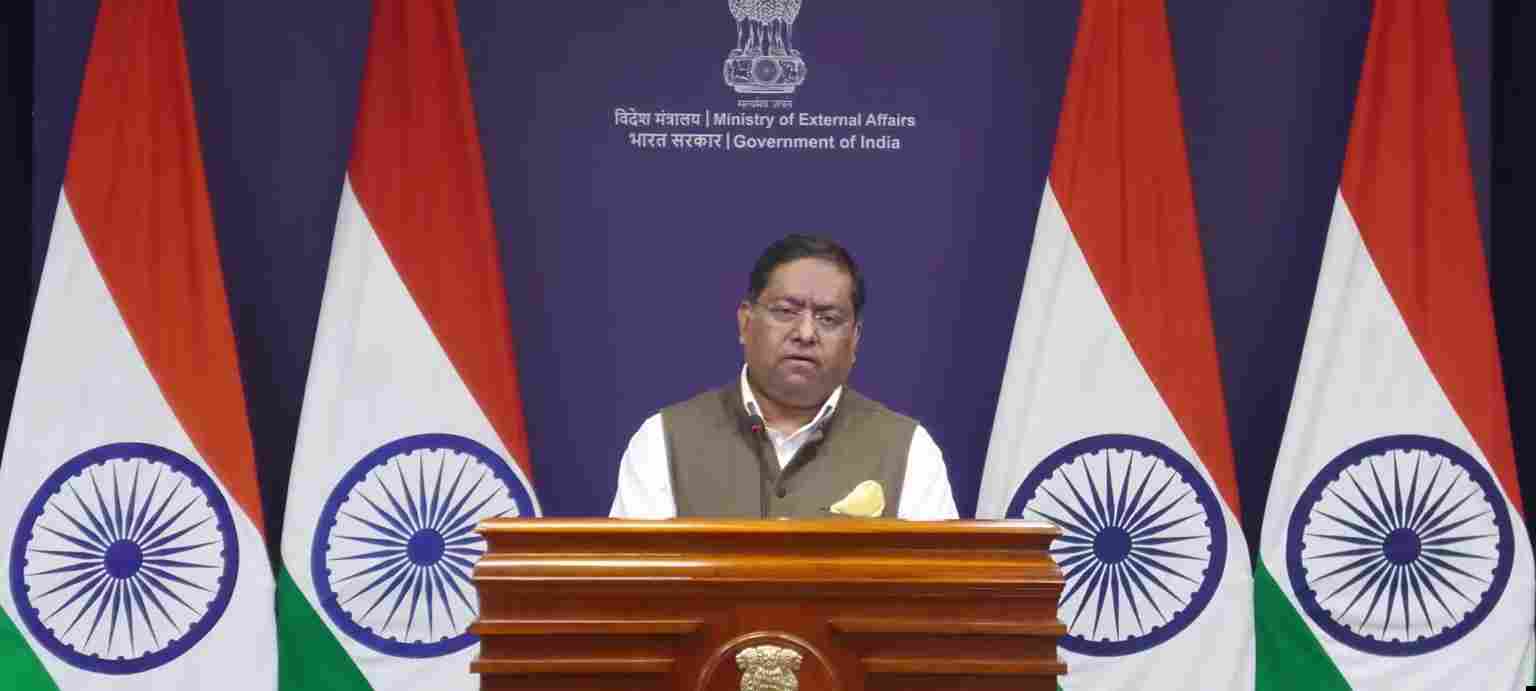
Responding to media queries, MEA spokesperson Randhir Jaiswal issued a strong statement, describing the Pakistani President’s remarks as “unwarranted” and “absurd,” while also highlighting Pakistan’s own human rights record.
India Rejects Pakistan’s Remarks
In an official statement issued on June 20, the MEA said India firmly rejects the comments made by Pakistan’s President and questioned his standing to comment on India’s domestic issues. According to the statement, New Delhi considers these remarks inappropriate and an attempt to interfere in sovereign matters that are exclusively within India’s jurisdiction.
The spokesperson emphasized that Pakistan has “no locus standi” to comment on issues that are internal to India, reiterating India’s longstanding position that domestic affairs remain beyond external scrutiny.
MEA Points To Pakistan’s Human Rights Record
India also turned the spotlight on Pakistan’s own human rights situation, stating that Islamabad’s record on protecting minorities has repeatedly drawn international attention and criticism. The MEA described Pakistan’s observations as particularly ironic given its own challenges regarding human rights and minority protection.
The statement said Pakistan has a long history of systematically targeting and victimizing minority communities belonging to different faiths, a concern that has been documented and discussed globally over the years. Without naming specific incidents, India underlined that Pakistan’s internal record weakens any attempt by its leadership to lecture other countries on governance or rights-related issues.
Political Attack Driven By Domestic Narratives
The Ministry further alleged that the Pakistani President’s comments should be viewed as a deliberate political attack rather than a constructive observation. According to New Delhi, such statements are rooted in Pakistan’s domestic political narratives and policies that foster division instead of cooperation.
The statement argued that these remarks appear designed to divert attention from Pakistan’s own internal challenges and project criticism outward. India asserted that such rhetoric contributes little to regional peace and only serves to deepen tensions between the two neighbouring countries.
India Reiterates Sovereignty Principle
The latest response once again underscores India’s consistent diplomatic position regarding sovereignty and non-interference. Over the years, India has maintained that external entities, including Pakistan, should refrain from making comments on issues that are entirely internal to the country.
The government has frequently emphasized that mutual respect for sovereignty and territorial integrity should form the foundation of bilateral relations. Officials believe repeated public remarks from Pakistani leaders undermine the possibility of constructive engagement and dialogue.
Strained India-Pakistan Relations Continue
The exchange also reflects the continued strain in relations between India and Pakistan, which have witnessed multiple diplomatic confrontations in recent years. Key areas of disagreement have included terrorism, cross-border security concerns, and repeated accusations exchanged through official statements.
While diplomatic channels remain open at limited levels, public exchanges between both governments continue to dominate the bilateral narrative. Analysts believe such statements often intensify political rhetoric on both sides and reduce opportunities for confidence-building measures.
Diplomatic Significance Of The Response
The strong wording adopted by the MEA signals India’s intention to firmly challenge any external commentary that it perceives as interference. Observers note that New Delhi increasingly uses official diplomatic responses to reinforce its position on sovereignty, national security, and domestic governance.
The statement also serves a broader strategic purpose by highlighting international concerns surrounding Pakistan’s own governance issues and treatment of minorities. India has repeatedly maintained that countries should address their own domestic challenges before commenting on the affairs of others.
Looking Ahead
The latest diplomatic exchange is unlikely to ease tensions between the two nations in the immediate future. However, it reaffirms India’s established approach of responding swiftly and forcefully to remarks that question its internal policies.
As geopolitical dynamics in South Asia continue to evolve, both countries remain under international scrutiny regarding regional stability and diplomatic engagement. For now, New Delhi has made its position clear: matters concerning India are internal, and external commentary, particularly from Pakistan, will continue to receive a strong rebuttal.