
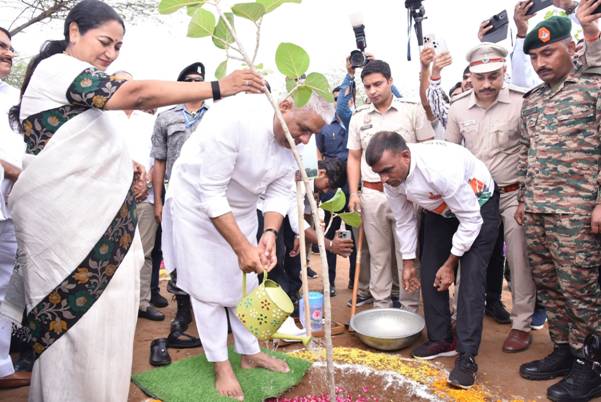
NEW DELHI: Marking World Environment Day 2026 with a major push towards urban greening and environmental conservation, Union Environment, Forest and Climate Change Minister Bhupender Yadav inaugurated 18 NaMo Oxygen Parks across Delhi and launched a series of green initiatives under the nationwide “Ek Ped Maa Ke Naam” campaign. The event was held at the NaMo Oxygen Park in Maidangarhi and witnessed the participation of Delhi Chief Minister Rekha Gupta along with senior officials from the Centre and the Delhi Government.
The inauguration of the NaMo Oxygen Parks is being viewed as a significant step towards improving Delhi’s environmental health by expanding green spaces, enhancing biodiversity and providing cleaner air to residents. The parks have been developed as urban green lungs that will contribute to air purification, ecological balance and public well-being.
Addressing the gathering, Bhupender Yadav highlighted that the world is currently facing three major environmental challenges—climate change, biodiversity loss and land degradation. He said India has emerged as a leading force in global environmental action under the leadership of Prime Minister Narendra Modi. According to the minister, India has made significant progress in renewable energy, solar capacity expansion, biodiversity conservation and climate commitments while achieving several environmental targets ahead of schedule.
The Union Minister emphasized that environmental conservation cannot be achieved through government efforts alone and requires active participation from society. Referring to the “Ek Ped Maa Ke Naam” initiative, he said the campaign has transformed tree plantation into a people’s movement rooted in gratitude towards mothers and responsibility towards nature. He urged citizens not only to plant trees but also to nurture and protect them to ensure long-term ecological benefits.
Focusing on Delhi’s environmental challenges, Yadav said coordinated efforts are underway to address major pollution sources such as road dust, vehicular emissions and industrial pollution. He noted that several measures are being implemented, including mechanized road cleaning, deployment of pollution control technologies, emission monitoring systems and promotion of electric mobility. These initiatives, he said, are aimed at creating a cleaner and healthier urban environment for future generations.
The minister underlined that the newly inaugurated NaMo Oxygen Parks are part of a broader national effort to strengthen urban ecology through the development of green infrastructure. He stressed that parks, urban forests, wetlands and grasslands must be protected together to build resilient ecosystems capable of supporting biodiversity and mitigating the impacts of climate change. Community involvement, he added, will be crucial for the long-term success of such projects.
During the event, three important environmental publications prepared by the Delhi Government were also released. These included the Working Plan for the National Capital Territory of Delhi for the next decade, the Management Plan for the Asola Bhatti Wildlife Sanctuary and the Delhi Bird Atlas. The documents are expected to strengthen scientific environmental governance, biodiversity conservation and sustainable urban planning in the national capital.
Bhupender Yadav described these publications as important tools for evidence-based policymaking and ecological management. He said scientific planning and informed conservation strategies are essential for protecting urban ecosystems while accommodating the needs of a growing population. The minister expressed confidence that these initiatives would support long-term environmental sustainability in Delhi.
Delhi Chief Minister Rekha Gupta also reiterated her government’s commitment to expanding green cover in the city. She announced a target of planting 15 lakh trees during the current year and called upon citizens to actively participate in environmental conservation efforts. According to her, public participation is essential not only during plantation drives but also in ensuring the survival and growth of newly planted trees.
The programme concluded with a plantation drive under the “Ek Ped Maa Ke Naam” campaign and recognition of civil society groups that contributed to the preparation of the Delhi Bird Atlas. The inauguration of the 18 NaMo Oxygen Parks and the launch of associated green initiatives reflect a renewed commitment by both the Union and Delhi governments to strengthen environmental protection, improve urban air quality and encourage greater public participation in conservation efforts.