
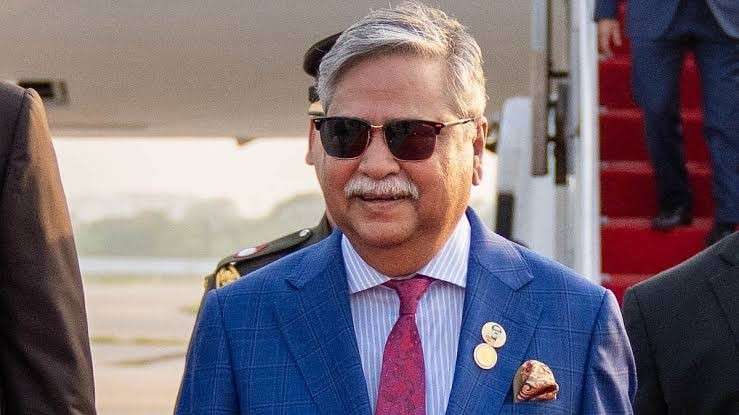
DHAKA: Bangladesh has entered another phase of political uncertainty after President Mohammed Shahabuddin resigned from office, citing serious health concerns. His resignation comes at a crucial moment for the country, with former Prime Minister Sheikh Hasina expected to return in the coming months and the political atmosphere already marked by deep divisions and heightened tensions.
According to official statements released by the President’s office, Shahabuddin stepped down after medical examinations diagnosed him with Autonomic Neuropathy, a condition that occasionally causes temporary loss of consciousness. The 76-year-old leader stated that his health no longer allowed him to effectively discharge the responsibilities of the nation’s highest constitutional office.
President cites medical condition behind resignation
In his resignation message, Mohammed Shahabuddin explained that doctors had advised him regarding the seriousness of his illness. He said the medical condition had led to intermittent episodes of unconsciousness, making it increasingly difficult to perform official duties.
The resignation officially ends Shahabuddin’s tenure before the completion of his five-year term. His departure follows months of speculation over his future amid Bangladesh’s rapidly changing political environment and mounting pressure surrounding his perceived closeness to former Prime Minister Sheikh Hasina.
Sheikh Hasina loses her last ally in high office
Political observers say Shahabuddin’s resignation carries significance beyond the presidency itself. A long-time associate of Sheikh Hasina and the Awami League, he had remained one of the few senior constitutional figures linked to the former ruling establishment.
Hasina’s Awami League has faced severe setbacks since the political upheaval that forced her government from power in 2024. The party remains banned, while many of its senior leaders have either been detained or gone into hiding.
Also Read: Massive Boulder Crushes SUV In Himachal Pradesh, 13 Killed In Chamba Tragedy
With Shahabuddin stepping aside, analysts believe Sheikh Hasina no longer has a prominent ally occupying one of Bangladesh’s top constitutional offices, further reshaping the country’s political balance ahead of her announced return.
Interim arrangements take effect
Following the resignation, Bangladesh’s constitutional process has been activated to ensure continuity in governance.
Officials confirmed that the Speaker of the Jatiya Sangsad (National Parliament) will carry out the duties of the President until Parliament elects a new head of state.
Although the President serves as the constitutional head of state and commander-in-chief of the armed forces, executive authority in Bangladesh remains vested in the Prime Minister and the Cabinet under the country’s parliamentary system.
Political tensions remain high
The resignation comes amid continuing political volatility in Bangladesh following the dramatic events of 2024, when widespread student-led protests led to the collapse of Sheikh Hasina’s government.
Since then, the country’s political landscape has undergone significant transformation, with new leadership emerging while legal proceedings continue against several former Awami League leaders.
Reports indicate that Sheikh Hasina has announced plans to return to Bangladesh in the coming months despite ongoing legal and political challenges. Her expected return has intensified political debate and heightened security concerns across the country.
Questions over the next president
Attention has now shifted to the process of selecting Bangladesh’s next President.
The incoming head of state will assume office during one of the country’s most politically sensitive periods in recent history. While the presidency is largely ceremonial, the office plays an important constitutional role during periods of political transition, government formation, and national emergencies.
Political analysts believe the choice of Shahabuddin’s successor will be closely watched by both domestic stakeholders and the international community, given the evolving political situation and expectations surrounding democratic stability.
Regional implications
Bangladesh remains one of South Asia’s most strategically important nations, sharing close political, economic and security ties with neighbouring India.
Any major political development in Dhaka is closely monitored across the region, particularly as Bangladesh prepares for another important phase in its political journey. The resignation of the President adds another layer of uncertainty at a time when the country is already navigating political realignment and institutional transition.
Observers say the coming weeks will be crucial in determining how smoothly the presidential succession process unfolds and whether it contributes to political stability or further intensifies existing divisions.
As Bangladesh moves toward appointing a new President, the country’s leadership will face the challenge of maintaining constitutional continuity while managing an increasingly complex political environment. With Sheikh Hasina’s proposed return drawing closer and the nation’s political future under close scrutiny, Shahabuddin’s resignation marks another significant chapter in Bangladesh’s evolving democratic landscape.
Click here to join our WhatsApp Channel for real-time news updates and exclusive coverage.